Personal data criminals want: which broker fields matter
Personal data criminals want is not all equally risky. Learn how phone numbers, addresses, age, and relatives data are used in real fraud.
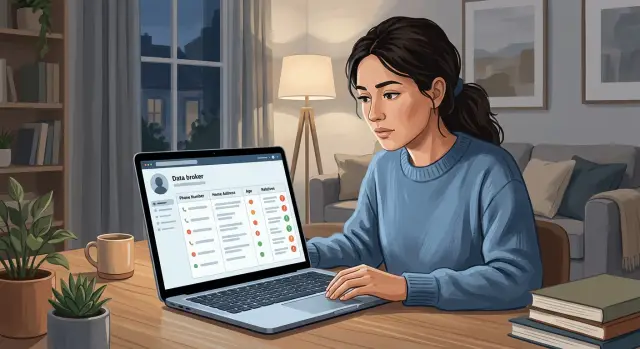
Why some exposed fields do more harm than others
A broker page can look harmless when you read one detail in isolation. Age 41, by itself, usually does not create much risk. The problem starts when that same page also shows your mobile number, current address, old addresses, and relatives.
That is when separate facts turn into a working profile.
A simple way to judge risk is to ask one question: what could a stranger do with this page today? Some fields let them contact you. Some help them pretend they are you. The worst records do both.
A phone number opens the door to scam calls, text scams, and account recovery tricks. A current address helps someone pass basic identity checks and makes a scam sound more believable. Relatives data gives them names they can use to pressure you or someone close to you. Age alone is usually weaker unless it sits next to a full birth date, an address, or family details.
That is why phone numbers and current addresses usually need faster action than age alone. A scammer does not need your full identity file. They only need enough facts to sound real for 30 seconds.
"Male, age 38" is mostly noise. "John Smith, 38, cell number, current address, sister Maria Smith" is a script for a fake bank call, a package scam, or a password reset attempt.
If you are deciding what to remove first, start with pages that connect contact details, location, and family names. Those records tend to do the most damage.
Phone numbers usually move to the top
When people think about exposed personal data, phone numbers often seem less serious than they really are. In practice, they are often one of the first things worth removing.
A working number gives a scammer a direct way to reach you. That matters because a lot of fraud starts with contact: a fake delivery text, a made-up bank alert, a job scam, or a password reset message that lands at the right moment. Calls work too, especially when the caller already knows your city, a relative's name, or a past address.
Phone numbers also matter in account recovery attacks. Many banks, email providers, and shopping apps still use text messages or calls for login codes, password resets, or security checks. If someone has your number and a few details from broker pages, they can sound believable enough to trick support staff or pressure you into sharing a code.
Old numbers are easy to ignore, but they still carry risk. If a bank, school, doctor, or online account once used that number, it may still be buried in recovery settings or old records. A number you stopped using years ago can still cause problems.
Risk jumps when a page ties your number to other details like these:
- your home address
- relatives or household members
- previous addresses
- your birth year or full date of birth
That mix gives a scammer both access and context. They do not need perfect data. They just need enough to sound convincing for half a minute.
If you only have time to remove a few records, start with phone listings that also show where you live or who you are related to.
Home addresses create online and offline risk
A home address does more than tell someone where you get mail. It connects your online identity to a physical place, and that changes the risk.
Once someone knows where you live, scams get more believable. A caller who already has your street name, city, and ZIP code sounds less like random spam and more like someone from your bank, insurer, utility company, or mobile carrier. People let their guard down when a stranger reads back an address they recognize.
There is an offline side too. An exposed address can make it easier to send fake notices, target package theft, stalk you, or show up in person. Even when none of that happens, it is unsettling for a reason.
Recent addresses matter most because many companies still use them in identity checks. A fraudster may be asked to confirm a current or previous street name, apartment number, or ZIP code during a form or support call. If they already pulled that from a broker record, they have one less obstacle.
Old addresses still matter. Credit applications, account recovery flows, and background databases often treat past addresses as proof that someone is really you. A broker listing from five years ago may still help with impersonation now.
If someone has your full name, mobile number, and two past addresses, they can sound convincing enough to trick a customer support agent into revealing more. That is why address exposure deserves attention even when the listing is not fully current.
On its own, an address may not look as alarming as a Social Security number or bank account. Paired with a phone number, birth details, or relatives data, it becomes much more dangerous.
Age is usually lower risk until more detail is attached
A rough age range on a broker page usually does not give a criminal much to work with. "35-39" or "about 62" is too vague to answer many identity checks or open accounts. On its own, age is often background detail.
The risk changes when that vague detail becomes a full date of birth. Day, month, and year make it much easier to match you across records. That is far more useful for fraud because it helps fill gaps in a stolen profile.
Age clues still have some value to scammers. They help them choose the pitch. Someone marked as 70+ may get Medicare, tech support, or grandparent scams. A person listed as 18-22 may get fake student loan, first job, or apartment deposit scams. A "likely parent" label can shape a family emergency story.
Still, age becomes more dangerous mostly when it sits next to contact or location details. A birth year plus a phone number gives a cleaner target list. A full date of birth plus a home address is worse because it helps confirm they found the right person.
A practical way to rank age data looks like this:
- Low risk: broad age range only
- Medium risk: birth year, graduation year, or life-stage labels
- High risk: full date of birth, especially with phone, address, or relatives data
A good rule is simple: age hints are annoying, but a full birth date can do real damage.
Relatives data gives strangers a script
Relatives data often looks harmless at first. It rarely is.
When a broker page shows your parents, spouse, children, or siblings, it gives a scammer instant context. A caller who knows your brother's name or your mother's name can sound much more believable than someone making a cold call. That small detail can lower your guard fast.
Family names also help with older account checks. Some services still use security questions, and support agents may ask for personal details before discussing an account. Relatives data can help an attacker guess answers, especially when those names appear next to your age, past address, or hometown.
The risk is not limited to you. If a criminal cannot reach you, they may call a parent, ex-spouse, or adult child instead. That is common in payment scams and fake emergency calls. One exposed family connection can turn one target into several.
Imagine a broker page that lists your full name, current city, your father's name, and your adult daughter's name. A scammer can call your daughter, mention your city and your father, and sound like someone from a hospital, bank, or law office. That is often enough to start panic and push for money or more details.
These records deserve quick attention:
- pages that name parents
- pages that list a spouse or ex-spouse
- pages that show children or siblings
- records that connect relatives with your address or phone number
If a page maps your family in public, treat it as more than a privacy annoyance.
The worst records connect the dots
One field can be irritating. A combined record is where real harm starts.
The most useful broker pages for criminals are usually the ones that link your name to ways to reach you and facts that help confirm who you are. If a page shows your full name, current phone number, and home address together, that is already enough for a fake bank call, a delivery scam, or a message pretending to be from your mobile carrier.
Each field makes the others stronger. The phone number gives them a way in. The address makes the story feel personal. Your name ties it together so the contact does not feel random.
The risk climbs even faster when the record also includes relatives or full birth data. A full date of birth paired with contact details and an address gives an impersonator much more room to work. Mixed records with old and new details can still help because many companies use past information for verification.
If you need a short priority list, start with records like these:
- name + phone + current address
- name + address + relatives
- name + full date of birth + any contact detail
- old and new details combined in one profile
Those are the pages most likely to be used right away.
How to rank a broker page in a few minutes
You do not need a spreadsheet or a long scoring system. A quick pass is usually enough.
Look for the fields that let a stranger reach you, find you, or connect you to other people. Those pages go first.
Start with contact details. If a page shows your current phone number, your mobile carrier, or a number that still receives texts, mark it right away.
Then check location. A current or recent home address matters more than an old city from years ago. A full street address can be used for account checks, fake delivery calls, stalking, or in-person scams.
Next, look for data that helps someone build a fuller profile. Relatives' names, household members, and full birth data make a record much worse. Age or birth year alone is often less serious, but paired with an address or phone number it becomes much more useful.
A simple triage rule works well:
- 1 mark: lower priority, unless the data looks current
- 2 marks: remove soon
- 3 or more marks: move it to the top
One last question matters a lot: how fresh does the record look? Current details beat old details every time. A page with your present address, an active number, and relatives who still live nearby should be treated as urgent even if one field is incomplete.
A page with your age and an old ZIP code can usually wait. A page with your phone, current address, and your sister's full name should not.
Common mistakes when cleaning this up
A lot of people start with the page that feels creepiest, not the page that can do the most harm. An age-only listing can feel invasive. It is usually not the biggest risk. A record with your phone number, past or current address, and a relative's name is far more useful to a scammer.
Old addresses get ignored all the time. That is a mistake. Many companies still use them in identity checks, account recovery, and phone support scripts. If a broker page ties your name to several past addresses, treat it seriously.
Relatives pages are easy to miss too. They can look harmless until you notice they name your parents, adult children, or former spouse. That gives a scammer material for fake emergency calls, phishing messages, and account verification attempts.
Another common mistake is assuming one opt-out solves the problem. It does not. Brokers copy from each other, buy from similar sources, and repost old records. Removing one page from one site rarely means the same data is gone everywhere.
The last mistake is treating cleanup as a one-time job. Data gets relisted, merged, and republished under slightly different profiles. Check again later, especially after moving, changing numbers, or appearing in a new public record.
What to remove first
If you are short on time, use a simple order instead of going by instinct.
Remove records that combine phone numbers, addresses, relatives, or a full date of birth. After that, deal with pages that show your current phone number and current address. Then handle records with relatives, aliases, and past addresses. Thin records like age range only can wait.
A small example makes the difference clear. If Mia finds one page with her cell number, an old home address, and her mother's name, and another page with only her age range and city, both are worth removing. They are not equally urgent.
The first page goes to the top because it gives a scammer several ways to act fast. A phone number opens the door to calls and texts. An old address can still help with identity checks. A parent's name makes the whole story more believable.
The second page is weaker. An age range and city can help with ad targeting or basic profile matching, but on their own they usually do not support direct scams nearly as well.
That is the rule to remember: remove the page that can be used today, not the page that is merely descriptive.
What to do after you find risky records
Once you spot a risky listing, do not try to clean up everything at once. Start with the pages that combine the most sensitive details in one place.
Keep a basic log as you go. A simple spreadsheet is enough. Write down the broker name, the page you found, the date you sent the request, and the result. That saves time when the same broker posts your data again later.
Rechecking matters more than most people expect. Some brokers remove a page, then relist it after a new data refresh. Even a quick monthly pass is better than a one-time cleanup.
If manual removals start eating hours, a service like Remove.dev can handle the repeat work across more than 500 data brokers and keep watching for relistings. Its dashboard lets you track requests in real time, which is easier than managing dozens of separate emails.
The goal is straightforward: remove the records that make it easy to contact you, locate you, or map your family first. That is where most of the real harm begins.
FAQ
What should I remove first from broker sites?
Start with pages that combine your phone number, current or past address, relatives, or a full date of birth. Those records give a stranger both a way to contact you and enough detail to sound believable.
Is my phone number more dangerous than my age?
Usually, yes. A working phone number lets scammers reach you right away by call or text. It gets worse when the same page also shows your address, relatives, or birth details.
Do old addresses still matter if I no longer live there?
Yes. Old addresses still show up in account checks, support calls, and recovery flows. Even if you moved years ago, that data can still help someone pretend to be you.
Is age alone something I need to worry about?
Usually not by itself. A broad age range is mostly weak background detail. The risk goes up when it sits next to your full birth date, phone number, address, or family names.
Why is relatives data such a big deal?
Family names give strangers a script. If someone knows your mother, spouse, or child by name, a fake bank call or emergency scam sounds much more real and can pressure both you and your relatives.
How do I tell if a broker page is urgent?
Look for records that let someone reach you, find you, or confirm who you are. A page with your name, phone, address, and relatives should move to the top. A page with only an age range and city can wait.
Should I focus on current data before older records?
Act on current details first, especially an active mobile number or present address. Those can be used right away in scam calls, fake delivery messages, and support impersonation.
Will one opt-out remove my data everywhere?
No. Brokers copy from similar sources and repost old records. Removing one listing helps, but you still need to check other sites and watch for relistings later.
How often should I check for relisted data?
Recheck regularly, not just once. A monthly pass is a good simple habit, and you should also look again after moving, changing numbers, or showing up in a new public record.
When does it make sense to use a removal service?
If manual opt-outs are taking hours or your data keeps coming back, a service can save time. Remove.dev handles removals across more than 500 brokers, watches for relistings, and most removals finish within 7 to 14 days with tracking in its dashboard.