Remove information from broker sites after a name change
Learn how to remove information from broker sites after a name change by checking old names, aliases, past addresses, and records that return.
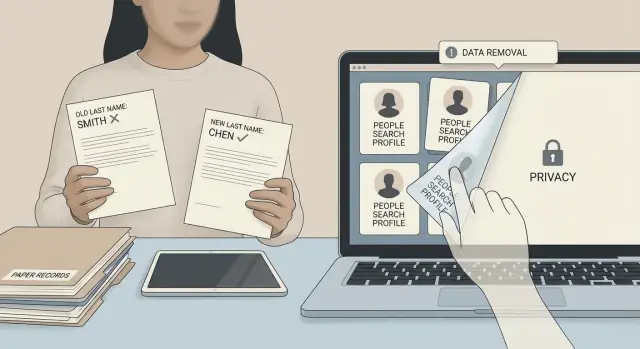
Why a name change leaves extra records behind
A legal name change does not replace your old identity everywhere at once. Data brokers collect information from many sources, and those sources update on different schedules. One database may show your new surname this week, while another still carries your old name from years ago.
That leaves both versions of you online at the same time. If you changed your name after marriage, divorce, or for personal reasons, people search sites may still list your old name, your new name, or both on the same record.
Some brokers split one person into two profiles. The old profile might use your previous surname and an older address. The newer one may use your current name but the same phone number, age range, or relatives. To the broker, those can look like two different people even when they clearly point to you.
Copied data makes this worse. Broker sites often pull records from each other, buy old lists, or keep archived snapshots. So even after a legal update, stale records keep circulating. A record removed from one site can still live on another site that copied it earlier.
A simple example shows how this happens. Sarah Nguyen becomes Sarah Patel. One site updates her surname but keeps an old apartment address. Another keeps Nguyen, adds her new city, and creates a second profile. If she searches only for Patel, she may miss the Nguyen listing entirely.
That is why removing your information after a name change is harder than removing it after a simple address update. A request can fail because the broker stores your record under the old name, not the one you searched.
The safest assumption is that your old and new identities are both still in circulation. Treat each name version as its own record trail, not as one profile that will update cleanly on its own.
What to gather before you start
Before you search, make one master list. A notes app, spreadsheet, or paper sheet is fine. What matters is having every identity clue in one place.
Start with your current legal name exactly as you use it now. Then add the versions a broker may still show: common misspellings, missing middle names, middle initials, shortened first names, and any old formatting that appeared on bills, forms, or public records.
Next, list every former name you have used. That includes a maiden name, a prior married name, a hyphenated last name, and versions with the hyphen removed. Small changes can create separate records. "Maya Reed," "Maya Reed-Lopez," and "Maya R. Lopez" can all lead to different people search pages.
Then gather your contact history. Old listings often keep details long after you stop using them. Write down past street addresses, apartment numbers if they appeared publicly, old phone numbers, and email addresses you no longer check.
Location details help when your name is common. Add the cities and states where you have lived, plus rough age ranges that may appear on broker pages. If a listing says you are 34 when you are 36, keep it on your list anyway. Broker data is often close, not exact.
Relatives matter more than most people expect. Many broker sites connect records through parents, siblings, spouses, or adult children. If an old listing still shows your former surname next to a relative's name, that can confirm the record is yours even when the address looks wrong.
A messy list beats a perfect memory. Once you start searching, you'll move much faster if each entry includes the name version, old contact details, city, age range, and relatives tied to that period of your life.
Where both names usually appear
After a name change, broker sites rarely clean up the old record neatly. Many keep the old surname live and create a second profile under the new one. That is why the process feels confusing at first. You are often dealing with two versions of the same person.
People search sites are usually the first place this shows up. One site may list a profile for your old surname and a separate profile for your current surname. Another may put both on one page and label one as an alias, former name, or "also known as." If your first name was shortened on some records, you may find even more variations.
Past addresses often connect the records. A broker might attach your old surname to an address from six years ago, then attach your new surname to your current home. Even when the names differ, the matching street, age, relatives, or phone number makes it obvious the records point to you.
That overlap matters because brokers copy from each other. One page with an old surname and one shared address can lead to fresh listings on other sites. This is common after marriage, divorce, or any legal name change.
Pay close attention to separate people search profiles for each surname, single pages that combine old and new names, address history pages tied to both identities, and search results that still show old text in the preview.
Search engines add one more layer of mess. Even after a broker updates a page, the result preview may still show your old surname or maiden name for days or weeks. The live page and the search preview do not always match. If you are trying to remove an old name from public listings, check both before you assume a request failed.
If Sarah Miller becomes Sarah Lopez, one broker may keep a Sarah Miller page with an old apartment while another creates Sarah Lopez with the same date of birth and relatives. A third site may merge them into one page. That is how old and new identities keep circulating long after the name change itself.
How to search every version of your record
Search the way brokers store records, not the way you introduce yourself now.
Start with your current full name plus your city, state, or ZIP code. Then repeat the same search with every former name you have used. Include a maiden name, a past married name, a hyphenated version, a middle initial, and common misspellings. Even one extra letter can lead to a separate profile.
Names are only part of the job. Many broker listings are tied to contact details and old household data, so search your phone numbers, email addresses, and past addresses on their own. Old mobile numbers often bring up records that still connect your old and new identities. Past addresses do the same, especially if you moved around the time your name changed.
A good first pass looks like this:
- current full name plus city or ZIP code
- every former full name plus city or ZIP code
- each phone number by itself
- each email address by itself
- each past address by itself
When you land on a broker site, do not submit the first request and move on. Check for duplicate profiles first. It is common to find one page under your old surname and another under your current one, both with the same age, relatives, or address history. If you remove only one, the other stays live.
Keep a simple record as you go. Save a screenshot of each page, write down the page title, and note the date you found it. That makes follow-up much easier if the site asks for proof or if the listing returns later.
The slow part is not filing the request. It is finding every version of you before you file it.
What to include in each removal request
A weak request gets ignored. A clear one gets handled faster.
When you ask a broker to remove a listing after a name change, use the profile exactly as shown. If the page uses your old surname, a shortened first name, or a misspelled version, copy that version into the request. Brokers often match requests to the text on the page, not to the person behind it.
Then add one or two matching details so the site can find the right record. Keep it simple. A full street address, a past city, an age range, or the name of a relative is often enough. If the listing shows several people with the same name, those details help the broker remove the right profile instead of rejecting the request.
A strong request usually includes the exact name shown on the listing, the page title or profile ID if the form allows it, one matching detail such as an address or relative name, and a direct request to remove any duplicate profiles for the same person on that site.
That last point matters. If a broker has your old married name on one page and your current name on another, ask them to remove both. Also ask them to remove any duplicate records tied to the same address, phone number, or relatives. Otherwise one version may disappear while the others stay live.
Keep the wording plain: "Please remove this profile and any duplicate profiles for the same person. The record matches my name, address, and family details." Short requests usually work better than long ones.
After you send it, save every bit of proof you get back. Keep confirmation emails, ticket numbers, screenshots of the form, and any auto-reply. If the profile stays up or comes back later, those records save time.
A simple example with an old and new surname
Maria Lopez gets married and starts using Maria Chen. A people search site still shows Maria Lopez at an old apartment, while another broker lists Maria Chen at her current address. That split is common because old records keep getting sold, copied, and merged in messy ways.
If Maria searches only her new name, she will probably miss part of the problem. The old surname can stay attached to an old address, while the new surname gets tied to a newer file. In practice, she has to search like she is tracking two versions of herself.
A good search would include Maria Lopez with her old city or state, Maria Chen with her current city or state, her phone number including old numbers if she still has them, and her personal email, especially one used before the name change.
Phone numbers and email addresses often connect records that look separate at first. A broker may hide her current name on one page and her old name on another, but the same phone number can reveal both.
When Maria finds both listings, she files separate removal requests. One request names the Lopez record and the old apartment. The other names the Chen record and the newer address. If the form has a notes box, she can briefly say that both records belong to the same person after a legal name change.
Then she waits about two weeks and checks again. One record may disappear while the other stays up, or a copy may show up on a different broker that pulled older data. That second check matters because removals do not happen at the same speed.
Mistakes that keep records online
The most common mistake is searching only your current name. After a marriage, divorce, or legal name change, broker sites may keep both versions alive for years. One profile might use your new surname, while another still shows your old one with the same age, city, or relatives.
Another mistake is skipping small name variants. Data brokers often split records because one site lists "Katherine," another lists "Katie," and a third uses "K. Marie" or drops the middle name. Those look minor, but they can create separate pages that stay online when you remove only one profile.
It also helps to check different versions of the same identity: your old surname and new surname, your middle name and middle initial, a nickname and your full first name, and any shortened or slightly misspelled version you have seen before.
A third mistake is stopping after the first match on a site. Many broker sites have duplicates. You remove one page, feel done, and miss a second or third page tied to the same person. Search the same site again with both surnames, a past city, and any phone number or age range shown on the listing.
The last mistake is treating removal as a one-time task. Broker sites buy fresh data all the time. An old-name profile can come back after a successful request, or a new duplicate can appear months later.
A simple rule works well: do one full sweep, wait for the removals to finish, then run the same searches again. After that, set a reminder to check later.
Quick checks before you move on
Before you close the tab and call it done, take five more minutes. The records that stay online are usually the boring leftovers: an old profile in one city, a duplicate entry on the same site, or a listing tied to a phone number instead of a name.
This last pass is where a lot of people miss something. The goal is simple: make sure no easy-to-find version of your identity is still live.
Use a short review:
- search every former and current name with each city you have lived in
- search your phone numbers and email addresses by themselves
- check each broker site for duplicate profiles
- save screenshots, request dates, and confirmation emails
- set a reminder to check again next month
Keep your notes in one place. A simple folder and spreadsheet work fine. One small habit helps more than people expect: name your files so they make sense later. Something like "broker-name_old-surname_request-sent" is enough. When a site ignores your request or relists you, you will know exactly what was submitted and when.
This part is tedious. It also saves you from doing the same cleanup twice.
What to do if records keep coming back
Some records return even after a successful opt out. Usually a broker bought a fresh list, copied another broker, or found your details again under both your old and new name.
A name change makes this harder. One site may remove your married name profile but keep an older listing under your maiden name, old email, or previous address. So treat this as ongoing maintenance, not a one-time job.
The simplest habit is to re-check on a schedule. Search the same details every time: old name, new name, name plus city, old phone numbers, current phone numbers, old addresses, current address, and any email that has shown up before.
A practical rhythm is to re-check about two weeks after each request, check again after 30 days, then run another search every two to three months. Search again after a move, a new job, or a phone number change.
Keep a record of what you find. A plain spreadsheet is enough if you include the broker name, the screenshot or page details, which identity version appeared, the date you sent the request, and whether the record came back later. This saves a lot of time when the same site asks for proof again.
If a broker republishes your details, send a new request and refer to the earlier removal. Be direct. State that the listing reappeared, include the old request date if you have it, and attach the exact profile that is live now. That often works faster than starting from scratch.
Manual tracking works, but it gets tiring fast when dozens of sites keep pulling from new sources. If you do not want to keep chasing re-listings yourself, Remove.dev handles removals across more than 500 data brokers and keeps monitoring for new postings in one dashboard.
The goal is not one perfect pass. The goal is to catch re-posts early, before your old and new identities spread again.
FAQ
Why do my old and new names both show up online?
Because brokers pull from different sources and update at different times. One site may keep your old surname while another builds a new profile from a newer address, phone number, or family match. That is why a legal name change often leaves two record trails instead of one clean update.
What should I gather before I start searching?
Start with one master list. Include your current name, every former name, misspellings, middle initials, nicknames, old addresses, old phone numbers, emails, cities, age ranges, and relatives that may appear on broker pages. A messy but complete list works better than trying to remember details later.
Should I search only my current legal name?
No. Search every former and current name you have used, then repeat those searches with a city, state, or ZIP code. If you only search the name you use now, you will miss profiles still filed under an old surname or older spelling.
Do phone numbers and old addresses really matter?
Yes. Many broker pages are tied to contact details more than names. An old mobile number, personal email, or past address can reveal profiles that do not appear when you search by name alone.
Where do old-name records usually hide?
People search sites are the most common place, but not the only one. Check separate profiles for each surname, pages that show aliases or former names, and address-history pages that connect both identities through the same home, age, or relatives.
What should I include in a removal request?
Use the exact name shown on the page, even if it is old or misspelled. Then add one matching detail like an address, age range, phone number, or relative name, and ask them to remove any duplicate profiles for the same person on that site.
Do I need separate requests for my old and new surname profiles?
Usually yes. If one site has a page under your old surname and another under your current one, treat them as separate records unless the broker clearly lets you remove both at once. Removing one profile often leaves the other live.
Why does Google still show my old name after a page changed?
That often happens because the search preview updates slower than the live page. Open the result and check the page itself before you assume the removal failed. In many cases the broker page is changed, but the cached preview still shows the old text for a while.
How often should I check for relisted records?
Check once about two weeks after each request, again around 30 days later, and then every two to three months. Search again after a move, a new phone number, or any other change that could create fresh records.
Why do my records come back, and can I automate the process?
They usually come back because brokers buy fresh data, copy other sites, or rebuild your profile from old addresses, emails, and family links. If you do not want to keep chasing that by hand, Remove.dev removes data from over 500 brokers, monitors for re-posts, and usually finishes most removals in 7 to 14 days.