Change-of-address databases after a move: why they spread
Change-of-address databases can expose your new home through mail forwarding, utility setup, and household matching after a move.
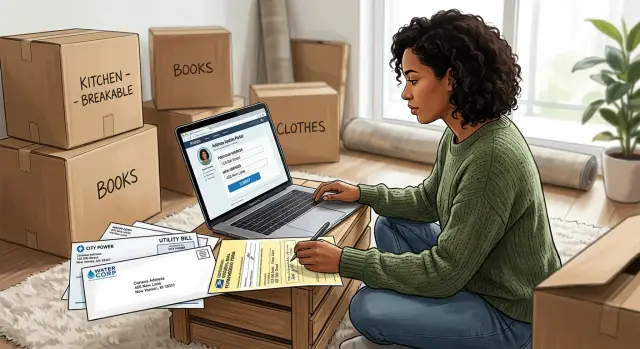
Why a new address spreads quickly
A move creates a burst of fresh records. In a week or two, your new address can appear in a postal forwarding request, a utility account, a bank profile, a mobile plan, a delivery app, and plenty of other places. Each update feels minor. Together, they create a clear trail.
That trail rarely stays inside one company. Businesses copy contact data into billing tools, marketing systems, fraud checks, and outside vendor databases. A single address update can move from a customer profile to a service provider, then into a data supplier that sells address history. That is one reason change-of-address databases fill up so fast after a move.
The old address usually stays put. In many systems, the new address is added as your current address while the old one remains as a past address or a match signal. Once a broker connects both to the same person, it can keep refreshing your profile even if one source goes quiet.
A move also gives brokers a strong timing signal. If several companies receive the same new address around the same time, the match looks real. One record might have a typo or a missing apartment number, but another record can fill in the gap. That is how a partial update turns into a fuller profile.
A few things make this worse. New records appear across several accounts within days. Companies keep past addresses instead of replacing them. Brokers compare household members to confirm a move. Many address files are refreshed on a set schedule, so a record that was removed once can show up again from a different feed later.
That is why one-time removal rarely lasts on its own. After a move, the address can keep circulating long after the boxes are unpacked.
Where updates usually start
Most change-of-address databases do not begin with one official source. A new address usually starts spreading because you update the same detail in several ordinary places within a few days.
The first trigger is often a postal forwarding request. Mail forwarding is useful, but it also creates a record linking your old address and your new one to the same person. Once that link exists, other companies can pick it up through licensed data feeds, address verification tools, or marketing files.
Utility accounts are another common starting point. When you turn on power, water, gas, or internet service, the provider usually collects your name, service address, billing address, and move-in date. That is enough to create a clean occupancy record. The same thing happens when you update a phone account, car insurance, a bank profile, or a credit card billing address.
Smaller updates matter too. Shopping profiles, food delivery apps, pharmacy accounts, and ride-share apps all store addresses. Use the new address a few times, and it stops looking temporary.
Which records appear first
The fastest confirmations usually come from postal forwarding, new utility or internet service, bank and insurance updates, shopping or delivery profiles, and housing paperwork.
Housing records often stick around the longest. A lease, rental application, mortgage document, deed filing, or property tax update can tie your name to an address for years. Even if that record is not fully public everywhere, it can still feed screening tools, marketing databases, or broker files.
A simple local move shows how quickly this stacks up. You forward mail on Monday, switch internet on Tuesday, update your card for grocery delivery on Wednesday, and sign a new lease on Friday. None of that feels unusual. Together, those steps create several matching records that point to the same address from different angles.
That is usually how the spread starts.
Why forwarding mail can republish your address
A mail forwarding request looks simple. You want bills, bank letters, and other mail to reach your new home. But the request can also act as a fresh address signal for many companies at once.
When a sender learns that you moved, it often updates your customer file right away. The change rarely stays there. A bank may refresh its records, a retailer may update your profile, and an insurer may do the same after the next mailing cycle.
Those updates can travel further than most people expect. Some companies share corrected address records with service vendors, fraud tools, marketing partners, and data suppliers. Once that happens, data broker address records can pick up the new address and connect it to your name.
The old address usually does not disappear either. Many systems keep both. Your previous address becomes an old-address entry, and the new one becomes the current one. That link helps other databases decide both records belong to the same person.
Households make this messier. If two adults receive mail at the same place, some databases treat them as part of one household record. So if one person files forwarding and updates a few accounts, the other person may be linked through household matching. Spouses, partners, children, and even roommates can get pulled into the same cluster.
A common pattern is pretty simple:
- You submit a forwarding request after moving.
- A few senders update your address after redirected mail.
- Vendors copy that update into wider data feeds.
- Brokers attach the new address to your old record and related household members.
That is why mail forwarding privacy is harder than it sounds. Forwarding solves a real problem, but it can also tell the data market where you live now and who probably lives with you.
How utility switches create fresh records
A utility switch is one of the clearest signs that you live at a new address. When you start electricity, gas, water, internet, or trash service, you usually give your full name, the service address, a start date, a phone number, and an email. That creates a clean record of occupancy.
Start dates make the record even stronger. An old mailing list might suggest you could live somewhere. A utility activation points to a specific move-in date. If the power starts on June 2, many systems treat that as confirmation that the household changed hands then.
Some providers also run an identity or soft credit check before opening the account. Depending on the provider and the country, that can add more matching points, such as date of birth, a prior address, or the last digits of an SSN. Once those details sit next to your new address, the record becomes easier to connect to older profiles.
Shared accounts create another path. One adult may open the electric account while another sets up internet or pays the water bill. Even if only one name appears at first, billing systems can connect both adults over time through payment cards, phone numbers, or co-applicant details.
The update also moves through more than one system. It may pass through the utility's billing platform, identity vendors, payment processors, installer scheduling tools, and customer support software. Every handoff is another chance for the address to spread or get matched back to an older profile.
That is why change-of-address databases do not depend only on postal forwarding. Utility account updates can confirm a move faster, and often with more confidence.
If you move across town, start internet on Monday, electricity on Tuesday, and add your partner as an authorized user on Friday, several systems may now connect both names to the new home within days. That first window after a move matters a lot.
How household matching fills the gaps
Household matching is simple, and that is exactly why it causes so many bad guesses. A broker does not need a complete file on you. If it can connect a few details, it may treat everyone in a home as part of one household record.
The usual signals are ordinary: the same street address, the same phone number on an older form, the same last name, or a shared utility, lease, or insurance record.
Once one person confirms a move, that new address can spread to other people tied to them. A spouse may get pulled in. So can a roommate who used the same internet account, or a child listed under a parent on school, medical, or warranty paperwork. This is one reason these databases keep growing even when only one person updated an account.
The problem is that household matching treats a home like a stable unit when real life is not. People break up, move out at different times, sublet rooms, or keep an old phone number for months. That is how a past resident can stay attached to a new address, or a new resident can inherit someone else's broker records.
A simple example makes it clear. Jamie moves into an apartment that Pat left two months earlier. Pat still has an old retail account with that address, and Jamie sets up power there. A broker sees the shared address, an overlapping phone record, and a refreshed database. Now Pat and Jamie can end up in the same household cluster even though they are not related and never lived there together.
This also explains why partial records get completed so fast. One file may have only your name and old city. Another has your surname, a family member, and the new address. Put those together and the gap disappears.
A simple example after a local move
Mia moves across town and tries to get ahead of everything. A week before moving day, she files a mail forwarding request so bills and letters do not get lost.
That sounds harmless, but it creates a fresh record tied to her old name and new address. Postal updates and the companies that buy or process those updates can treat that as a strong sign that she now lives somewhere else.
On move-in day, Mia starts electric service in her name. That same week, she updates her mobile plan so the billing address matches the new place.
Each step adds another trail. A utility account update can move into billing systems, identity checks, fraud checks, and marketing files. A phone carrier update can do the same. None of this feels public when she does it, but the records do not stay in one place for long.
A few days later, Mia orders basic supplies online and saves the new home as her shipping address. Now one more company has a current address tied to her name, card, device, and email.
Within a couple of weeks, people-search sites start showing the new address. That is what catches most people off guard. They expect a delay. In practice, records can refresh quickly when several systems point to the same move.
Her partner gets pulled in too, even though he never filed a forwarding form. He moved with Mia, shares the same household, and appears on some of the same accounts and purchases. Household matching can connect those dots without one single form causing it.
That is why mail forwarding privacy is harder than it looks. Mia did not post her address online. She just did normal move tasks, and each one confirmed the next.
What to do in the first 30 days
The first month after a move matters more than most people think. This is when broker systems start picking up signals from banks, utilities, mail forwarding, and older account files. If you spread the new address too widely too soon, the record can travel fast.
Start small. Update the accounts that truly need your home address to function. For most people, that means banks, credit cards, insurance, payroll, tax-related accounts, and bills tied to the home.
Store accounts can wait. So can most shopping apps, loyalty programs, restaurant rewards, and random sites you used once. A retail profile with your new address may seem harmless, but it can still become another source for broker records.
A simple order helps. Update bills, banking, and tax-related accounts first. Change utilities and internet when service actually starts. Leave store and loyalty accounts for later unless you need a delivery. Skip optional profile edits on sites you barely use. For low-risk accounts, a PO box or work address may be enough.
Keep one plain list as you go. A notes app or spreadsheet is enough. Write down who got the new address, when you updated it, and whether the change was required or optional. That small habit makes it much easier to spot where a leak may have started.
Then do a quick check within two to four weeks. Search your full name with your new city, and try your name with your street name if it is unusual. You are not trying to find every listing. You are checking whether the new address is already being copied.
If a listing appears, save screenshots before you do anything else. Note the date, the site name, and what details are shown. Then send removal requests.
Common mistakes after a move
One common mistake is updating every shopping account on day one. It feels organized, but each retail account, loyalty program, and delivery app can create a fresh address record. Change them all at once, and brokers get a very clear signal that your old address and new home belong to the same person.
A slower order usually works better. Update banks, insurance, payroll, and medical providers first. Leave low-priority store accounts for later unless you need something shipped right away.
Another mistake is checking only your own name. Brokers often build household records, so a spouse, partner, parent, or other family member at the same address can pull the whole home into view. One person opts out, another stays listed, and the address starts circulating again.
People also assume one opt-out removes every copy. It rarely does. A broker may delete one profile but keep another under a middle initial, an old surname, or a household entry. Utility data, mover data, and shopping data can all feed separate records.
Old listings cause trouble too. If an older profile still points to your new home, leaving it alone is a mistake. Even stale records can be copied, resold, or merged into newer files. That is how a half-correct listing turns into a full current address record a few weeks later.
The biggest mistake is stopping after the first cleanup. Address data comes back. A utility switch, a package order, or a voter file update can put the same home back into broker systems after an earlier removal.
A simple rule works well: change only the accounts you need first, search for every adult tied to the household, recheck old and alternate-name listings, and keep watching for re-listings for at least a few months.
Quick checks for your new address
A new address often leaks in small ways before it appears on a people-search site. The first month after a move is the best time to catch that early.
Start with a basic search. Type your full name with your new city and postcode or ZIP code. Then try the same search with an old employer, a family member's name, or your phone number if it appears publicly anywhere. You are looking for clues that databases have started connecting the dots.
A few checks tell you a lot:
- Sign in to shopping, delivery, and travel accounts and see whether the new address appears as a suggested or prefilled option.
- Search for other people in your home. If a spouse, partner, parent, or adult child appears at the same address, household matching may already be linking all of you.
- Watch your mailbox for coupon packs, warranty offers, insurance ads, or broker mail addressed to you by name.
- Save screenshots or photos when you find something. Dates help you work out when the spread started.
One small example: you move across town, update a utility bill, then place two online orders. A week later, a store checkout page offers the new address before you type it. Soon after, a coupon mailer arrives with your name on it. That does not prove one company sold your data, but it does show the address is already circulating.
Repeat these checks every few weeks at first. New records often appear after the move itself, especially once mail forwarding, billing updates, and household matching start feeding other systems.
What to do next
If your move has already fed change-of-address databases, act in the order that lowers exposure fastest. Start with the sites already showing your full home address. A page with your name and street address matters more than a record that shows only your city, age range, or an old address.
Keep a simple log from day one. A notes app or plain spreadsheet is enough. Track the broker name, the date you found the listing, the date you sent the request, and screenshots from before and after.
That saves time later. Some brokers ask for follow-up steps, and some listings return under a slightly different profile.
Expect that to happen. New data sales can republish your address even after a successful opt-out. A utility account change, mail forwarding request, or household matching update can create a fresh record that gets sold again. One round of removals rarely stays finished by itself.
If you are doing this manually, set reminders to recheck the same brokers after two to four weeks. When a listing disappears, take one more screenshot and keep it with your notes. If it returns, you can move faster because you already know the site, the process, and the dates.
If you do not want to chase opt-outs one by one, Remove.dev is built for this problem. It removes records from more than 500 data brokers, keeps monitoring for re-listings, and shows requests in a dashboard, which is especially useful in the first few weeks after a move when the same address can resurface fast.
Focus on the records that expose the most, keep proof of what you sent, and check again before the next refresh turns your new address into another public listing.
FAQ
Why can my new address appear online so quickly after I move?
Because a move creates several matching records at once. Mail forwarding, utility setup, bank updates, and delivery accounts can all point to the same home within days, and brokers use that overlap to confirm the address.
Does mail forwarding expose my new address?
Often, yes. A forwarding request links your old address and new address to the same person, and that update can spread when senders refresh their records. It helps your mail reach you, but it can also make your move easier to track.
Do utility accounts make my new address easier to find?
Yes. Starting power, water, gas, internet, or trash service creates a strong occupancy record because it includes your name, service address, and move-in date. That makes utility changes one of the fastest ways a new address gets confirmed.
Can my partner or roommate get linked to my move even if they did not update anything?
They often can. Brokers use shared address details, phone numbers, surnames, and account links to group people into one household, so one person's update may pull in a spouse, partner, child, or roommate.
Should I update every account as soon as I move?
Usually no. Start with accounts that truly need your home address, like banking, insurance, payroll, tax records, and home-related bills. Leave store accounts, loyalty programs, and low-priority apps for later unless you need them right away.
What should I update first in the first 30 days?
Keep it simple. Update bills, banking, insurance, payroll, and home services first, then handle optional retail and delivery profiles later. Writing down what you changed and when makes it easier to spot where the address started spreading.
How soon should I search for my new address after moving?
Check within two to four weeks, then repeat every few weeks for a while. Search your full name with your new city or street name, and check other adults in the home too because household matching can expose everyone.
Is one opt-out enough to remove my address for good?
No. One site may remove a profile while another keeps a copy under a middle initial, old surname, or household record. Rechecks matter because fresh data feeds can republish the same address later.
What if I find an old or partial address listing?
Do not ignore it. Even an old or half-wrong listing can be copied, merged, or sold again, which can turn stale data into a current address record. Save screenshots first, then send the removal request.
Can Remove.dev help if my new address keeps coming back?
Yes. Remove.dev finds and removes personal data from over 500 data brokers, tracks requests in a dashboard, and keeps watching for re-listings after a move. Most removals finish within 7 to 14 days, and plans start at $6.67 per month with a 30-day money-back guarantee.