Charity donor wall privacy: why your name keeps showing up
Charity donor wall privacy is not just one public page. See how fundraising software, cached pages, and list resellers keep your name moving online.
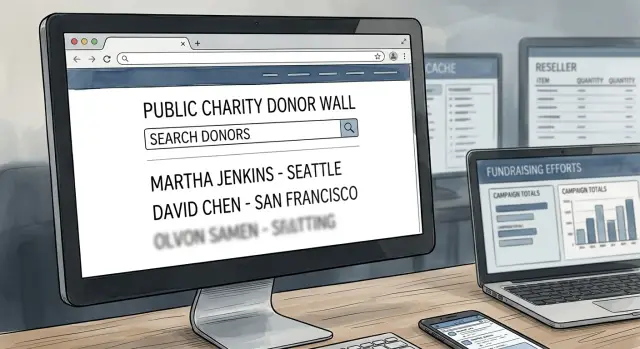
Why donor wall pages become a privacy problem
A donor wall looks like a thank-you note. Online, it can work more like a public record.
When a page shows your full name next to your city, it gives strangers a clean identity match. A common name gets much easier to pin down once a location is attached. Search engines can index the page, show it in results, and keep a text snippet around long after you stop thinking about the donation.
Many donors assume the audience is small: other supporters, a few staff members, maybe people already following the campaign. That is not how a public webpage behaves. Once it is live, it can show up for neighbors, employers, data collectors, or anyone searching your name.
The problem gets worse because donor pages often stay online for years. A school drive, hospital fund, or local nonprofit campaign may end quickly, but the page can linger. Even a $10 or $25 gift can leave a public trail that lasts far longer than the appeal itself.
Once that trail exists, it can connect with other public data. A full name and city may be enough to match a home address, employer, age range, relatives, or social profiles on other sites. The risk is not the same for everyone. Still, for teachers, health workers, abuse survivors, public-facing staff, or anyone trying to stay less visible online, the exposure can feel very real.
That is the real privacy issue. The donation is not the problem. The problem is that a thank-you page can act like a directory entry, and directory-style data tends to spread. One public page can be copied, cached, scraped, or resold long after you forgot it was there.
How the record spreads
A donor wall entry rarely stays in one place. Once your full name and city appear on a public page, other systems can copy them before anyone notices.
Many nonprofits use fundraising software that creates campaign pages, team pages, and donor recognition pages by default. A staff member may think they posted a small acknowledgment. In practice, the software may also generate a public page that search engines can crawl, and that page can stay online for months.
After that, the record can move in quiet ways. Search engines may keep cached donor pages even after the charity edits or removes the original. Public pages can be scraped by companies that build marketing files. Spreadsheets, email tools, event lists, and vendor uploads create extra copies inside normal fundraising work. List resellers can then combine your name, city, and donation context with data they already hold.
A small example shows how easy this is. You donate to a school fundraiser and leave the default display setting unchanged. The page shows "Jordan Lee - Austin." A few weeks later, the school hides donor names, but the earlier version still shows up in search results. By then, a data company may already have copied the page and added Jordan's name and location to a larger contact record.
The export side is easy to miss. A public donor wall is only one source. The same details can travel through mailing tools, event files, and vendor systems. Every handoff creates another copy, and extra copies are hard to track.
That is why a simple edit does not fully solve the issue. Removing the page at the source helps, but it does not pull back cached pages, old email files, or reseller records. The first page may be gone while the trail stays live somewhere else.
What these pages often reveal
Many people expect a donor wall to show a first name and maybe an initial. In practice, a lot of pages show more than that. A common setup is a full name beside a city or neighborhood, and that is often enough for a stranger to figure out who you are.
Some pages go further. They may show an exact gift amount or a tier such as "$500-$999." They may include a tribute note naming a spouse, parent, child, or memorial honoree. Some even add search and filter tools that let anyone sort by year, campaign, amount, or last name.
That is where donor wall privacy stops feeling abstract. "Alex Romero, Tucson" may look harmless on its own. Add a school name, a tribute note, or an older campaign page, and the match gets much easier.
Gift amounts matter more than many donors expect. Exact numbers can hint at income, savings, or a major life event. Even a range can place someone in a category that feels too personal, especially in a smaller town where names are easier to match.
Tribute notes are often the most revealing part. A line such as "In memory of Robert and Ellen Park" or "For Lily's treatment fund" can expose family names, health issues, religious ties, or the reason someone gave. People usually write those notes to be kind. They do not expect them to sit on a searchable public page.
Search tools change the risk too. Without them, a donor wall is just a long page that few people will read closely. With a search box, it becomes a quick directory. Someone can type a surname, filter by city, and scan years of giving in seconds.
Older pages make this worse. One gala page might not say much. Five archived pages can show where you live, what causes you support, how much you tend to give, and which family names connect to yours.
A simple example
Maria gives to a local hospital campaign after a family member gets care there. During checkout, a small note says donors may be thanked publicly unless they choose to stay anonymous. She misses it. A few days later, a thank-you page lists her full name and city.
That may sound minor. It is only one line on one page. But privacy problems often start with details that look harmless on their own.
The hospital uses fundraising software that builds public donor pages automatically. Maria's entry may appear on the main campaign page, a separate donor wall page, and a search engine snapshot. Now her name is tied to a city, a cause, and a date that anyone can search.
A few weeks later, Maria notices it and asks the charity to remove her name. The staff does. The live page is fixed, and the hospital thinks the issue is closed.
But search results can still show the old text for a while. A cached page may keep the same snippet even after the site changes. If someone searches Maria's full name, they might still see "Maria Santos, Phoenix" in results and click through to an older copy or archived version.
There is another problem. Before the page was edited, a list reseller copied the public entry into a mailing database. That record can be grouped with other signals, like ZIP code, age range, or likely interests, then sold to groups looking for donor leads. Maria starts getting fundraising mail from charities she has never heard of.
At that point, removing the original page helps, but it does not clean up the copies. The hospital removed one source. Search caches, archives, and reseller databases may still keep the record alive.
That is why a public donor wall entry should be treated like published personal data, not a simple thank-you note. Once it spreads, one small mention can turn into a long cleanup job.
How to check your exposure
Start with a plain search, not a privacy tool. Put your full name in quotes, then add your city. That catches the most common pattern: a public page that shows "Jane Smith, Denver" or a campaign entry with a gift amount, event name, or tribute note.
Then try a few narrower searches:
- "Full Name" "City"
- "Full Name" "Charity Name"
- "Full Name" "Campaign Name"
- "Full Name" donor
- "Full Name" fundraiser
If you have a common name, add one detail at a time. Your city, employer, school, or the cause you gave to can narrow results fast. If you changed your name, search the old one too.
Do not stop at the main results page. Check image results because donor walls are sometimes saved as event graphics, scanned programs, or screenshots posted by supporters. Check PDFs too. Annual reports, gala brochures, and campaign summaries often list donors in a format search engines can still read.
Older search results matter as well. A charity may remove your name from the live page, but an older copy can stay visible for a while in search results. Cached donor pages, archived snippets, and copied pages on other sites can keep the record around after the original is gone.
Before you ask for removal, save proof. It is boring, but it saves time later. Take a screenshot of the page and the search result. Save the page title, the date you found it, the exact search you used, and any visible details such as your city, gift range, or campaign name. A simple folder is enough if you name each file clearly.
If you find your data in several places, track them one by one. That includes the charity site, mirror pages, PDFs, and search results.
What to ask for when you want it removed
When you contact a charity, be direct. A small edit is often not enough. If your full name and city appeared on a donor page, ask for the public page to be removed entirely, not just shortened.
That matters because old copies can stick around. A page with your first name removed may still leave your last name in the page title, archive, or search snippet. Full removal is usually the cleaner fix.
A short message can cover most of what you need:
Please remove my donor page and any public copies, including search caches and vendor-hosted pages. Please also mark my account so my name is not published in future donor walls or recognition lists.
Be specific about search results. The charity may control the page, but the result can still linger for days or weeks. Ask them to remove the page, add a noindex rule if needed, and request cache clearing for old versions. If they use a third-party fundraising service, ask them to make the same request there too.
The vendor question is easy to miss. Many charities run campaigns through outside fundraising software, and that software may host its own donation pages, honor rolls, or archived campaign pages. Even if the charity deletes one record, the vendor may still have a live copy or an older page that search engines already picked up.
It also helps to ask for a future-facing change. Say clearly that you do not want your name published in donor walls, annual giving pages, or public recognition lists going forward. If they have a donor preference setting, ask them to mark your account as anonymous for all future gifts.
Keep your note polite, but do not be vague. Clear language is easier to act on and easier to follow up on later.
Mistakes that keep the record alive
One reason this is hard to fix is simple: people remove the first page they find, then assume the record is gone. In many cases, that only clears one copy.
A common mistake is deleting a donor profile but missing the campaign page, event page, or yearly donor list that used the same data. Fundraising software often creates more than one public page from one donor record. Your name might disappear from a profile page while staying live on a gala page or an archived donation roll.
Another mistake is handling it with one phone call and no written record. A staff member may say they will remove it, then the request gets lost when shifts change or the work is passed to a vendor. If you do not keep notes, it is much harder to follow up or prove what was requested.
Keep a few details each time you ask for removal: the date and time, the page title or screenshot, the person or email address you contacted, what they agreed to remove, and when they said it would be done.
People also forget cached pages. Even after the live page changes, a search engine can still show an older snapshot for days or weeks. That creates a false sense of progress. You see the old result and assume the charity ignored you, or you stop after the live page is fixed and leave the cached copy untouched.
The last mistake is stopping after one search result disappears. Personal data moves around. A page may drop out of one search engine but still sit on another, on a mirrored campaign page, or in a reseller database that copied the donor wall earlier.
A small example shows how this happens. Someone gets their name removed from a nonprofit donor page on Monday. By Friday, the main result looks cleaner, but the annual fundraising page still shows their full name and city, and an old cached page still appears when relatives search for them.
The fix is dull, but it works: remove every version you can find, keep requests in writing, clear cached copies, and check again after the first result disappears.
Before your next donation
A donation form can feel routine. You pick an amount, add your name, maybe type a tribute, and move on. But if the charity uses a public donor wall, those details can end up on a page that search engines, fundraising software, and other sites pick up later.
A quick pause before you donate can save a lot of cleanup. Ask one direct question first: will this donation appear on a public page? Some groups show donor names by default. Others give you a choice, but the checkbox is easy to miss.
Then look closely at every field on the form. If city, employer, or job title is optional, leave it blank. Those details make it much easier to match the listing to you.
A short checklist helps:
- Check whether public recognition is turned on by default.
- Choose "anonymous" or use initials if the form allows it.
- Skip optional fields like city, employer, and title.
- Keep tribute or memorial text general.
- Save a screenshot of your privacy choice and receipt.
Tribute text deserves extra care. A line like "In honor of Sarah Miller from Austin, marketing director at Westlake Dental" gives away far more than most people mean to share. Warm, personal wording can turn into a neat public profile once it lands on a donor page.
If the form does not make the privacy setting clear, email or call before donating. That small pause is worth it. Staff can often mark your gift as anonymous manually, even when the online form is clumsy.
One more habit helps: use a separate email address for donations if you can. It will not stop a public donor wall by itself, but it can make it harder to connect your donation record with other data later.
What to do next
Start with a short cleanup plan and keep it simple. That usually works better than a big one-time push.
If a donor page used your full name and city, send the removal request, then check again in two to four weeks. Search results often lag behind the page itself. A charity may remove the page quickly, but cached copies and scraped entries can stay visible for a while.
Keep one basic log as you go. A notes app or spreadsheet is enough. Write down the page you found, the date you contacted the site, what you asked for, and whether they replied. When the same record shows up again later, that log saves time.
Then recheck your name every few weeks with a few search variations: your full name with your city, your name with the charity name, and your name with an old campaign or gala title. You are looking for repeats, not perfection.
If the record has already spread beyond the original page, manual cleanup gets tedious fast. That is where a service like Remove.dev can make sense. It removes personal data from more than 500 data brokers and keeps monitoring for re-listings, which is useful when a donor wall entry has already moved into wider people-search and broker databases.
The main point is simple: treat donor wall exposure like any other public data leak. Remove the source, look for copies, document every step, and check again later. That steady approach usually works better than assuming one deleted page solved the whole problem.
FAQ
Why does my name show up in search results after I donated?
Because many donor walls are public webpages. Search engines can index the page, keep a snippet in results, and hold onto an older copy for a while even after the page changes.
Can a donor wall show my gift amount or personal note?
Sometimes, yes. Some pages show an exact amount, while others show a giving range. Tribute notes can also reveal family names, health details, or the reason for the gift.
Can I ask the charity to remove my name?
Yes. Ask them to remove the public page, any vendor-hosted copy, and any public recognition tied to your donor record. Also ask them to mark your account as anonymous for future gifts and request search cache clearing if old results still appear.
If the charity deletes the page, is the problem fixed?
Not always. Deleting the original page is a good first step, but cached search results, archived pages, and scraped copies can stay around. That is why you should check again after the page is gone.
How do I check whether a donor wall page is exposing my information?
Start with your full name in quotes and add your city. Then try your name with the charity name, campaign name, donor, or fundraiser. Check image results and PDFs too, and save screenshots before you contact anyone.
Why is my full name and city such a privacy risk?
A full name and city make it much easier to match you to other public records. From there, someone may connect your address, employer, relatives, or social profiles, especially in a smaller city or town.
What should I do before my next donation to avoid this?
Use the anonymous option if the form has one. If it does not, ask staff to mark the gift as anonymous, leave optional fields like city and employer blank, and keep tribute text general so it does not read like a public profile.
Are old search snippets normal even after my name was removed?
Yes, that can happen. Search engines often keep older snapshots for days or weeks after a page is edited or removed. The site can ask for cache clearing, but it may still take some time for results to update.
What if I have a common name and cannot tell which result is mine?
Add one detail at a time, like your city, employer, school, or the charity name. If you changed your name, search the older one too. That usually narrows results without pulling in too many unrelated pages.
When does a data removal service make sense for donor wall exposure?
If your donor entry has already spread beyond the charity site, manual cleanup gets tiring fast. A service like Remove.dev can remove your data from over 500 data brokers and keep checking for re-listings, which helps when the record has moved into broker databases.