How data brokers identify you from city and age alone
How data brokers identify you often starts with your city and age range. See how those clues get matched with other records to build a full profile.
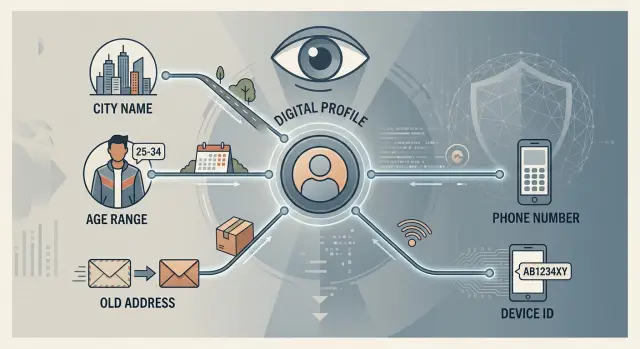
Why two small details can point to one person
A city and an age range sound vague. Often, they are not. In a small town, or even in one part of a large city, those two details can shrink a huge population to a short list.
That is why brokers rarely need your full name at the start. They begin with scraps: a ZIP code, an age band like 35-44, a phone number seen once, or an old address from a signup form. Each scrap is weak on its own, but the mix gets specific fast.
This is how data brokers identify you without a complete profile. They look for records that overlap enough to suggest they belong to the same person. If one source says "woman, 40-44, lives in Columbus" and another shows a household in Columbus with a matching age range, the broker already has a solid lead.
Then the testing starts. A likely match gets checked against a phone number, address history, property records, voter files, shopping data, or the names of relatives. They are not guessing in the dark. They are comparing patterns.
Say there are twelve people in one neighborhood who fit the same age band. Remove the renters who moved last month, add a phone number tied to one address, then match a relative's name from another file. The list can drop to one person very quickly.
A broker does not need every detail to be perfect. One record might have your age off by a year. Another may use an older address. That usually does not stop the match if the rest lines up.
The profile gets stronger each time a new detail fits. One match becomes two, then four, then a near-certain profile with a name, home address, past addresses, relatives, and contact details. That is why partial identifiers are so useful to people-search sites and other data broker profiles. Small facts connect, and once they connect, the rest is often easy to fill in.
What counts as a partial identifier
A partial identifier is a detail that does not name you by itself, but still helps narrow the field. One piece may look harmless. Put a few together, and a broker can get much closer to a full profile than most people expect.
Location is a common starting point. Your city, ZIP code, or even a neighborhood name can show up in mailing lists, property records, voter files, app data, and marketing databases. None of that says "this is definitely you," but it can shrink a huge population to a much smaller group.
Age works the same way. Brokers may not know your exact birth date at first. An age band like 25-34 or 45-54 is often enough to sort records, and that range can come from ad data, survey answers, loyalty programs, or public records tied to your household.
Other details often act like glue between records. A first name and last initial, household size, a past address, or the names of likely relatives can all help join one file to another. If one file says "Maria, 30s, Austin" and another says "M. Lopez, same ZIP code, lives with two relatives," a broker may treat those as the same person. Add an old address or a family member's name, and the guess gets much stronger.
Past addresses are especially useful. People move, but old records stick around for years. A broker can connect a current city to an older address, then pull in phone numbers, home ownership data, and household links attached to that earlier record.
Relatives make matching easier too. If a likely parent, spouse, sibling, or roommate appears in another database, that relationship can confirm that two partial records belong to one person.
That is a big part of how data brokers identify you. They do not always need one perfect record. Often, they just need enough small details that line up.
How the matching usually works
A data broker usually does not start with your full profile. It often starts with one thin record: a city, an age range, and maybe a first name or last initial. That does not look like much, but it is enough to begin a search.
The next step is simple. The broker pulls in other records that might fit the same person. Those records can come from address history files, phone records, household databases, app data, voter files, shopping data, or old account lists. Each source is incomplete on its own. Together, they start to look like one person.
This is how data brokers identify you in practice: they compare small overlaps and give each overlap some weight. A match gets stronger when two records share the same city, a similar age band, the same street name, a last name seen at that address, or a phone number tied to that household. In some cases, a device ID or advertising ID helps connect online activity to an offline record.
No single clue has to be perfect. Brokers are often satisfied with a record that is very likely right, not proven beyond doubt. If one file says 34-38 and another says age 36, that may be close enough. If one source has an old apartment and another has a newer one in the same area, that can still support the same profile.
Once a likely match wins, the broker keeps that profile and adds more facts to it. A missing phone number from one source fills a gap. An address from another adds history. A household file may attach relatives or roommates. Over time, the profile gets fuller, even if no source ever had the whole picture.
Then the process repeats. When fresh data arrives, the broker checks whether it fits an existing profile better than starting a new one. If it does, the profile grows again.
That is why partial identifiers matter so much. A city and age range are not the end of the story. They are the opening move.
Why city and age range narrow the pool so fast
City and age range sound broad, but they usually are not. For a data broker, those two details can cut a huge population down to a short list very quickly.
Place does a lot of the work. In a smaller city, there may be only a few people in the same age band with similar records. Even in a bigger city, brokers rarely look at one city record in isolation. They compare local address history, household records, and people-search entries until one person starts to fit better than the rest.
Age range removes a large part of the local population right away. If the range is only five years wide, that can rule out most adults in the area. Add a city, and the pool gets much smaller than most people expect.
A few extra details make it smaller still. A past move can connect the same person to two cities. An uncommon surname can remove most close matches fast. A spouse, parent, or roommate at one address can make one record much more likely than the others. A long-term home address is often easier to pin down than a recent one.
That is why rough location often turns precise. A record may start with something broad like "Sacramento, age 40-44." Then one address appears with the right age band, a matching household member, and an older address in another database. At that point, the guess is no longer broad. It points to one home.
You do not need a rare name for this to happen. Ordinary details can be enough when they line up. That is what makes partial identifiers so effective. Each one feels harmless on its own, but together they narrow the list until only one person still fits.
It also explains why people-search sites can feel creepy without doing anything magical. They are often just combining small, boring facts until the result looks exact.
A simple example of a full match
Picture a broker starting with a thin record: someone in Tulsa, age 30-34. No full name yet. That sounds vague, but it is enough to begin.
A second file adds one more piece. It shows that at a certain Tulsa address, only one resident falls into that same age band. Now the broker has a strong guess. City plus age range did not identify the person by itself, but it narrowed the pool enough to make the next match easy.
Then a shopping or marketing file lands on the same address. This one includes a personal email and a mobile number tied to that home. The broker does not need perfect proof. If the age range, city, and address all line up, the email and phone often get attached to the same profile.
Public records make the picture even clearer. A property record, court filing, or voter-related record may connect that address to relatives, older addresses, and date ranges for past moves. Once that happens, the broker can link the current household to earlier households and pick up more names, phone numbers, and email addresses from older databases.
By the end, what started as two small clues may turn into a profile with a full name, current and past addresses, a phone number, an email address, and likely relatives or household members.
That is a simple version of how data brokers identify you. They rarely rely on one perfect source. They stack partial identifiers until the odds point to one person.
This is also why people-search sites can feel oddly accurate even when the first detail seems harmless. A city and age range may look too broad to matter. In practice, those two facts can be the thread that pulls in the rest.
It is also why personal data removal works best across many sources at once. If one record disappears but the same address, age band, and contact details stay exposed elsewhere, the profile can be rebuilt.
Where the extra details usually come from
The missing pieces usually do not come from one secret source. They come from many ordinary places that get stitched together over time.
A common source is mobile app data. Many apps collect location signals and an advertising ID tied to your phone. On its own, that may look anonymous. In practice, a broker can see where that phone sleeps at night, where it goes during the day, and which stores it visits. A device that spends every night at one address is often easy to connect to a real person.
Public records fill in a lot. Property records, voter files, court records, business filings, and other public databases can attach a name to an address. They may also reveal past addresses, the year a home was bought, and the names of relatives or other people in the same household.
Retail and marketing data adds another layer. If you have ever signed up for a store discount, entered a giveaway, or given an email for a receipt, that data may end up in broker lists. Those lists can include email addresses, shopping categories, household guesses, and estimated income ranges. The guesses are not always right, but they give brokers more ways to test a match.
Then there are old people-search pages. These sites often keep past phone numbers, old home addresses, and possible family links online for years. Even outdated details help because they create a trail. A past number can connect to an old account, and an old address can connect to a property record.
The messy part is that each source only needs to be partly right. One app shows a nightly location. One record shows who lived there. One people-search page lists a past phone. Together, that is enough to build a very solid profile.
Common mistakes that make matching easier
Most people do not hand over their full identity in one place. They leave bits of it everywhere. That is enough.
A common mistake is using the same email for shopping, app signups, newsletters, and social accounts. One store may have your name and home address. A social profile may show your city and a photo. A forum account may reveal a hobby or employer. If the same email touches all three, the match gets much easier.
Public profile details also do more work than people think. Your birthday month, city, school, graduation year, and old username can narrow a huge crowd into a short list fast. Even if you never post your full birth date, a birthday month plus a city and school can still make matching much easier.
Old bios and forgotten profiles create the same problem. A stale about page, alumni entry, event listing, or neighborhood directory can keep your name tied to a location long after you have moved. Brokers love old records because they help connect past and present versions of the same person.
The same goes for phone numbers that follow you for years. If the number shows up in older records and newer ones, it becomes an easy bridge between them.
A quick self-check before you panic
Start with a calm scan, not a rabbit hole. You are trying to see how easy it is to connect small facts, not document every page on the internet.
Search your full name with your current city first. Then try older towns, older states, and common short versions of your name. A surprising number of people-search sites still tie someone to places they left years ago.
As you check results, focus on the details that make a match feel certain. One site may show only an age band, like 35-39. Another may show an address from 2018. A third may list two relatives. On their own, those bits can seem harmless. Together, they can point to one person fast.
Keep notes as you go. Write down which sites show your age range, address history, relatives, old phone numbers, or old email addresses. Pay close attention to details that repeat across more than one site. Repeated details are what make partial identifiers stick.
A small table in your phone or on paper is enough. You only need four columns: site name, what it shows, whether it looks current, and whether the same detail appears elsewhere.
For example, if one page shows "Alex Carter, Seattle, age 40-44" and another shows an old Tacoma address plus a sibling's name, you already have a strong match trail. Add an old Gmail address from a third page, and the guess becomes much firmer.
What to do next if you want less exposed data
Once you see how data brokers identify you, the next step is practical: remove the details that help one record connect to another. You do not need to wipe yourself off the internet. You need to make matching harder.
Start with the public details you can control. Hide your birth year, personal phone number, and home address anywhere they appear publicly. Clean up old profile pages, bios, and forum accounts that mention your city, employer, school, or relatives. Replace public contact details with a work email, business number, or contact form when possible. Then send opt-out requests to people-search sites and data brokers, and keep a record of each request.
This matters because brokers often do not need much. A city, an age range, and one extra clue like a phone number or old street name can be enough to lock onto the right person.
A lot of people miss the older pages that keep feeding those profiles. Think about old real estate listings, alumni pages, event registrations, local directories, and cached bio pages. Even one outdated page can reconnect your name to a current broker profile.
Check again after life changes. A move, a new job, a marriage, or a new phone number often creates fresh records. If the same number follows you from one city to another, or your new employer page lists your location, matching gets easier again.
Doing all of this by hand works, but it takes time, and some brokers add records back after buying new data. If you do not want to manage that process yourself, Remove.dev automates removals across more than 500 data brokers and keeps monitoring for re-listings.
That ongoing check is the part many people miss. A one-time opt-out helps, but it does not always last.
FAQ
Is my city and age range really enough to identify me?
Yes, often they are. In many places, a city plus a five- or ten-year age band cuts the pool down fast. Add one more clue like an old address, phone number, or relative, and a broker can often narrow it to one person.
What counts as a partial identifier?
A partial identifier is a detail that does not name you by itself but still helps narrow the field. Think of a ZIP code, age range, past address, first name with last initial, or a relative tied to your household.
Why do old addresses matter so much?
Old addresses connect your past and present records. Once a broker links an old home to your current city or phone number, it can pull in older databases and fill out the rest of your profile.
Can brokers still match me if some details are wrong?
Usually, yes. Brokers do not need every record to match perfectly. If most of the details line up, a small error like an age off by a year or an outdated apartment often will not stop the match.
Where do brokers get the extra details from?
They usually pull from ordinary sources, not one secret file. Public records, app data, store signups, marketing lists, people-search pages, phone records, and household databases all add small pieces.
What makes matching me much easier?
The biggest problem is reuse. If the same email or phone number shows up across shopping accounts, apps, social profiles, and old signups, it becomes an easy bridge between records.
How can I check if brokers already have a strong match on me?
Start with a few searches, not a deep dive. Look up your full name with your current city, then try older towns or name variations. Check whether age bands, past addresses, relatives, phone numbers, or old emails repeat across multiple sites.
What should I remove or hide first?
Begin with public facts that link records together. Hide your birth year, home address, and personal phone number where you can, then clean up old bios, profile pages, and forum accounts that show your city, school, employer, or relatives.
Do opt-outs last, or do records come back?
Not always. A one-time opt-out can help, but new data sales and re-listings can bring your record back. That is why periodic checks matter, especially after a move, job change, marriage, or new phone number.
How long does data removal usually take?
Manual removals can take a while because each broker has its own process. With Remove.dev, most removals are finished in 7–14 days, and the service keeps watching for re-listings so the same record does not quietly return.