Clean up your data before testifying with safer steps
Learn how to clean up your data before testifying with fast wins, safer proof, and a simple review of records that can expose your address.
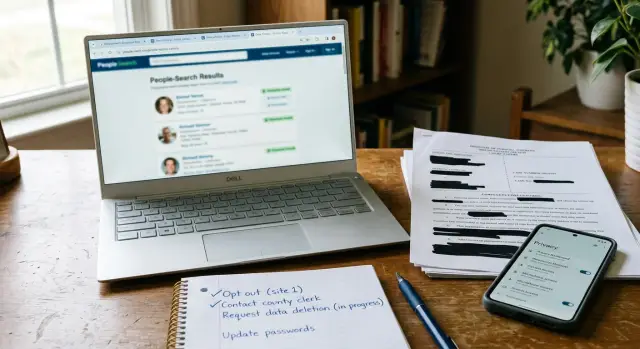
Why this matters before you testify
Testifying can put your name in front of the one person you most want to avoid. If an abusive ex decides to search for you, they usually do not need much. A court date, a full name, an old phone number, or one forgotten account can be enough to trace where you live now.
Most people are not found through anything dramatic. They are found through public records, people-search sites, old shopping accounts, delivery apps, social profiles, and bios that were never updated.
Small leaks add up fast. A phone number can connect to a data broker profile. An old bio can mention a city. A food delivery profile can still hold a current address. Even a casual review account or resale app can reveal a neighborhood, pickup area, or recent move.
One detail on its own may look harmless. Put a few together and a clear picture forms. That is often how stalking works in real life.
The goal is not to erase every trace of your past in one day. The goal is to reduce exposure quickly without losing evidence you may need later. That means being careful before you delete accounts, edit messages, or remove posts that may help show a pattern of abuse, threats, or contact.
A safer approach is simple: save proof first, then limit what points to your current location. Take plain screenshots of account settings, profile pages, and search results. Keep copies somewhere your ex cannot access. After that, start changing or removing the records most likely to expose where you are now.
Start with anything tied to your present address, not every old detail at once. A stale college profile from ten years ago is usually less urgent than a current shipping address in a retail account, a data broker listing, or a public record that shows where mail can reach you.
A quick example makes the risk clear. If someone finds your full name in a court calendar, matches it to a people-search site, then sees the same phone number on an old marketplace profile, they may get your current city within minutes.
This work can feel heavy, especially right before a hearing. Still, trimming the obvious leaks first can lower the risk quickly and give you more control over what an abusive ex can find.
Start with the fastest wins today
When time is short, begin with the places most likely to expose where you live now. A quick cleanup can lower risk the same day, even before you deal with harder records.
Start with a plain search
Search your full name, your phone number, and your current address in a private browser window. Try them one by one, then try your name with your city. Write down which sites show your address, phone number, employer, family members, or photos tied to your location.
You are looking for quick fixes, not a perfect sweep. An old profile bio, a marketplace listing, or a people-search page can be enough to point someone to your current address.
Then check your social accounts. Remove your city, neighborhood, workplace, school, and any contact details from bios and profile fields. Look at older posts too. A moving photo, a new pet tag, or a "finally home" caption can give away more than it seems.
Lock down the accounts closest to daily life
Turn off location sharing on your phone and inside the apps you use most. Check family tracking apps, shared photo albums, map sharing, fitness apps, and any cloud photo backup that adds location data. If someone once had trusted access, remove them completely instead of just hiding your location.
Next, go through the accounts that quietly store your address. Shopping apps, payment apps, marketplace accounts, ride and food delivery services, pharmacy accounts, and old shared accounts from the relationship are common trouble spots. Delete saved addresses you do not need. Remove public profile details. Check whether pickup locations, receipts, or account pages still reveal where you live.
Change passwords on anything your ex may still know, especially your email, phone carrier, Apple or Google account, banking logins, and social media. Sign out of other devices where you can. If an account offers two-factor login, turn it on and use a method your ex cannot access.
If people-search sites already show your details, start data broker removal right away. Manual requests work. If you do not have the time or energy to chase dozens of broker sites, Remove.dev can handle removals across more than 500 brokers and keep checking for relistings afterward. The point today is simple: stop the easy exposure first, then work through the longer list with a clearer head.
Records that often show your current address
Do not start with every account you have ever opened. Start with the places most likely to show where you live now, or where you lived very recently. Those records spread quickly because other sites copy them.
People-search sites and data brokers are near the top of the list. They often pull the newest address from public records, store accounts, and credit-related sources. If one site has your current address, many others may copy it within weeks.
Brokers are only part of the problem, though. Your address can still sit in public pages and old customer accounts that no broker controls.
Places to check first
Start with court forms, witness paperwork, and any mailing fields used for notices or follow-up letters. Even when a public filing does not show your address on the front page, a mailing field, attachment, or service form might.
Then check property tax pages, assessor records, rental listings, and landlord portals. If you moved recently, an old listing may still be live with a unit number, photos, and move-in dates. Business filings can create the same problem if you freelance, run a side business, or used your home address for mail.
Do not skip the ordinary apps you use every week. Delivery services, food apps, pharmacy accounts, store profiles, school directories, clubs, volunteer pages, and donation records often keep contact details long after you forget about them.
A simple example: you remove your address from a few search sites, but your meal delivery app still has your new apartment saved, your PTA directory lists your phone number, and your LLC filing uses your home address. That is three separate ways to find you.
Focus on the records that update often, the ones tied to mail, and the ones you forgot you joined. Those usually expose the newest address first.
How to keep proof without exposing yourself
Save proof before you change anything. Once a listing, account page, or post is edited or removed, the original record may be gone. A quick screenshot taken first can save stress later.
Try to capture the full screen, not just the middle of the page. That usually shows the site name, the page itself, and the date on your device. If the date is not visible, save the page as a PDF or take a second screenshot that includes your clock.
A simple rule helps: keep one private original and share a safer copy only if someone asks for it. The original stays untouched in your folder. The copy can be cropped or redacted if your lawyer, advocate, or the court does not need every personal detail.
What to save after each change
After you submit a removal request, save the proof right away. These records are easy to lose if you wait. Keep the screenshot of the page before removal, the confirmation page or PDF, any email that confirms the request or completion, and a short note with the date, site name, and what you changed.
If you use Remove.dev, save the dashboard record or confirmation email after each request. That gives you a clear timeline without forcing you to dig through your inbox later.
Keep everything in one private folder protected with a strong password. Clear file names matter more than people think. "2026-03-10_people-search-site_before" is much better than "screenshot1."
It also helps to make two folders: "Originals" and "Shared copies." That small step lowers the chance of sending the wrong file when you are tired or rushed.
Ask what format will actually help
Courts, lawyers, and advocates do not always want the same thing. One person may prefer a PDF with the full page and date. Another may want the email trail that shows when you acted. Ask before you organize too much, because the best proof is the proof they can use.
For example, if a broker site showed your current address on Monday, take the screenshot first. Then submit the opt-out, save the confirmation page, and keep the email that follows. In one folder, that gives you a short, clear record: the listing existed, you asked for removal, and the site responded.
A simple example before a hearing
A week before court is not the time for a full privacy overhaul. It is enough time to catch the records most likely to expose where you live right now.
Picture this. You open a private browser window and search your full name, old names, phone number, and city the same way a stranger would. Within 20 minutes, you find three problems: a people-search site with your current address, a shared calendar event that still shows your home street in the location field, and a store account profile with an old pickup address that is still visible in search results.
Stop before you start changing things. Save proof first.
Take evidence screenshots that show the page, the date, and what information is exposed. Crop out anything that reveals your own account email, browser bookmarks, or other open tabs. If a page includes your full address, save one full screenshot for your records and one cropped version you can share more safely if needed.
After that, fix the easiest items. Send the data broker removal request right away. Then log into the calendar and remove the home address from old invites, recurring events, and default meeting locations. Last, check the store profile, loyalty account, and saved shipping details. Delete old addresses if you can, or switch them to a safer mailing option.
If court paperwork is still being prepared, ask the clerk or your lawyer whether a safer mailing address is allowed. In some cases, you may be able to use your lawyer's office, another approved mailing address, or a court-approved alternative instead of your home. Do not guess. Ask what the court will accept.
A few days later, run the same searches again. The calendar fix may disappear from search results quickly, while a broker listing can stay live a bit longer. If the broker page is still up, keep the first screenshot, note the date of your request, and follow up.
This kind of pass will not erase every trace. It can still remove the obvious risks before the hearing, and that alone can lower the chance that your current address is easy to find when timing matters most.
Mistakes that can expose you again
The first round of removals is only part of the job. A few common habits can put your current address back into public records, people-search sites, or shared accounts within days.
One of the biggest mistakes is using the same email address and phone number everywhere. Data brokers match records across sites by those details. If an old shopping account, a utility login, and a voter lookup all point to the same phone number, one fresh record can reconnect the rest. If you can, keep a separate email for court, legal, and safety matters, and avoid giving out your main number unless you have to.
Posting live updates is another easy way to give away where you are. A photo in front of the courthouse, a check-in near your hotel, or a quick story saying you are on the way to a hearing can narrow your location fast. Even if your address is not visible, the timing and place can be enough for someone who is already watching.
Proof matters too. People often find an exposed record, panic, and click around trying to fix it before they save evidence. That can erase the clearest proof of what was public. Before you edit, request removal, or close the page, save a screenshot that shows the full page, the date, and the site name.
Shared accounts cause trouble more often than people expect. Old family cloud folders, shared calendars, phone plans, and retail accounts can still expose your location through shipping updates, event invites, or synced contacts. Even a family photo album can reveal a school name, street sign, or appointment notice. Check who still has access, then remove or replace shared spaces that are no longer safe.
Another mistake is assuming one removal request fixes the problem for good. Many listings return after a new data sale or a fresh public record update. If you are handling removals yourself, set reminders to recheck the same sites. If you want ongoing help, Remove.dev continuously monitors for relistings and sends new removal requests when your data shows up again.
A simple rule helps: remove, save proof, then monitor. If you skip the last step, the same record can come back when you least expect it.
Quick check the night before
The night before a hearing, do one last sweep and then stop. Keep it focused. You are not trying to fix everything at once. You are checking the places most likely to expose your current address or other details that can be used to track you.
This final pass should take about 20 to 30 minutes. Set a timer if that helps. Tired people make messy changes, and last-minute panic can create new problems.
A simple order works well. Search your full name, old names, phone number, and current address in a search engine. If one result still shows your address, take a screenshot for your records and note it. Do not spend the night chasing every listing.
Then open the apps you use most for deliveries, shopping, rides, and payments. Check saved addresses, shipping defaults, contact info, and any public profile details. Old apartment numbers and work addresses can stay buried in these accounts.
Read the court papers you plan to bring. Make sure the mailing address, return address, and contact details are the ones you mean to share. A simple typo or an old form can undo a lot of careful work.
Check your social accounts with fresh eyes. Review who can see your posts, your friends list, and photos where other people tagged you. Old birthday posts, moving photos, and event check-ins often reveal more than people expect.
Put your proof in one clean folder or envelope. Bring copies that show what matters and hide what does not. Add a short note with any loose ends, such as one broker listing still live or one account you still need to update.
Keep your proof simple. If you took screenshots, crop them so they show the page, date, and the exposed detail without showing extra tabs, bookmarks, or your own logged-in account details. Printed copies can be easier to handle under stress.
One small habit helps a lot: check your phone lock screen and notification previews. Delivery alerts, payment receipts, and account emails can flash your address in plain view when someone is standing nearby.
If you are using a removal service, glance at the status and note anything still pending. Then leave it there for the night. Sleep matters. Tomorrow, you want clear notes, clean proof, and no surprises in the records you carry.
What to do next if the list feels too big
If your list feels messy, that is normal. This kind of cleanup gets overwhelming fast, especially when every search turns up another old profile, voter record, or people-search page.
The fix is simple: make the list smaller. Do not aim for a perfect cleanup in one day. Aim for the next safe step.
Cut the job into a short list
Write down only the sites and records that still need work. Keep it plain and short so you can read it under stress. A basic log should include the site or record name, what it shows, what action you took or still need to take, and whether touching it could alert your ex.
That last note matters. Some changes are low risk, like sending a removal request to a data broker. Others carry more risk, such as updating a public record or contacting an office that might mail something to an old shared address. If a step could alert your ex, stop there and ask an advocate or lawyer before you do anything.
A simple log helps more than people expect. Keep the date, what you changed, and what happened next. If you later need to explain your safety steps, that record is much easier to trust than memory alone.
For example, your log might say: "March 8 - requested removal from Site A. March 10 - listing gone. March 14 - checked again, still gone." Short notes are enough.
When the manual work is too slow
Sometimes the problem is not knowing what to do. It is having too many places to deal with.
If manual data broker removal starts eating hours you do not have, it can help to hand off part of the job. Remove.dev automatically finds and removes personal data from more than 500 brokers, and most removals are completed within 7 to 14 days. You can also track requests in real time through its dashboard, which is useful when you need a clean record of what has already been done.
If you found 20 places that still expose you, pick one safe action today. Maybe it is finishing your log. Maybe it is sending two removal requests. Maybe it is asking your lawyer which records you should not touch without advice.
Small steps count. A calm, tracked cleanup is better than a rushed one that creates new risk.
FAQ
What should I fix first if my hearing is only a few days away?
First, search your full name, old names, phone number, and current address in a private browser window. Save screenshots before you change anything, then fix the leaks most tied to where you live now, like people-search pages, delivery apps, shopping profiles, and shared calendars or location sharing.
Should I delete old posts and accounts right away?
Not yet. Save proof first so you do not lose a record that may help show contact, threats, or stalking. After that, remove or edit the pages that point to your present location and leave less urgent cleanup for later.
Which records are most likely to show my current address?
The usual places are people-search sites, court mailing fields, property or rental pages, delivery and shopping accounts, pharmacy profiles, school directories, and business filings that use your home address. Put the newest, mail-related records at the top of your list because they tend to expose the latest address fastest.
How do I keep proof without exposing even more of my info?
Use a full-page screenshot or save the page as a PDF so the site name and date are visible. Keep one original copy untouched and make a second copy you can crop or redact before sharing. Clear file names and one password-protected folder make this much easier later.
Can shared accounts still give away my location?
Yes. Old family plans, shared calendars, cloud photo albums, synced contacts, and retail accounts can still reveal shipping updates, event locations, or photos with location data. Remove the other person's access fully, change passwords, and sign out other devices where you can.
What should I check on social media before court?
On social apps, remove your city, workplace, school, and contact details from bios and profile fields. Then check older posts, tags, check-ins, friends list visibility, and any live location or map sharing that could show where you are now.
What if a court form asks for an address?
Ask the clerk or your lawyer what the court will accept before you put anything down. In some cases, a lawyer's office or another approved mailing address may be allowed, but guessing can create a problem. Read every form closely so an old address does not slip in by mistake.
Will one opt-out request keep my information hidden for good?
Usually not. Broker listings often come back after a new data sale or public record update, so you need to recheck the same sites. If you do it yourself, set reminders and save the dates of your requests and follow-ups.
Is a removal service worth it if I feel overwhelmed?
If the work is piling up, handing off broker removals can save time and energy. Remove.dev removes data from more than 500 brokers, most removals finish in 7 to 14 days, and it keeps checking for relistings so you do not have to start over each time.
What should I do the night before I testify?
Keep it short. Do one last search for your name, phone number, and address, check the apps that store addresses, read the papers you plan to bring, and put your screenshots or printouts in one clean folder. Also check your phone lock screen so delivery or payment alerts do not flash your address in view.