Contractor deposit scams after permit filings explained
Contractor deposit scams often start after a permit filing exposes your name, address, and project details. Learn the warning signs and safer next steps.
Why this scam catches people off guard
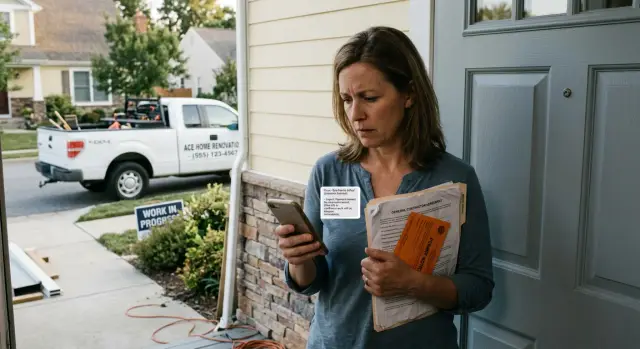
This scam works because it shows up at exactly the right moment. You file a permit for a remodel, roof repair, fence, or HVAC job. A day or two later, someone calls or texts and says they're with the crew, the supplier, or the scheduling office. They ask for a deposit, a materials payment, or a fee to hold your spot on the calendar.
That timing does most of the heavy lifting. You're already thinking about estimates, start dates, inspections, and who might contact you next. So the message doesn't feel random. It feels like part of the job.
It gets more convincing when the caller knows what kind of work you planned. If they mention a bathroom remodel or a new deck, a lot of people stop questioning the call. It seems like something only the real contractor would know. But permit filings can reveal more than most homeowners expect, and phone lookup data can help a stranger match an address to a mobile number.
That's why this trick feels personal. The caller may use your name, your street, and the project type. They might sound rushed in a believable way, like someone calling between jobs. A text like "We can lock in the tile order today if you send the deposit now" sounds normal when you're already waiting for updates.
The real crew may have nothing to do with it. In many cases, the contractor doesn't even know it's happening. Someone else saw the permit, found a phone number, and stepped into the gap before the real company reached out.
Good timing, a few real project details, and a familiar request for money make this kind of permit-related scam easy to believe.
What a permit filing can reveal
A permit filing can expose more than many homeowners realize. In lots of cities and counties, permit records are public and easy to search. They can include your name, street address, and a short description of the job, such as roof repair, bathroom remodel, electrical work, or a new fence.
That gives a scammer a strong starting point. They don't have to guess whether work is happening. They already know where the job is, what kind of work is planned, and that you're probably waiting for calls, texts, deliveries, or crew updates.
Dates help too. Permit records often show when the permit was filed, issued, or updated. That makes it easier to time the contact. A call right before the expected start date feels routine, especially if it sounds like a normal note about materials or scheduling.
Some records also show the contractor's name, company name, or permit number. With that, a caller can sound believable fast. A script doesn't need to be clever. It only needs a few real details: your address, the project type, rough timing, and sometimes the contractor's name.
Once a scammer has that, they can fill in the rest with a phone lookup or a people-search profile and call as if they're already part of the job. A homeowner hears familiar details and drops their guard.
The permit record isn't the whole scam. But it gives fraudsters a believable reason to contact you, and that's often enough to get a rushed payment. Cutting down how often your phone number appears next to your address on people-search sites can make that script much harder to use.
How scammers get from your address to your phone
A permit record isn't a phone book, but it gives scammers the first thing they need: a real address tied to recent work.
From there, the rest is often cheap and easy. People-search sites and data brokers try to match homes with phone numbers, email addresses, names, and even relatives. A scammer doesn't need a perfect match. They just need one number that seems likely to reach someone in the house.
In practice, it usually works like this: a public permit filing shows the property address and the type of project. A people-search site ties that address to one or more phone numbers. The records may be messy or out of date, but they still help. A broker page might list a spouse, parent, adult child, or even a former resident. The scammer starts calling or texting until someone answers.
That's why the contact can sound so specific, even when the person has never spoken to your real contractor. They may know your street, the kind of work being done, and a last name linked to the property. That's enough to sound familiar for the first half-minute.
Old data makes this worse. If a site shows your address next to your brother's phone number from three years ago, the scammer may call him first. If it lists a previous owner, the scammer may learn a surname and use it in the next call. Small scraps add up quickly.
One public record plus one phone lookup can make a fake story sound real. "We're at the house on Maple Street for the kitchen job and need the deposit cleared before we unload materials" sounds much more believable than a random spam call.
That's why careful people still get fooled. This usually isn't hacking. It's public records mixed with stale broker data.
If your number is spread across people-search sites, the jump from permit address to direct contact gets much easier. Remove.dev focuses on removing personal data from data brokers and monitoring for relistings, which can reduce how often your phone number shows up next to your home address.
What the fake contractor contact usually looks like
The first contact usually sounds ordinary. The caller says they're from the contractor's office, the install crew, or a project coordinator. They may know your address, the type of job, and roughly when work should start. That small bit of truth is often enough to lower your guard.
Then the ask comes quickly. They say the crew is scheduled soon, materials are waiting, and they need a deposit today to lock in the date. The pressure matters as much as the lie. If you feel pushed to pay before you can think, that's part of the script.
The reason they give is usually simple and believable. They might say the supplier won't release materials until the deposit clears, the permit window is tight, the crew is already on the calendar for tomorrow morning, or accounting needs payment before dispatch can confirm the job.
The payment method is another warning sign. Instead of sending a normal invoice or taking a card through the business office, they push Zelle, a wire transfer, gift cards, crypto, or a payment app tied to a personal account. Those payments move fast and are hard to reverse.
Scammers also try to keep you from slowing down. They may text instead of email, call from a local-looking number, or say the office is "busy" so you should pay them directly. Some add a small threat, like a supply delay, a missed permit deadline, or a cancellation fee if you don't act within the hour.
A real contractor can explain the charge, send paperwork, and give you time to confirm it. A fake one wants speed.
A simple example: the bathroom remodel call
Picture a homeowner who just filed a permit for a bathroom remodel. The filing includes the property address, the type of work, and often the contractor's name. A scammer doesn't need much more.
Two days later, the homeowner gets a call from someone who sounds calm but hurried. He says he's with the remodeling crew and mentions the permit number, the street name, and the plan to replace the shower, tile, and vanity. That level of detail makes the call feel real right away.
He even knows the contractor's business name because it was listed on the filing. Then he adds one more believable detail: the crew can start a day early, but only if the materials payment goes through before noon.
The request is framed as a last-minute fix. He says the supplier is holding the custom tile and the plumber's slot will be lost if the deposit isn't sent now. He asks for payment by bank transfer, a payment app, or gift cards split into smaller amounts because the office card terminal is supposedly down.
That's where people get pulled in. The homeowner was already expecting calls about the job. The name matches. The address matches. The work matches. Even the timing fits.
Then one detail breaks the story. The caller says the old tub is being replaced, but the real plan is to keep the tub and only redo the shower walls and floor. Or he asks for payment to a personal account that doesn't match the company name. Sometimes the biggest clue is even simpler: he refuses to let the homeowner hang up and call the office back.
That moment matters. Scammers often sound most convincing right before they push for money. If the payment request feels urgent, personal, or oddly secret, trust that reaction.
How to check if the crew is real
The fastest way to catch this scam is to stop responding to the message in front of you. A text that mentions your project address, permit date, or contractor name can feel real. That's the point.
Pause the call or text thread and start over with contact details you already trust. Use the number from your signed contract, invoice, previous email, or business card. Don't call the number that just texted you, even if the name looks right. If the company is real, the main office can tell you in a minute whether the message came from their team.
When you call, ask plain questions. Did anyone from your staff contact me today? Do you ever request deposits by text or by payment app? What is the exact amount due, and how do you normally collect it? Who is scheduled to come out, and when?
Ask about the payment method before you send anything. Many real contractors want deposits through the method listed in the contract, not through a random Zelle, Venmo, gift card, or wire request sent at the last minute.
If the office says, "Yes, Mike is on your job tomorrow," keep going. Ask for Mike's full name, what vehicle the crew uses, and whether any extra deposit is actually due today. If the person who contacted you can't match those details, stop there.
A quick phone call can save you a lot of money. If you get a text saying the tile crew can lock in your bathroom remodel slot if you pay $800 now, call the office number from your contract. If the receptionist says they don't collect same-day deposits by text and your crew is already scheduled, you've got your answer.
When something feels rushed, treat that as a warning sign. Real crews may be busy, but they can still confirm who they are, when they're coming, and how they get paid.
What to do if you already paid
Move fast. The first few hours matter most, especially if you paid by bank transfer, debit card, Zelle, Cash App, Venmo, or another fast payment method. A scammer who gets one deposit often asks for a second payment soon after, so stop the conversation and start protecting your money.
Call your bank, credit card company, or payment app right away and say the payment was tied to fraud. Ask whether they can freeze, reverse, dispute, or flag the transaction. If you paid by credit card, a chargeback may be possible. If it was a bank transfer, ask whether they can place an urgent recall.
Then save everything before messages disappear. Keep the texts, call logs, voicemails, invoices, receipts, screenshots, profile names, and the number that contacted you. If the person claimed to work for a real contractor, save that claim too.
After that, call the real contractor using the number from their official paperwork, not the number that contacted you. If scammers are using the company's name, the business can warn other customers and tell staff what to watch for.
You should also file reports with local police and consumer fraud offices. Keep the summary simple: when the permit was filed, when the call came in, what number they used, what they asked for, and how you paid. A report doesn't always get your money back, but it creates a record that can help with disputes and pattern tracking.
If the scammer keeps texting, don't send more money to "unlock" a refund or finish the job. That's a common follow-up trick. Save the messages, then block the number after you've made your reports.
Mistakes that make the scam easier
This scam works because it feels connected to something real. You filed a permit, you're expecting calls, and then someone reaches out with your address already in hand. That one detail makes plenty of people drop their guard.
The first mistake is answering in a rush because the caller sounds informed. An address from a permit filing is not proof that the caller works for your contractor. Once you start filling in blanks about the project type, start date, or company name, the scammer gets the rest of the script for free.
Another common mistake is trusting caller ID. A local area code feels familiar, but it doesn't mean much. Numbers can be spoofed, and the name on the screen can be wrong.
Payment is where small caution matters most. People get pushed into sending a deposit through a method that's hard to undo because the caller says the crew is about to leave the warehouse or needs materials that day. If the money goes to a personal payment account, a wire, or another fast transfer, getting it back can be difficult.
A short pause would stop many of these scams. Use the number you already had before the surprise call came in - the one from the written estimate, the invoice, the business card, or prior emails. Don't call back the number from the text or voicemail that asked for money.
Another mistake is treating pressure as normal. Real contractors may ask for deposits, but they don't need you to act in two minutes or keep the payment secret from the office. That kind of urgency is a warning sign.
If you remember one habit, make it this: when money is involved, break the conversation and restart it on your terms.
A quick check before any deposit
Most of these scams work because the message feels almost right. The name sounds familiar, the job matches your project, and the timing lines up with when you expected someone to show up.
Before you send any money, stop and check four things:
- Is the request coming from a new number you don't recognize?
- Does the payment method match your contract?
- Have you called the office yourself to confirm the amount and due date?
- Is someone asking for money before arriving on site when that was never part of the plan?
A real company should be able to confirm basic facts right away: your name, the job address, the scheduled date, the deposit amount, and how they normally collect payment. If the caller gets vague, changes the amount, or says the office is "too busy" to verify it, don't pay.
One detail matters more than people think: who started the contact. If you didn't call them first, slow down. A scammer only needs a permit record, your address, and a phone number from a lookup site to sound convincing.
A solid rule is simple: no deposit goes out until the number, amount, and payment method all match your contract. If even one part is off, hang up, call the company directly, and reset the conversation.
Next steps to reduce repeat targeting
These scams get easier when a stranger can match your address, project, and phone number in a few minutes. The best defense is to make that trail harder to follow.
Start with your real contractor. Ask how deposits are handled before work starts, not when someone calls in a rush. Get the amount, payment method, company number, and billing name in writing. If a caller asks for a different payment app, a new number, or a same-day transfer, treat that as a stop sign.
It also helps to keep permit details, start dates, and photos of permits off social media. Even a casual post like "crew starts Tuesday" tells a scammer when to call and what story to use. Saving the official contact info for your contractor ahead of time makes it much easier to ignore an incoming number you don't recognize.
Phone number exposure matters more than it seems. If your number is tied to your address on people-search sites, a scammer can sound believable very quickly. Searching your own phone number and home address can show you where that information is exposed.
If your details keep resurfacing, manual cleanup gets old fast. Remove.dev is built for exactly that problem: it removes personal data from over 500 data brokers, uses direct integrations, browser automation, and privacy-law removal requests, and keeps monitoring for relistings after removal. Less public data means fewer easy clues for the next caller.
You don't need perfect privacy. You just need to make the scammer's job harder.
FAQ
How do scammers know I have a remodel or repair planned?
Often from public permit records. A scammer can see your address, the type of work, and sometimes the contractor name, then use that to make a call or text sound real.
Can a permit filing really expose details about my project?
Yes, in many places they do. A permit record may show your name, street address, job description, filing date, and sometimes the company tied to the work.
How do they get from my address to my phone number?
Usually through people-search sites and data brokers. They match addresses with phone numbers, old household records, relatives, and past residents, so one address can lead to a working number fast.
What are the clearest red flags in a fake contractor deposit request?
The biggest warning sign is pressure. If someone wants money right away, pushes Zelle, wire transfer, gift cards, crypto, or a personal payment app, stop and verify before you send anything.
What is the safest way to check if the crew is real?
Hang up or stop replying, then call the company using the number from your contract, invoice, past email, or business card. Ask if they contacted you, what amount is due, and how they collect payment.
Do real contractors ever ask for a deposit by text?
Sometimes, but it should match what you already agreed to in writing. If the payment method, amount, or account name is different from your contract, treat it as suspicious until the office confirms it.
What should I do if I already paid?
Move fast and contact your bank, card issuer, or payment app at once. Tell them it was fraud, ask about a reversal or dispute, save every message and receipt, and report it to the real contractor and local authorities.
Can I trust caller ID or a local phone number?
No. A local-looking number can be spoofed, and the name shown on your screen can be wrong. Caller ID is never proof that the person works for your contractor.
How can I lower the chance of getting targeted again?
Start by getting deposit rules in writing before work begins. Keep contractor contact details saved, avoid posting permit or schedule details online, and never send money from a surprise call or text.
How does removing my data from broker sites help with this scam?
It cuts down one of the easiest ways a scammer makes the story believable. Remove.dev removes personal data from over 500 data brokers and keeps watching for relistings, so your phone number is less likely to sit next to your home address online.