Customer referral privacy risks for couples and families
Customer referral privacy risks grow when invite forms, shared discounts, and reward portals tie partners and relatives into one visible profile.
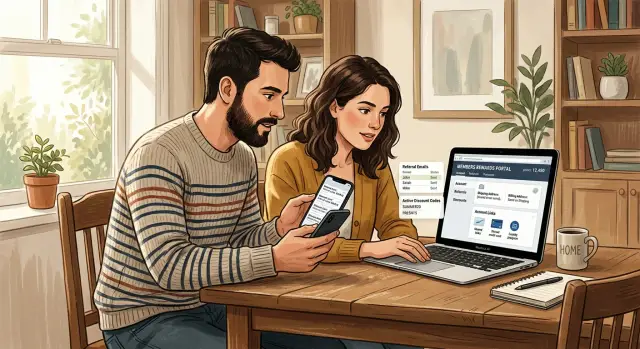
Why a simple invite can expose a household
Referral programs look harmless. "Invite a friend, get $10" sounds like a quick discount, not a privacy risk. But the moment an invite is sent, a company can start connecting two people through the details it already has.
That link gets stronger when both people share an address, use the same Wi-Fi, have the same last name, or pay with cards tied to one billing address. A referral is no longer just about a reward. It can suggest that two people live together, shop together, or share money.
Apps do this all the time. A grocery service may see that one person referred another and both accounts ordered to the same apartment a few days apart. A ride-share app may notice the same pickup address and a similar surname. A meal kit company may spot two "new" customers using different emails but the same payment card. One signal means little on its own. Put a few together and the picture gets clear.
Both sides are affected. The sender's account helps confirm someone else's identity and location. The receiver's new account can be attached to an older household record without any obvious warning. If either person wanted to keep shopping habits, address history, or contact details separate, that gap shrinks fast.
Shared discounts make this worse. A promo for "new customers only" pushes companies to check whether the second person is really new. That often means matching home address, phone number, card details, device data, and past orders. The reward system also keeps a record of who invited whom, when the invite was used, and whether the bonus was paid.
For couples and families, that is the real issue. A simple invite can create a fresh data point that links two profiles, and that link can stay in place long after the discount is forgotten.
Where the link usually starts
The first step is often an invite form. A company asks for your partner's or relative's name, email, and sometimes a phone number so it can send the offer for you. That single action can connect two people inside one system, even if only one of them had an account before.
The referral itself adds another layer. Many discounts do not use a plain coupon code. They include a sender account ID, referral token, or campaign tag that points back to the original customer. If your spouse or sibling uses that code, the company does not just see a new signup. It sees who sent them.
At that point, the record may show that Account A invited Account B, that both later used the same home address, or that both opened emails from the same IP range. None of that proves a household by itself. Together, it is usually enough.
Reward portals make the connection tighter. These dashboards often keep both sides of the referral in one place: who sent the invite, who accepted it, when the discount was used, and whether a reward was paid. If either person updates their profile later, that shared record may still sit there for years.
Follow-up emails add more copies of the same link. One message tells the sender the referral was accepted. Another tells the recipient who invited them. A reward notice confirms it again. A family discount can end up creating matching records in email tools, billing systems, analytics software, and customer support logs.
A common example is easy to picture. One partner refers the other to a meal kit, phone plan, or home service. The recipient uses the code, both get a credit, and the company now has a clean chain of data tying two adults at one address together.
Once that chain gets pushed into marketing systems or passed to data brokers, removing it takes a lot more effort than sending the invite ever did.
What companies can learn from these details
To a company, a referral does more than track a coupon. It can show who likely lives together, who buys for whom, and which accounts belong to the same home.
A shared address is one of the easiest clues. If two accounts use the same home address, or even the same delivery address for gifts and repeat orders, the company may treat them as part of one household whether it says so or not.
The same happens with payment and device data. If two people use the same bank card, the same phone, or the same laptop to open referral emails and claim discounts, the pattern starts to look less like two separate customers and more like a couple, relatives, or roommates using connected accounts.
Some offers make that connection even more obvious, especially partner discounts, family bundles, gift referral credits, and promos that openly say "invite someone you live with." In those cases, the campaign itself labels the relationship.
That matters because the link can stay around long after the reward is paid. A company may keep it in fraud checks, account notes, ad targeting groups, or support logs. Months later, the same household record can shape who gets a promo, which account is flagged, or whose details appear side by side when someone contacts support.
A simple example makes the point. One person sends a referral to their partner. The partner signs up with a different email but uses the same apartment address and the same card for a first purchase. That gives the company three matching signals, and that is often enough.
These links can also show up in people-search and broker databases later. Once a household connection exists in one system, it can spread. Services like Remove.dev can help remove exposed personal data from broker sites, but it is still better to avoid creating extra links in the first place.
A simple example from one shared home
Take a common setup: Jordan already uses a meal kit app and sends a referral to Sam, their partner. It feels harmless. One person gets a discount, the other gets account credit, and dinner shows up next week.
The privacy issue starts before Sam places the first order. The invite form may collect Jordan's account ID, Sam's email address, the referral code, the time the invite was sent, and whether Sam opened the message. If Jordan types Sam's name instead of only an email address, that adds one more personal detail to the record.
That small step creates a new connection inside the company's system. Jordan and Sam are no longer separate customers. They are tied together by an invite, a shared offer, and, later, often the same home address.
When Sam signs up, the link gets stronger fast. The app can match the referral code to Jordan's account, then add Sam's full name, phone number, delivery address, and payment details. If the first box goes to the apartment Jordan already uses, the company can reasonably infer that both people live together or at least share a household.
The rewards page adds another layer. It usually logs the full sequence: invite sent, invite accepted, first purchase made, reward unlocked, payout issued. Even if only Jordan looks at that page, the record behind it may still show both names, both account IDs, the order value, and the date the discount was used.
That is when a shared discount stops looking like a coupon and starts looking like a durable household map.
If the app sends event data to ad platforms, email vendors, payment processors, or analytics tools, that map can spread beyond the meal kit company. Jordan's name may end up attached to Sam's email. Sam's order may reinforce Jordan's home address. Over time, both profiles may point to the same household, spending habits, and relationship.
That is how one dinner invite can turn into a much wider record than either person expected.
How to audit your referral trail
Most people remember the discount, not the record it created. A quick audit can show which apps tied two people together, what details they stored, and whether an old invite still lives in a rewards page.
Start with a plain note or spreadsheet. List every app, store, bank, service, or subscription where either person sent or accepted an invite. Then search old inboxes and text threads for words like "invite," "refer," "bonus," "credit," and "reward." After that, open account pages and look for referral history, earned credits, saved friends, family settings, and household profiles.
Write down what each side can see. That includes names, email addresses, phone numbers, order status, account credits, and shared address details. Be picky. Small scraps matter. A first name plus a street address is often enough to connect two people, especially if the same pair shows up again in food delivery, shopping, travel, or finance apps.
Look beyond the main inbox. Archived mail, deleted folders, and old SMS threads often hold the first referral code. Inside apps, check the places people usually ignore: wallet, promotions, billing, loyalty, family, and account settings. Some programs also show whether the other person completed a purchase, when the reward posted, or how much credit was earned.
A simple table helps. Track the app name, who sent the invite, who accepted it, the date, the code, the reward, and the exact data shown to each person. If you spot the same email domain, phone number, card ending, or home address across several programs, mark it. Repeated details make household links much easier.
Take screenshots before you change or delete anything. If you later close an account or remove a household profile, you may want proof of what the program displayed.
When the list is done, sort it by risk. A store app that kept only a code is a minor issue. A service that shows both names, a shared address, and referral payouts deserves attention first.
Mistakes that make the link easier to spot
Some household links are created by the company. Others come from everyday habits.
A shared email inbox is one of the easiest ways to connect two accounts. If one person signs up with a joint address and the other uses that same inbox for reward notices, password resets, or discount codes, the match is hard to miss. Even if the names differ, one inbox history can tie them together.
Using the same phone number on two accounts is even more revealing. Phone numbers often stay the same for years, and many companies use them for login recovery, verification, and support. If two people enter one number for separate profiles, the referral system does not need much else to guess the relationship.
Device habits matter too. One person may send invites from a work laptop, then check the reward page later on a home tablet. A partner might redeem the offer on the same Wi-Fi, in the same browser, or on a device already used for the first account. None of that proves a household on its own, but it adds another clue.
A quick self-check can catch the obvious weak spots:
- one inbox used for signups and reward emails
- one phone number reused across two profiles
- invites opened on shared devices or home networks
- old reward accounts left active after the promo ends
That last one is common. People assume the risk ends when the discount ends. Often it does not. Old reward dashboards, saved payment info, referral history, and support tickets can keep the link alive long after the offer is over. Deleting an app is not the same as closing the account.
If you want less exposure, start with the boring fixes. Separate contact details, log out of old accounts, and close reward profiles you no longer use. Those steps remove some of the easiest dots for a company to connect.
What to change before you send another invite
Most referral tools are built to feel quick. That speed hides the trade-off. If a company gets your relative's contact details along with your account details, it can connect both sides of a household much faster than most people expect.
Before you enter anything, read the full form. Many invites start with an email field, then ask for a phone number, date of birth, address, or access to your contacts on the next screen. If the reward is small and the form wants more than an email address, it is usually smarter to stop.
A short check helps:
- Does the invite ask for more than one contact detail?
- Will it pull names, birthdays, or contacts from your phone?
- Is profile sharing or a family setting turned on in your account?
- Would a normal gift work better than a referral?
That last question matters. A direct gift purchase can do the same job without creating a trackable link in a reward portal. If you want to help your partner, parent, or adult child save money, buying the item or sending a gift card is often cleaner than using a referral code.
It also helps to check account settings before you share anything. Some stores and apps quietly leave profile sharing, family plans, or shared order history turned on. If you do not need those features, switch them off first. Otherwise, one invite can expose names, saved addresses, and buying habits at the same time.
Picture a common case. You send a discount to your sister, but the form asks for her full name and mobile number. Your account already has a shared delivery address because she sometimes receives packages at your place. Now the company has two names, two contact points, and one home address in the same record.
The safest invite is usually the plain one: one email address, no synced contacts, no family mode, and no extra profile data. That will not remove every privacy risk, but it cuts down the easiest links before they are created.
A quick household check
You do not need a full audit to spot the easiest links. Fifteen minutes with your partner or another family member is often enough.
Sit down with both inboxes and account lists open. The goal is simple: figure out which companies can already tell that two people in one home know each other.
Start by comparing the stores, apps, and service accounts where one person invited the other. Shared discounts and referral bonuses usually leave a clear trail. Then search old email for words like "invite," "reward," "credit," and "refer," along with the company name. Those messages can sit in inboxes for years, even after the offer ended.
Next, open the reward or loyalty page and check what it stores. Some portals keep a home address, mobile number, payout details, or the name of the person who referred you. If you find a live link, decide whether it still needs to exist. Sometimes the fix is basic: delete an old message, remove a stored number, or shut down a spare account.
A small example makes this easier to spot. One person refers their spouse to a grocery app. The new account uses the same home address for delivery and the same card for payment. Months later, both accounts still show the referral credit, both inboxes still hold the invite email, and the rewards page still lists a phone number. That is more than enough to connect the household.
Start with the places that mix marketing with account data. Retail apps, food delivery, travel rewards, and subscription services are common trouble spots. They often keep referral records longer than people expect.
Small cleanup steps will not erase every record, but they do make the household easier to separate going forward.
What to do next if the data is already out there
Once referral data is out, the first job is to break the link and clean up what you can still control. Old invite logs, redeemed discounts, and reward accounts can keep connecting two people long after the original offer is forgotten.
Start with the company that ran the referral program. If your name, email, phone number, or home address was used in invites or shared rewards, ask support to delete old referral records and remove any unused credits tied to that activity. Some companies will only close the visible account unless you ask about referral history too, so be direct.
Focus on a few basic steps:
- delete saved household details from account settings
- remove secondary emails, partner names, and old shipping addresses
- ask for unused rewards, invite history, and referral notes to be erased
- save copies of your request and the company reply
Then look at where that data may have spread. Referral details often move into marketing tools, fraud checks, and broader customer profiles. That means one shared discount can turn into a longer record that connects relatives, partners, or roommates at the same address.
People-search sites are worth checking next. Search for your full name, your partner's name, old email addresses, and your home address. If a referral program helped create or confirm a household link, broker sites may start showing both people together even when neither of you meant to share that much.
If you find listings, remove the easy ones first and keep a record of what you submitted. Some sites process removals quickly. Others relist the same details a few weeks later, which is why one round of cleanup is often not enough.
If that turns into a time sink, Remove.dev can help. It removes exposed personal data from over 500 data brokers worldwide and keeps monitoring for relistings, which is useful when an old household link has already spread beyond the original company.
The goal is simple: cut the company-side record, clear the account settings that keep feeding it, and watch for your names, emails, or address where they should not appear.
FAQ
Is sending a referral code really a privacy risk?
Yes. A referral can tie two accounts together through the invite itself, then strengthen that link with shared address, Wi-Fi, payment details, or order history. What feels like a small discount can leave a long-lived record of who knows whom and who may live together.
What details usually connect two people in one household?
The usual matches are a home address, phone number, payment card, device, and the referral token that points back to the sender. Even small details like the same Wi-Fi, surname, or delivery pattern can make two profiles look like one household.
Do companies need proof that two people live together?
No. One signal rarely means much, but a few matching signals are often enough for a company to treat two accounts as related. That can happen without any clear notice on the screen.
Are shared discounts riskier than regular promo codes?
Often, yes. "New customer" offers push companies to check whether the second account is really separate, so they may compare address, card, device, phone number, and past orders. The reward record also keeps a direct link between the sender and recipient.
What's the safest way to help a partner or relative save money?
A simple gift is usually cleaner than a referral. If you still want to use an invite, stick to the plain version with one email address and avoid contact syncing, family mode, shared profiles, or extra details like phone number and date of birth.
How can I check which referrals have already linked us?
Start with old emails and texts. Search for words like "invite," "refer," "reward," and "credit," then open the app's referral or loyalty page to see what it still shows. Write down which names, emails, phone numbers, addresses, and credits appear on both sides.
What mistakes make household matching easier?
Shared habits make it easy. Using one inbox, one phone number, the same card, or the same device for both accounts gives a company extra clues. Leaving old reward accounts open after the offer ends can keep that connection alive.
Does deleting the app remove the referral record?
Usually not. Deleting the app removes it from your phone, but the company may still keep the account, referral history, support notes, and reward records. You need to close or clean up the account itself if you want the link reduced.
What should I ask a company to delete?
Ask them to remove referral history, unused credits, saved household details, old shipping addresses, and any notes that connect the two accounts. Be direct, because some companies will close the visible account but keep the referral log unless you mention it.
What if our names and address already show up on broker sites?
Check people-search and broker sites for both names, old emails, and your address. If the household link has spread, remove the easy listings first and keep records of your requests. If that takes too much time, Remove.dev can remove exposed personal data from over 500 data brokers and keep watching for relistings.