Data broker household links: how profiles get rebuilt
Data broker household links can let one relative's record refill your profile. Learn how it happens, what to remove first, and how to check for relisting.
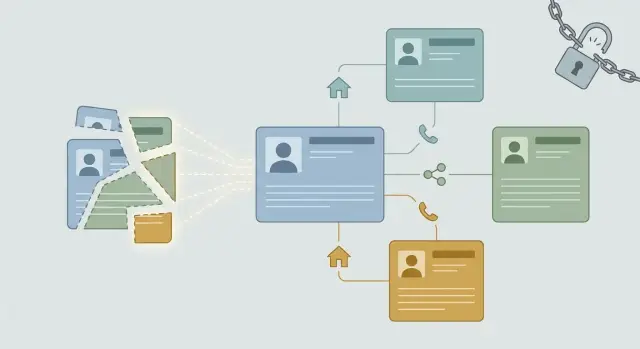
Why household links matter
A lot of people think a listing is only about one person. Usually it is not. On many people-search and marketing databases, one household record can connect several names at once.
If you once lived with a parent, partner, roommate, or adult child, that tie can stay in a broker's file for years. The address may be old, but the connection still works.
That is where the problem starts. A broker does not always need new information to rebuild a profile. It can pull pieces from related records and fill the gaps. If one file still shows a past address, a relative's name, or a phone number, another file can be rebuilt around it.
Old addresses are especially messy. A home you shared in 2018 can still connect your record to your father's, your spouse's, or your grown child's record today. Once those names sit under the same household, the broker may treat them like one cluster instead of separate people.
That is why data broker household links matter so much. You remove your listing, but the shared source stays live somewhere else. Another broker copies the same address, sees the family connection, and publishes your details again. It looks like your removal failed, but the source was never fully cleared.
A simple example shows how this happens. Say your profile disappears from one site, but your mother's listing still shows the house you both lived in. Another broker picks up that address, matches your name through the relatives field, and creates a fresh page for you. Nothing new was discovered. The system just reused an old connection.
That is also why removing one page rarely fixes the whole issue. You often have to deal with the linked records behind it, then keep checking for relisting. One successful deletion does not stop shared data from spreading again.
What brokers mean by a household
"Household" sounds simple, but brokers use it loosely. It often does not mean family. It usually means "people our records think belong at the same address, or used to belong there."
With data broker household links, the match often starts with address history. If two people show up at the same street address, even years apart, a broker may tie them together. A past apartment, an old family home, or a short-term rental can still feed that link.
The address is only one clue. Brokers often add other signals, such as the same last name, a shared landline or mobile number, mail or signup data tied to one property, and records that place both people in the same address timeline.
That is why former homes can matter almost as much as your current one. If your brother still appears at an address you left five years ago, your name may get pulled back into that record set. A listing can look "updated" even when it is really a recycled guess.
Mistakes happen because the matching is broad, not careful. Roommates get grouped together. Ex-partners can stay attached long after they split. Adult children who moved out may still appear in a parent's relatives field because old records keep circulating between brokers.
Picture a simple example. Maya shared an apartment with Erin in 2021. Maya later moved, changed her number, and removed several listings. Erin kept the old utility account and stayed visible in broker databases. A new broker may still connect Maya to that address, then rebuild a household record that makes them look linked today.
Once one linked profile stays live, it can refill another person's listing through shared address clues, surnames, or old phone data. That is why removals do not always stay gone after a single request.
How profiles get rebuilt
A removed listing does not always stay gone because many brokers do not rely on one record alone. They keep stitching together bits from public records, commercial data, and other broker pages. If one relative still has a visible page, that page can help refill yours.
This is the frustrating part of household data matching. Your profile may be gone on Monday, but the broker still sees your name next to a parent, spouse, sibling, or former roommate on another page. If that connection stays live, the site has enough to start rebuilding.
The pattern is usually simple:
- A relative's listing stays online with a shared address, landline, or mobile number.
- The broker matches that detail with your old record, even if your page was removed.
- It compares names, age ranges, and the relatives field to decide the records belong together.
- Blank spots get filled from the relative's page or from a fresh broker feed.
- Your listing returns, either under the same page or as a new profile with small differences.
The match does not need to be perfect. A broker may only need your last name, an address from two years ago, and a relative listed nearby. If your old page used to show your cell number, and your father's page still shows that same number, the site may treat that as enough proof to reconnect both records.
That is why relisting often looks messy. The new page may have the wrong age, an outdated city, or a partial phone number. Even so, it still exposes real personal information, and other sites can copy it.
If a listing keeps reappearing, the problem often is not the page you removed first. It is the linked record that never went away.
A simple family example
Picture a parent named Lisa. She removes her people-search listing, and for a while it looks like the problem is fixed.
But her adult son, Daniel, still has an old record online. His listing shows the same home address they shared years ago, plus a past landline that once belonged to the household.
That is how data broker household links usually work in real life. One person cleans up a record, while a relative's older listing keeps acting like a backup copy.
A few weeks later, another broker picks up Daniel's record from a different source. It sees the shared address, the family name, and a past phone number. That is often enough to guess that Lisa and Daniel belong in the same household group, even if they do not live together now.
Once that match is made, Lisa's details can start to come back. Her name may reappear next to the old address. Her phone number may return. On some sites, she may show up in a relatives field again because Daniel's record still points back to her.
This is why removals can feel confusing. Lisa did remove her listing. The problem is that the broker network kept another copy through Daniel's profile, and a different site rebuilt the connection later.
The delay matters too. Relisting does not always happen the next day. Data brokers buy, trade, and refresh data on their own schedules, so the rebuilt profile may show up two or three weeks after the first removal, sometimes longer.
A simple rule helps: if one family member is still exposed, the household trail is still partly exposed. Old addresses, shared phone numbers, and relatives fields tend to spill over the most.
Which details cause the most spillover
Some details spread across family records more than others. If you are trying to stop data broker household links, these are usually the trouble spots.
Past addresses are a big one. When several relatives lived at the same home, brokers often treat that address like glue. A child who moved out years ago can still get pulled back into a parent's listing because both names were once tied to that property, utility account, or voter file.
Phone numbers cause similar trouble, especially old landlines. One shared family number can connect parents, adult children, former spouses, and even roommates. Old mobile numbers create problems too when they were used on joint accounts, family plans, or school forms. If one record keeps that number, matching software may refill the others.
The relatives field is another common source of spillover. On many people-search sites, that field gives brokers an easy way to connect one page to another. If your sister's profile still lists you, your name can keep resurfacing even after your own page comes down.
Name variations also keep records alive. A maiden name, middle initial, shortened first name, or old married name can lead to duplicate pages. Those duplicates may look minor, but they often keep feeding the main profile after you think the job is done.
In practice, the worst records are usually the ones that combine several of these details at once: a shared address, a shared number, and a relative listed by name. Those pages do the most damage.
What to remove first
To break these links, start with the connectors. A plain profile with only your name is less risky than one that ties you to relatives, old homes, and shared contact details.
First, look for listings that show a relatives field. That single section can refill a removed page quickly. If your sister's page still names you, and both pages point to the same past address, a broker has enough to stitch the record back together.
Next, focus on old addresses, especially homes where several family members lived. One outdated address can connect parents, adult children, ex-spouses, and siblings in the same broker database.
Then go after shared phone numbers. A family landline, an old mobile on a shared plan, or a number used on school or utility records can connect several people at once. If that number stays on one page, other pages may come back with it.
After that, check for duplicates. Brokers often split one person into two or three records. You might see a maiden name, a shortened first name, a middle initial, or an old married name. Those extra pages are easy to miss, and they can keep feeding the main profile.
A short working order helps:
- Remove pages that list relatives by name.
- Clear records tied to shared past addresses.
- Delete shared phone numbers when you can.
- Check for duplicate pages under old or alternate names.
- Keep notes on aliases, old cities, and date ranges tied to each record.
Those notes matter more than people expect. The same person often appears a little differently across sites. If you have a record of old locations, names, and phone numbers, repeat listings are much easier to spot.
Mistakes that make records come back
The most common mistake is thinking one opt-out fixes the problem. It usually does not. A data broker can rebuild your listing from other records, old copies, or a relative's profile that still shows the same address, phone number, or household tie.
Another common mistake is removing only your own page and stopping there. That feels logical, but it leaves an easy path back. If a spouse, parent, or adult child still has a public listing with the same home address, a broker can connect the dots again.
People also miss duplicate entries. You might have one record under a full legal name, another under a shorter version, and a third under an old married name. If even one stays up, it can help rebuild the rest.
Smaller brokers are easy to overlook too. Many people focus on the big people-search sites and skip the lesser-known ones. That is a problem because brokers copy from each other all the time. One small source can keep feeding larger sites later.
Then there is the timing issue. A lot of people do one round of removals, see good results for a week or two, and assume the problem is over. But brokers refresh on different schedules. A profile that disappeared this month can return next month when another source updates.
The pattern is frustrating, but it is usually not random. If records keep coming back, one shared detail is still doing the work.
A short checklist for follow-up
Relisting often starts quietly. One old address, one shared phone number, or one relative's profile can reconnect everything. A quick follow-up check can catch the problem before a fresh listing spreads to more sites.
Use this routine after a removal request goes through:
- Search your full name with two older addresses, not just your current one.
- Search a close relative's name with your current city.
- Compare the relatives field on a few listings side by side.
- Watch for the same phone number coming back.
- Check again after a move, marriage, divorce, or name change.
This does not need to take long. For most people, 15 to 20 minutes is enough for one pass if you already know the names, addresses, and numbers that tend to resurface.
A small habit helps: keep a plain list of the details that reappear most often. If the same number or address keeps showing up, you have probably found the piece that needs extra attention.
If you are doing removals by hand, save dates and screenshots so you can spot patterns later.
Next steps if listings keep returning
If a listing comes back after removal, the problem usually is not that one broker ignored you. It is that the same shared details are still live somewhere else. One relative's record can refill another person's profile through an old address, a family phone number, or a possible relatives field.
Start with a simple map. Write down every relative tied to the same address history, shared landline, and reused mobile number. Include former addresses too. A record from six years ago can still feed a fresh listing today.
Then work the group, not just the person you first searched for. If your profile shows your brother, spouse, or parent at the same address, remove those linked records as a batch when you can. That cuts off one of the main paths for data broker relisting.
A practical order looks like this:
- List the shared details that appear again and again: addresses, phone numbers, relatives, and age ranges.
- Search each relative on the same broker sites where your record returned.
- Submit removals close together so one live profile does not refill another a week later.
- Recheck after each round and note which shared detail keeps resurfacing.
Do not stop after the first success email. Many brokers refresh from partner sources, so a removed profile can return when a linked record stays public elsewhere. Check again after a week or two, then once more after another short gap. Keep going until the same shared address or phone number stops showing up across the cluster.
If manual work starts eating your evenings, that is usually when outside help makes sense. Remove.dev handles removals across more than 500 data brokers and keeps watching for re-listings, which is useful when you are tracking several relatives and trying to figure out which shared detail keeps reopening the profile.
The goal is simple: stop treating each listing like a separate leak. Fix the shared links, and the repeat listings usually slow down.
FAQ
What is a household link on a data broker site?
A household link is a broker's guess that two or more people belong to the same home record. That guess often comes from a shared address, an old phone number, the same last name, or a relatives field on another profile.
Why did my profile come back after I removed it?
Usually, another record still had enough shared details to rebuild it. If a parent, spouse, sibling, or former roommate still shows your old address or phone number, a broker can stitch your profile back together from that live page.
Do old addresses really matter that much?
Yes. Old homes often stay in broker databases for years, and they still connect people who no longer live together. One past address can keep tying your name to a parent, adult child, or ex-partner long after you moved.
Which details usually cause the most spillover?
Past addresses cause a lot of problems, and shared landlines or old mobile numbers do too. The relatives field is another common source, and name variations like a maiden name or shortened first name can keep duplicate records alive.
Should my family members remove their listings too?
If your records are linked, yes. Removing only your own page often leaves an easy way back because a relative's public profile can act like a backup copy. It is usually better to handle the connected records around the same time.
Can brokers link me to the wrong person?
They can. Brokers often use broad matching, so old roommates, former partners, and even people tied to a short-term rental can end up grouped together. That is why some profiles look partly wrong but still expose real details.
What should I remove first?
Start with the pages that connect you to other people. A profile that names relatives, shows a shared past address, or keeps an old family phone number is usually more urgent than a thin page with only your name.
How often should I check for relisting?
Check again after the first removal goes through, then do another pass a week or two later. It also helps to recheck after a move, marriage, divorce, or name change because those changes often trigger fresh matching.
How can I tell if a relative’s record is rebuilding mine?
Look for the same old address, the same phone number, or the same relatives showing up again and again. Another clue is a new page that has small mistakes, like the wrong age or an outdated city, but still points to the same household history.
Is it better to do this by hand or use a removal service?
Manual opt-outs can work if you only have a few pages to fix. When several relatives are linked or listings keep returning, a service can save time. Remove.dev handles removals across more than 500 brokers, watches for re-listings, and most removals finish within 7 to 14 days.