Dating app privacy risks: what your profile gives away
Dating app privacy risks often start with small clues like reused photos, linked socials, and location hints that make you easier to find on broker sites.
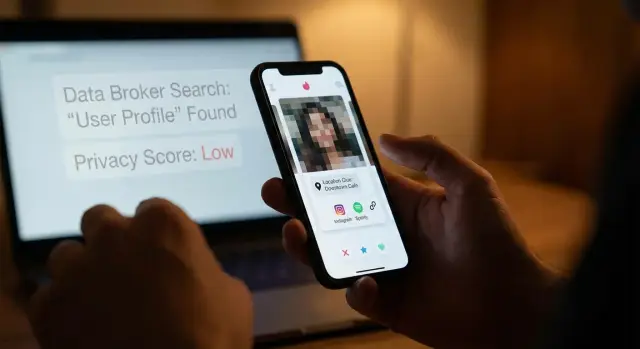
Why your profile can point to the real you
Most people treat a dating profile like a smaller, safer version of themselves. A first name, a few photos, a rough age, and a short bio can feel harmless. Often, it isn't.
A stranger does not need your full name to figure out who you are. They only need a few clues that fit together. A photo taken outside your building, a mention of your dog park, a college hoodie, and a linked Instagram account can narrow the search very quickly.
Each clue looks minor on its own. Together, they can point to one real person.
That is how privacy problems on dating apps usually start. It is rarely one huge mistake. More often, it is a pileup of small details. A reused selfie can match an older social profile. A joke about your commute can hint at your neighborhood. A specific job title can separate you from everyone else with the same first name and age range.
Once someone has that rough sketch, data broker sites can fill in the blanks. These sites collect and sell bits of personal data such as past addresses, relatives, phone numbers, email addresses, and date-of-birth ranges. They are built to connect fragments, and a dating profile can give them a starting point.
The chain is usually simple. Someone sees your profile and spots a photo you also used somewhere else. That second account includes your city and a username. A broker-site search for that username, city, and age range may bring up a matching record. At that point, your profile is no longer just a dating profile. It is tied to a real name, an address history, and people close to you.
This matters for more than awkward oversharing. It can lead to unwanted contact, stalking, harassment, or an ex finding details you meant to keep private. Even when nothing dramatic happens, losing control of your personal data feels unsettling. A stranger should not be able to move from your profile photo to your off-app life in a few easy steps.
That is why small clues deserve a second look. Once personal data lands on broker sites, it can spread fast and keep coming back unless it is removed again and again.
Which profile details give you away
A dating profile feels harmless because each detail seems small. The problem starts when those details line up. A neighborhood name, a photo outside your gym, and a linked account can be enough to narrow you down to one person.
Location is one of the fastest ways to shrink the search. You do not need to post your street or building for this to happen. Saying "I live in Wicker Park" or "usually around downtown" already cuts the pool. Distance ranges can do the same. If someone sees you are two miles away one night and one mile away the next morning, they can make a decent guess about where you spend time and where you probably live.
Linked Instagram or Spotify accounts make the job much easier. Instagram can reveal tagged friends, older posts, favorite places, and usernames that match other apps. Spotify feels less personal, but a unique username can still connect to other accounts very fast. Once one public profile is found, the rest often follow.
Reused photos are another common slip. People reuse the same good selfie everywhere, so one image can connect a dating profile to LinkedIn, Instagram, or an old event page. A reverse image search, or even a manual search, can turn a first name into a full identity.
Your bio often fills the last gaps. Job titles, school names, gym habits, and routine details sound casual, but they are often specific enough to narrow the field. "Teacher," "likes coffee," or "travels a lot" are broad. "Pediatric nurse," "NYU alum," and "at the 6 a.m. class at Southside Barbell most weekdays" point to a much smaller group.
That is why a good rule of thumb works so well: if a detail would help an old coworker recognize you in under a minute, it probably gives away too much for a dating profile.
How people connect those clues to broker sites
Most people do not begin on a broker site. They begin with the easiest clue on your profile and work outward. That is what makes these privacy risks easy to miss. One detail looks harmless. A few together can point to a real person.
A reused photo is often the first break. If the same selfie appears on a dating app and an old public Instagram, X account, or forum profile, an image search can connect them quickly. Once someone finds that second account, they may get a real first name, workplace, school, or list of friends.
Usernames do the same job. Many people keep one handle for years because it is easy to remember. Search that name across social apps, gaming profiles, comment sections, and shopping sites, and the same person starts to appear in more than one place. If your dating profile links a social account, the jump is even shorter.
From there, the search gets narrower. A city, age, and one extra hint can cut a huge list down to a few likely matches. "29, recently moved to Denver" may not sound precise, but add a job title, a college mention, or a neighborhood photo and people-search results become much easier to sort.
The pattern is usually the same. Someone starts with a photo or username, finds one public profile with a real name or fuller identity, matches that against your age, city, and other hints, then checks broker pages for contact details.
Broker sites often supply the part you never posted yourself. A listing may add current and past addresses, phone numbers, email addresses, relatives, and past cities. Even when one result is not perfect, two or three matching details can feel certain enough for someone to keep digging.
That is why fixing the dating profile alone is not always enough. If the same clues already connect to broker listings, those records need attention too.
A simple example of how it happens
Say Mia uses the same smiling photo on a dating app and on her public Instagram. On the app, her name is just "Mia, 29." That feels private enough, but the reused photo makes the first match much easier.
Her bio says she is "usually in Greenpoint after work" and "always hunting for the best dumplings nearby." That sounds harmless. Still, a small part of town can narrow the search fast, especially when paired with a face.
Someone taps through to her Instagram and sees a workplace tag on an office holiday post. Now they have a photo, a neighborhood, and an employer. They do not need special skills. A basic image search, a username search, or a few minutes of scrolling can connect those clues.
At that point, the rest moves quickly. The same photo appears on two public accounts. A bio points to a specific neighborhood. A social post shows where she works. Then a broker listing fills in her full name and street address.
That last step is where things get uncomfortable. A people-search site may show her full name, age range, current address, past addresses, and names of relatives. Even if one detail is old, the page can still confirm that the dating profile belongs to a real person at a real place.
What makes this so unsettling is how ordinary each clue looks on its own. A selfie is normal. Mentioning your area is common. Linking Instagram feels casual. The problem comes from stacked details, not one giant error.
No hacking is needed. No private database is required. A stranger just follows a trail that starts with a reused picture, gets tighter with a location hint, and ends when a broker page supplies the missing facts.
That is why small edits matter. Changing photos, removing neighborhood references, and hiding workplace tags can break the chain before it reaches your full identity.
How to audit your own profile
A good privacy audit is a little boring, and that is fine. You are trying to see your profile the way a stranger would, one clue at a time.
Start with a full inventory. Write down every app or site where your face, username, and bio appear. Include dating apps, Instagram, TikTok, LinkedIn, old forums, fitness apps, and any public account you forgot about. If the same photo, handle, or catchphrase appears in three places, it becomes much easier to connect them.
Then check your photos. See whether they appear anywhere else in public. Trouble starts when the same selfie also shows up on a work page, an old event gallery, or a social profile under your real name. Reused profile photos make the jump from a dating app to your wider online identity much faster.
Usernames deserve the same check. If your dating app handle matches your Instagram, Reddit, or gaming account, someone can follow that trail in minutes. Even a slightly altered version can still be easy to guess.
Your bio usually needs the hardest edit. Many people give away more than they mean to with harmless-sounding lines. "Teacher in Park Slope," "works nights at St. Mary's," or "always at the 6 a.m. class at Eastside Boxing" can narrow down who you are very quickly.
A safer bio keeps the personality and drops the precise details. "I work in healthcare and like climbing" says enough. You do not need your employer, exact neighborhood, favorite local spot, and weekly routine in the same profile.
If you want a simple place to start, remove social links you do not need, replace photos that also appear on public accounts, change usernames that match your other apps, and cut bio details that point to one exact person.
One last test helps. Open your profile and ask yourself a blunt question: if someone had only this page, could they find my real name, workplace, or social accounts in ten minutes? If the answer is yes, trim it down.
If your information is already floating around on broker sites, fixing the profile is only half the job. You also need to deal with the records that make those clues easy to confirm.
Common mistakes people make
Most privacy problems on dating apps do not come from one huge mistake. They come from small habits that seem harmless on their own. Put two or three of them together, and finding your real identity gets much easier.
The most common one is reusing the same headshot everywhere. If your dating profile photo is also on LinkedIn, Instagram, or an old company page, an image search can connect those accounts in minutes. Even if your dating app only shows your first name, the photo can do the rest.
Another mistake is getting too specific about where you live. Saying you are in a city is one thing. Naming your exact neighborhood, apartment complex, tiny coffee shop, or the gym you go to every morning is different. Those details shrink the number of possible matches very fast, especially when combined with your age and job.
Old usernames cause trouble too. People often think a handle is harmless because it looks random. Usually, it is not. A username you made years ago may still be tied to Reddit posts, gaming accounts, old forums, shopping wish lists, or social profiles you forgot were public. If that same handle appears in your bio or linked account, it can act like a trail marker.
Linked social accounts are another weak spot, especially when your friend list or follower list is public. Even if your own profile is fairly locked down, other people in your network may not be. A public Instagram or TikTok can reveal your full name, school, workplace, regular hangouts, and who you spend time with.
A simple rule helps here: if a detail appears on your dating profile and somewhere else under your real identity, treat it as searchable.
If you want one place to start, change the photo first. Then remove exact location hints and any handle that has followed you around the internet for years.
A quick privacy check before you post
A dating profile should say enough to start a conversation, not enough for a stranger to trace you across the web. A quick review can cut a lot of risk before your profile goes live.
Look at your photos first. If you reuse the same pictures from Instagram, LinkedIn, or an old public account, someone can search them and connect the dots fast. Use different photos for dating apps, even if they are just a few casual shots you have never posted anywhere else.
Location needs the same treatment. Broad is fine. Exact is not. Saying "North London" or "Chicago area" gives people context without handing over your routine. A neighborhood name, apartment view, office block, or the coffee shop you visit every morning gives away much more than most people expect.
Your bio can also narrow the search too much. A line like "teacher at Westlake High, Northwestern alum, lifting at Iron Forge" may feel harmless, but it creates a very small pool. A job title, school, and gym name are easy search hooks, especially when paired with a face and city.
Before you post, run a stranger test. Ask yourself whether someone could tell where you live within a few miles, whether your photo matches another public profile, whether your bio names places tied to your routine, and whether your first name plus those details would make you easy to find. If the answer is yes to even one of those, trim it down.
A simple rule works well: keep details broad, personal, and a little boring. "I work in healthcare" is safer than naming the clinic. "I like climbing" is safer than naming your gym. "I spend weekends near the coast" is better than posting the same beach in three photos.
That small change matters. One photo, one location hint, and one workplace mention can be enough to uncover broker listings, old addresses, or family names.
What to do next if your info is already out there
The problem does not stop at the app. If your photos, city hints, or old usernames have already led people to broker listings, act in two places at once: fix the profile and clean up the copies.
Start by removing the clues that make you easy to trace. Swap out reused profile photos, delete mentions of your neighborhood, gym, workplace, or favorite weekly spot, and unlink social accounts you do not need. Keeping the same public clues live while trying to erase older listings only makes the job harder.
Then do a basic search on yourself. Search your full name with your city and state. Try old usernames, dating app handles, and email prefixes. Check where reused photos appear online. Visit broker sites that show people-search results and note what you find.
Be thorough with name variations. Try a maiden name, old cities, shortened first names, and usernames you used on Instagram, Reddit, or gaming accounts. Many broker pages pull from older records, so outdated details can still point back to you.
Once you find listings, send opt-out requests one by one. That usually means confirming the right record, proving the request is yours, and waiting for the site to process it. Some brokers remove data quickly. Others take longer, or post it again after the next refresh.
Track every request in a simple note or spreadsheet. Write down the broker name, the record you asked to remove, when you sent the request, and whether it actually disappeared. Without tracking, it is easy to forget which sites removed your data and which ones quietly put it back.
If you are dealing with more than a handful of listings, manual opt-outs can turn into a part-time job. Remove.dev can help with that by finding and removing personal data from more than 500 brokers and then monitoring for relistings, so the same record does not quietly come back later.
This is not a one-time fix. Check again after a few weeks, then again every few months. If your dating profile is less precise and the broker listings are gone, you are much harder to trace from a few casual clues.
FAQ
Can someone really figure out who I am from a dating profile?
Yes. A face, first name, rough age, and one or two specific clues can be enough to connect your profile to your real identity.
The usual path is simple: someone spots a reused photo or username, finds another public account, then matches that with your city, job, or school details.
What parts of my profile give away the most information?
Reused photos, exact location hints, linked social accounts, and very specific bio details tend to expose the most.
A neighborhood, employer, school, gym, or daily routine can shrink the search fast when paired with your face and age range.
Are reused photos actually a big privacy risk?
Usually, yes. If the same selfie appears on Instagram, LinkedIn, or an old public page, it can connect your dating profile to your real name.
Using photos that do not appear anywhere else online makes that jump much harder.
Should I unlink my Instagram or Spotify from dating apps?
Often, yes. A linked Instagram or Spotify account can expose usernames, tagged friends, favorite places, and older posts that reveal more than your dating profile does.
If you do link an account, make sure it does not show your full identity, workplace, or regular hangouts.
How specific should I be about my location?
Keep it broad. A city or large area is usually enough for context.
Skip your neighborhood, apartment view, office block, or places you visit all the time. Those details make it much easier for someone to guess where you live or spend time.
What should I remove from my bio first?
Start by cutting anything that points to one exact person. That usually means your employer, school, gym, neighborhood, and any routine you follow at a set time or place.
You can still sound like yourself without those details. "I work in healthcare" is safer than naming the clinic.
How can I check if my profile is easy to trace?
Do a quick stranger test. Look at your profile and ask whether someone could find your real name, workplace, or social accounts in ten minutes.
Also search your photo, username, and first name with your city. If the same clues show up elsewhere, your profile is too easy to trace.
If I change my profile now, does that fix the problem?
It helps, but it may not solve everything. Updating your photos, bio, and social links can break the trail going forward.
Still, if broker sites or old public accounts already connect those clues to your real identity, those records can keep the problem alive.
What should I do if my information is already on broker sites?
Start with a search on your full name, city, old usernames, and email prefixes. Then check people-search pages that show addresses, phone numbers, relatives, or age ranges.
Send opt-out requests for any matching records and keep track of what was removed. Some sites put records back later, so check again after a few weeks.
Is a data removal service worth it for this?
If you only find a couple of listings, doing the opt-outs yourself may be enough. If your data appears on many broker sites, a removal service can save a lot of time.
Remove.dev removes personal data from over 500 brokers and keeps checking for relistings, which matters because records often come back after they are taken down.