Delete moving accounts before old move data gets reused
Delete moving accounts after a move to cut off old addresses, phone numbers, and payment details that scammers can use months later.
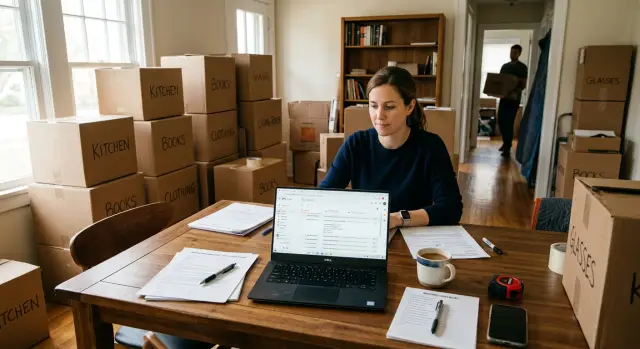
Why old move accounts matter
A move leaves behind more than boxes. It leaves a record of where you lived, where you went, when you moved, how to reach you, and sometimes how you paid.
That record often stays around long after the truck is returned or the storage unit is empty. A finished rental is not the same thing as a deleted account. Many people wrap up the move, delete the app, and forget about it. The company may still keep a live profile with old addresses, payment details, invoices, and support messages.
One reservation can hold a lot. You might enter your full name, phone number, email, pickup location, drop-off address, move date, and card details. If you rented supplies, added another driver, or changed the booking, the profile can hold even more. Few services connect your old address and your new one as neatly as a moving account does.
Storage accounts can be just as sticky. Even after move-out, they may keep billing records, saved cards, signed agreements, gate logs, or chat history. Some of that has to stay for billing or legal reasons. Fair enough. But that does not mean you should leave an account open if you no longer need it.
That is why people search for how to delete moving accounts after a move. It is basic cleanup. You are removing old reservation data from places you probably have not thought about in months.
A quick example makes the risk easier to picture. Say you rented a truck for one weekend and used a storage unit for two months. Half a year later, you barely remember those accounts. The company may still know your old address, your current address, your phone number, and the last card you used. That is enough to make a fake billing notice or account alert sound real.
Move-related accounts feel temporary. The data inside them often is not. If the rental is done, the unit is closed, and the move is over, clean up the account too.
Why scammers want move data
Move data is useful because it describes a real life change. A truck rental login or storage account can reveal your old address, new address, move date, phone number, email, and bits of payment information. That mix gives scammers context, and context makes scams work.
A recent address change is especially helpful for identity fraud. Many banks, phone companies, and other services still use current or previous addresses in basic verification. If someone already has both, they are closer to getting through those checks. They do not need your whole identity file. Sometimes a few correct details are enough.
Move dates matter too. If someone knows you moved on a certain weekend, they know when your routine was disrupted. That can feed fake delivery texts, storage payment reminders, damage claims, or "confirm your move" emails that arrive at exactly the right time.
Brand recognition makes those messages more believable. A text that mentions a real truck rental or storage company sounds less suspicious than a random phishing attempt. Add your street name or move month, and it gets a lot easier to click before thinking.
Scammers also mix move details with data broker records. That helps them match an email to both old and new addresses, send calls or texts that sound familiar, fake bills or refunds, or try password resets that rely on your phone or email.
Picture a normal case. You move across town, rent a van, and leave the account open. Two months later, you get a text saying your "storage balance" is overdue and your unit will be locked. The company name looks real. The phone number is the one you used during the move. Even if the message is fake, it feels close enough to real life to catch you off guard.
That is why move scam prevention starts with cleanup. Keep the records you may need, then close accounts you no longer use. Remove saved cards, old addresses, and extra contact details wherever you can. Less leftover move data means less material for someone else to use.
What these accounts may still keep
A moving or storage account can hold much more than the final reservation. Even a quote you never finished can leave a trail. That can include your full name, email, phone number, move date, pickup and drop-off cities, and even the size of your home.
Drafts matter because they still tell a story. If someone knows you asked for a truck in late June and looked at a storage unit near your new address, a fake call or text feels a lot more believable.
The ID step is easy to forget. Some companies ask for a driver's license number, a photo of the license, or another upload to confirm identity. If that file stays attached to the account after the move, it is one of the most sensitive things you left behind.
Payment details often stick around too. A saved card may be partly hidden on screen, but the account can still keep the billing address, card type, last four digits, and invoice history. That is enough to make a payment warning sound real, especially when paired with your move date.
Extra contacts spread your data farther than most people expect. If you added another phone number for pickup day, or listed a spouse, roommate, parent, or emergency contact, that information may still sit in the profile long after the move ended.
Then there is the paper trail people stop noticing after move-in. Storage accounts may keep contracts, auto-pay forms, and support requests. Moving truck accounts may keep damage photos, fuel receipts, and messages you sent when plans changed.
If you review the account before closing it, check a few places people usually miss:
- profile and contact settings
- saved payment pages
- document or agreement tabs
- quote history, canceled bookings, and support inboxes
Unfinished bookings can be as revealing as completed ones. Before you close anything, look through the oldest corners of the account. The document tab and message center are often where forgotten copies sit.
What to save before you close anything
Before you delete moving accounts, save the proof first. Once an account is gone, it can be hard to show when you canceled, what you paid, or whether a truck was returned on time.
This matters more than it sounds. Move-related accounts often hold pickup dates, drop-off locations, phone numbers, card details, access codes, and billing records. If a charge shows up later, or support claims your profile is still active, a few saved records can save you a long argument.
A good rule is simple: save anything that proves the move is finished and the account should not still be open. That usually means the final receipt, any return or move-out confirmation, the reservation number or unit number, and a screenshot of the cancellation or closure screen. Save support emails or chat messages too, especially if an agent said the account would be closed or your personal data would be removed.
Screenshots help because websites change quickly. A page you can see today may be gone tomorrow, and support agents may not be looking at the same screen you saw. If the company later says, "We do not see a closure request," you have a timestamped record.
Put it all in one folder
Do not scatter this stuff across your inbox, camera roll, and downloads folder. Put it in one folder with a plain name like "Move closeout." If you can, add the date to each file name. That makes it much easier to find later if a charge appears three months from now.
One extra note is worth keeping: write down the exact day you asked for account closure or data deletion. That date gives you a clean starting point if you need to follow up, dispute a charge, or remove personal data online somewhere else later.
Five minutes now beats an hour of back-and-forth later.
How to close moving truck and storage accounts
If you want to delete moving accounts cleanly, start with the account itself, not just the last booking. A canceled reservation or an emptied unit does not always close the profile behind it. The order may be gone while your old address, saved card, extra contacts, and login all remain.
Sign in through the website if possible. The app often shows less. Check the profile page, payment settings, saved addresses, stored documents, notifications, and any reservation history. A truck rental profile may still hold pickup and drop-off details, driver information, and saved cards. A storage account may still have auto-pay turned on even after the unit is closed.
Before asking for deletion, clear out the loose ends. Remove saved cards and bank details. Delete extra drivers, backup contacts, and old addresses. Turn off auto-pay and confirm there is no future billing. Download invoices, receipts, and closing statements you may need for taxes, reimbursement, or disputes.
Then look for the actual account closure option. Some companies let you remove profile data yourself. Others only let you end the booking and keep the account open for future rentals. If the self-service options stop short, contact support and be plain: ask them to delete the account profile and personal data, not only the reservation or storage contract.
If they say some records must stay for legal or billing reasons, ask two direct questions: what will remain, and what can they remove now? That gives you a clearer answer than a vague "your request has been processed" message.
A week later, check again. Try signing in. Review the profile, payment page, saved addresses, and alerts. If anything is still there, send one more request and include screenshots. That follow-up takes a few minutes and often catches the details people leave behind.
If the company will not fully delete the account, strip out as much data as you can and change the password before you walk away. It is not perfect, but it is better than leaving a live login full of old move data.
A local-move example
Picture a normal local move. Sam rents a truck for one day, uses a small storage unit for three weeks, and then gets on with life.
The truck rental account stays open. So does the storage login. Both still hold the old address, move dates, phone number, card on file, and maybe a scanned ID from pickup day. None of it feels sensitive anymore, so it gets ignored.
Four months later, an email arrives with the subject "Past due balance." It looks plain, not flashy, which is why it works. It mentions the exact move-out date, the old street address, and a unit number that sounds familiar enough to cause a quick spike of panic.
That detail is what makes the message believable. Most scam emails guess. This one sounds real because it uses facts from an old move.
A forgotten moving account can give away more than people expect: old addresses, move dates, saved payment details, billing names, phone numbers, and copies of invoices or rental agreements. That is why this is more than a tidy-up task. Save the records you may need, then remove stored cards, delete files you do not want sitting there, and close the account if you will not use it again.
Mistakes that leave data behind
Deleting the app feels final. It usually is not. The account behind it can stay active for years.
Another common mistake is assuming a paid balance means full closure. It does not. You can pay the last bill, return the truck, empty the unit, and still leave an active profile behind.
People also forget about family and backup contacts. During a move, it is normal to add a spouse, parent, roommate, or employer so someone can answer a call or pick up keys. Months later, those names and numbers may still be attached to the account.
Old confirmation emails often tell the real story. If you still have messages about reservations, gate access, password resets, or saved payment methods, there is a good chance the login still works. Check archived mail too, not just your main inbox.
Password reuse makes everything worse. If you used the same password on a moving truck site, a storage account, and your main email, one weak account can expose the rest. That is especially risky after a move, when people are distracted and less likely to notice a strange login alert.
Before you forget about the move, do one last check:
- sign in on the website and confirm the account is really closed
- make sure auto-pay is off and no payment method is still saved
- remove extra contacts and old addresses
- save the final closure email or chat message
- update or remove the login from your password manager
If you get a login email weeks later, treat it as proof the account was never fully closed.
What to do if your data keeps showing up
Old move details often spread beyond the rental or storage company. They can end up on people-search sites and data broker pages, then keep resurfacing months later.
Start by searching for both your old address and your new one. If a site lists your name next to either address, take a screenshot before you request removal. That gives you a record if the listing comes back.
If any move-related account is still open, change the password now. Use a new one, not a recycled password from email or shopping sites. Then watch your bank and card statements for the next few weeks. Small test charges are easy to miss, and they can be an early warning that someone is checking whether a card still works.
Keep one folder for closure emails, receipts, screenshots of deleted profiles, people-search removals, and notes on dates. If you need to dispute a relisted address or an odd charge later, that folder will do a lot of the work for you.
Sometimes the problem is no longer the moving account itself. Your details may already be circulating through data brokers that copy and repost address records. If the same old address keeps reappearing, manual cleanup gets old fast. Remove.dev can automate removals across more than 500 data brokers and keep monitoring for relistings, which is useful when you do not want to chase the same record over and over.
If your data keeps coming back, assume it has spread. Save proof, lock down any account you still use, watch your statements, and keep removing listings until the old address stops following you around.
FAQ
Why delete moving accounts after the move is done?
Because the move may be over while the account is still live. That profile can keep old and new addresses, phone numbers, invoices, saved cards, and support messages that you no longer need sitting there.
What data can a moving or storage account still keep?
More than most people expect. A truck rental or storage account may keep your name, email, phone number, move dates, pickup and drop-off details, billing address, last four card digits, invoices, contracts, chat history, and sometimes ID uploads.
Is deleting the app enough?
No. Deleting the app only removes it from your phone. The account, login, and stored data usually stay on the company side until you remove the data or ask for account closure.
What should I save before I close anything?
Save proof first. Keep the final receipt, return or move-out confirmation, reservation or unit number, and a screenshot of any closure or cancellation screen. If support told you the account would be closed, save that email or chat too.
How do I fully close a truck rental or storage account?
Start on the website, since it often shows more than the app. Remove saved cards, old addresses, extra drivers or contacts, and turn off auto-pay. Then look for account deletion or contact support and ask for the profile and personal data to be removed, not just the booking or unit.
What if the company says it has to keep some records?
That can be normal for tax, billing, or legal records. Ask two plain questions: what must stay, and what can they delete now. Even if some records remain, they should still be able to remove saved payment methods, extra contacts, and other profile details.
Do unfinished quotes and canceled bookings matter?
Yes. A draft quote or canceled booking can still reveal your name, move month, cities, email, and phone number. That is enough detail to make a fake text or billing message sound real.
How can old move data be used in scams?
The usual scams are fake overdue balance emails, storage lock warnings, refund notices, and move confirmation texts. They work because the message uses real details from your move, which makes it feel familiar instead of random.
What should I do if my old address keeps showing up online?
Search for your name with both your old and new address and screenshot any results before you request removal. If any move account is still open, change the password, watch your bank and card statements for a few weeks, and keep all receipts and closure emails in one folder.
When does Remove.dev help with move-related data?
If the same address keeps coming back on people-search or data broker sites, manual cleanup gets old fast. Remove.dev can find and remove your personal data from over 500 brokers, keep checking for relistings, and send new removal requests automatically. Most removals finish in 7–14 days, and you can track requests in the dashboard.