Fake bank fraud calls get harder to spot after a move
Fake bank fraud calls often feel real after a move because scammers mix old addresses, new numbers, and family details into one story.
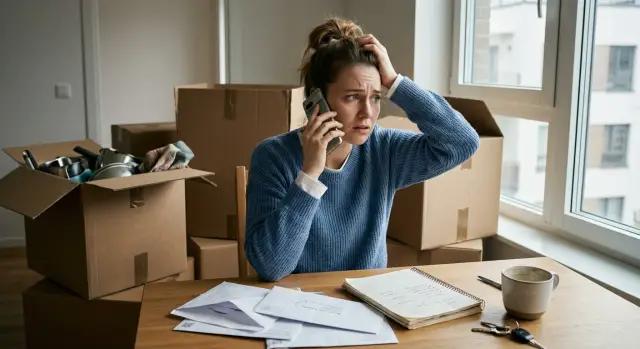
Why a recent move changes the risk
Moving leaves a paper trail. Your old address rarely disappears when the new one shows up. For a while, both can sit in bank records, shipping accounts, utility files, loyalty programs, people-search sites, and data broker listings. That overlap gives scam callers more material.
If someone on the phone knows the street you left and the one you moved to, the call stops feeling random. Most strangers should not know both. A scammer can use that detail to sound like a bank employee checking "suspicious activity" after an address change. Even a simple script feels personal once they mention your old address and ask you to confirm the new one.
A move also puts you in the right mindset for this trick to work. You may be waiting for replacement cards, forwarded mail, password resets, or a bill that still shows the wrong address. So when a caller says there is a problem with your account, it fits the mess you are already dealing with.
A few real details are often enough. Maybe your bank did ask you to confirm a new phone number. Maybe a family member helped with a delivery and their number ended up on an order. Maybe one account still points to the old address. A scammer does not need a complete file to sound believable. Old address, new address, a mobile number, and the name of a relative can sound like proof, even when the rest of the story is made up.
Where the caller gets your details
Most scam calls do not start with a giant leak. They start with cheap, easy records that almost anyone can buy or scrape. After a move, that trail often gets longer, not shorter.
People-search sites often keep both your old address and your new one. They may also show relatives, past roommates, an age range, and sometimes a landline or mobile number. One old street name and the name of your brother can make the story feel real enough to keep you on the line. Once that happens, the rest of the call turns into fishing.
Data brokers add another layer. They connect names to phone numbers, address history, email addresses, and household links pulled from public records, store loyalty data, app signups, and other sources. That means a scammer can see that Jane Smith used to live in Phoenix, now appears in Denver, and has a number ending in 4421. Even if some details are wrong, the mix can still lower your guard.
Leaked accounts fill in the gaps. A breach from an online shop, delivery app, or old forum can reveal an email address, birth year range, or usernames you used years ago. Now the caller can say, "I'm calling about suspicious activity tied to your old Maple Avenue address and your Gmail account." It sounds specific, even when it is mostly recycled data.
That is why scammers ask leading questions instead of making firm claims. They open with one correct detail, then wait for you to confirm the next one. If you say, "Yes, I used to live there," they push further: "And you changed your number after the move, right?" Bit by bit, you build the profile for them.
How the script gets stitched together
Most of these calls begin with a routine warning: a card charge, a login from another city, or a transfer that needs review. That gives the caller a reason to sound urgent without sounding strange.
Then they use one detail you recognize. After a move, that is often your old address. If the caller says, "I have 48 Pine Street on the account," many people relax for a second. It feels like proof. In reality, an old address is easier to find than most people think.
Once that trust is in place, the script shifts. The caller asks you to "verify" your new address, current phone number, or both. It sounds harmless. People are used to updating records after a move, so the request fits the moment.
They may add one more familiar detail. A relative's name is common. Maybe they mention a spouse, parent, or adult child and ask if that person is still linked to the account or still listed as an emergency contact. Even when the detail is half wrong, it can still push you into answering.
A stitched-together script often sounds like this:
"We spotted a suspicious payment on your card."
"For security, I have your previous address as 48 Pine Street."
"Can you confirm your new address and the best number to reach you on?"
"Is Michael Reed still connected to this account?"
"I just sent a code so I can stop the transfer. Read it back to me."
That last step is the real goal. The caller is not trying to stop fraud. They want something they can use right away: a one-time code, your full card number, your online banking login, or approval for a transfer.
The script works because each piece sounds small on its own. Put together, an old and new address, a current phone number, and a relative's name can make a stranger sound like someone who already knows your account.
A call that sounds real
Most fake bank fraud calls do not start with shouting or threats. They start with a calm voice and one detail that lands a little too well.
Picture this. The caller says they are from your bank's fraud team and asks about a card charge from your old city. You moved a few months ago, so the place name hits home. For a moment, it feels less like spam and more like a real alert.
Then they say, "I have a mailing address ending in 18. Is that still correct?" Notice what they are doing. They are not proving they know your address. They are getting you to prove it for them. If you answer, "No, we moved to Oak Street," you just gave them the missing piece.
A minute later they mention a relative. Maybe they ask if your brother is still the contact on the account, or whether your mother should be called if the card is frozen. Even if the relationship is wrong, the name may still be real. That mix of true and false lowers your guard fast.
Now comes the part that catches a lot of people. The caller says they need to send a security code and asks which phone should receive it, the number ending in 44 or 71. It sounds routine. In real life, they may be trying to trigger a login, a password reset, or a new-device check while keeping you busy on the phone.
By then, the story feels believable because it sounds half familiar. The old city is right. Part of the address is right. A family name is right. One phone number may even be yours. Your brain starts filling in the gaps for them.
That is why a scam after a move can be unusually convincing. The caller does not need a perfect file. A few real details, mixed with guesses and old records, can make a made-up fraud story sound like something your bank would actually say.
Small signs the story is off
What makes these calls hard to spot is partial accuracy, not perfect accuracy. A caller may know your old street, your new town, a relative's name, and the last four digits of a phone number. That mix can make a weak script sound real for the first 20 seconds.
One easy tell is speed. The caller wants you worried before you can think. They say a charge is happening "right now," your account will be frozen, or a transfer is already in motion. If they keep talking over you or refuse to give you a minute, treat that as a warning.
Another bad sign is any request for secrets your bank should never need from you on an inbound call. That includes a one-time code sent by text, your PIN, your full card number, or the full login code for your banking app. Banks use those details to verify you. Scammers use them to get into the account while you are still on the phone.
Pay attention when you ask simple questions back. A real bank employee can usually explain which account they mean, what type of card is involved, and what the next safe step is. A scammer often slides past the question and goes back to the script. They repeat the amount, the merchant name, or your address because that is the data they already have.
The callback trick is common for a reason. The caller says, "If you don't trust me, hang up and call this fraud line." It sounds fair, but the number still goes to them. Use the number on the back of your card or inside your bank app, not any number given during the call.
The clearest sign is control. If the caller tells you not to hang up, not to open your banking app, or not to contact the bank directly, the story falls apart. A real bank expects you to use official channels. A scammer needs you to stay inside the call long enough to hand over something useful.
What to do during the call
The safest move is simple: end the conversation as soon as the caller says there is fraud on your account. That first claim is the hook. Everything after that is meant to make you react before you think.
Even if the caller knows your old address, your new one, a family member's name, or part of your phone number, do not confirm any of it. They already have bits of truth. They want you to fill in the rest.
A common trap is the small correction. The caller says, "We have 14 Oak Street on file," and you reply, "No, I moved to 28 Pine Avenue." Now they have your update, and the script gets stronger. The same goes for relatives, middle initials, and alternate phone numbers. Give them nothing.
If you freeze up, keep it short:
"I'm not verifying anything on this call."
"I'll contact the bank myself."
"Goodbye."
Then hang up.
If the line feels strange, wait a moment before calling your bank back. Some scams rely on keeping you on the line or making you feel as if you are still connected to the bank. If you can, use a different phone. If not, wait a minute, clear your head, and start fresh.
When you do contact the bank, use a number you chose yourself. The best options are the number inside your banking app or the number printed on your card. Do not use a number the caller gives you, even if it sounds official.
Do not stay on the call to argue, test them, or "see where this goes." That usually helps the scammer more than it helps you. The less you say, the less they can use later.
Quick checks after you hang up
The first minute after a suspicious call matters. Do not call the number back. Open your bank's official app and check for fraud alerts, login warnings, password reset messages, or new device notices.
Then look at the basics, slowly. Check recent transactions, your card status, and any saved payees or transfer recipients. A scam call tries to rush you so you miss the simple stuff.
Here is a short post-call check:
- Review pending and posted transactions you do not recognize.
- Check whether any card was frozen, replaced, or added to a digital wallet.
- Look at your payee list for a new name or changed account details.
- Write down exactly what the caller knew, such as your old address, new address, relatives' names, or part of your phone number.
That last step helps more than people think. If you note what the caller used, you can spot the pattern later. Maybe they mentioned your old street first, then your new ZIP code, then a brother's name. That tells you what data may be floating around.
If the caller claimed a card was used in another city, compare that claim with the app. If there is no alert, no pending charge, and no security message, the story gets weaker fast. If you do see something odd, contact the bank through its normal support channel right away.
When you report the call, keep it plain. Tell the bank what number called, what time, what the caller asked you to do, and what personal details they used. A short note or screenshot of your call log can save time.
Mistakes that help the scammer
Most people do not lose money because the caller sounds perfect. They lose it because they try to be polite and helpful for 30 seconds.
That first half minute is often enough for the scammer to test what they know and fill in what they do not. If they read out an old address and you say "yes," you have confirmed they are speaking to the right person. If you then correct them with your full new address, you have handed over a fresh piece of identity data they can use later.
The same thing happens with phone numbers and family details. The caller may mention a relative, an old mobile number, or a house you left last year. People often correct small errors without thinking. To the scammer, every correction helps.
Caller ID is another trap. It can be spoofed, and scammers know many people relax as soon as they see their bank's name on the screen. Staying on the line while opening your banking app is risky too. The scammer keeps talking, keeps the pace high, and tells you what the screen "means." Even if nothing looks wrong, they can say the fraud is still pending and push you into the next step.
The safest move is boring, and that is why it works. End the call. Wait a moment. Then contact your bank using the number on your card or the official app you opened yourself.
Next steps to cut down future calls
After a move, assume any inbound call can be built from scraps of real data. A scammer may know your old address from one source, your new one from another, and a relative's name from a public listing. That mix is what makes the story sound specific enough to rattle people.
Start with your bank. Ask one plain question: what will your fraud team never ask me to do on a live call? Many banks have firm rules. They will not ask for your full password, a one-time code, your card PIN, or a transfer to a "safe" account. Write those rules down. If a caller breaks one, hang up.
Then clean up older accounts. A move leaves a trail in store logins, utility portals, delivery apps, insurance accounts, and old email inboxes. If you reused passwords across any of them, change those first. Forgotten accounts can sit exposed for years.
It also helps to search for your name, phone number, old address, and new address on people-search and data broker sites. Remove listings that expose relatives, age, or full address details. Use unique passwords for your bank, email, phone carrier, and any account that stores your address. Turn on app-based two-factor authentication where you can.
This is the part many people put off because manual removals take time. If you want less manual work, Remove.dev automatically finds and removes exposed personal data from more than 500 data brokers and keeps monitoring for relistings. That will not stop every scam call, but it can leave scammers with fewer details to stitch into a convincing story.
You probably will not stop every call. But you can make the script weaker. When less of your personal data is easy to find, the caller has fewer ways to sound real and fewer chances to push you into a bad decision.
FAQ
Why do fake bank fraud calls feel more believable after I move?
Because a move leaves old and new records behind at the same time. A caller who mentions both can sound like they really know your account, even if they only found scraps of public or leaked data.
That timing also works in their favor. When you are already fixing addresses, cards, and bills, a fake "fraud check" feels easier to believe.
How can a caller know both my old and new address?
Often it comes from people-search sites, data brokers, old app accounts, and breach data. Those sources can connect your name to past addresses, current addresses, phone numbers, and relatives.
The caller does not need a perfect file. One correct address, part of a phone number, and a family name can be enough to keep you talking.
Does knowing my old address mean the caller is really from my bank?
No. An old address is not proof that the caller is real. Past address details are much easier to find than most people think.
Treat it as a warning sign, not a sign of trust. If the caller is real, you can still hang up and contact the bank through the number on your card or in the official app.
What is the caller actually trying to get from me?
Usually they want something they can use right away, like a one-time code, your login details, your full card number, or approval for a transfer.
The early questions are often just setup. They use small details to lower your guard, then push for the thing that gives them access.
What should I say if they ask me to confirm my new address or phone number?
Keep it short and give them nothing new. You can say, "I'm not verifying anything on this call. I'll contact the bank myself," and then end the call.
Do not correct them, even on small details. A simple "no" or a full new address helps them build a better profile.
Is it safe to call back the number they give me?
Never use a number the caller gives you during the call. That number can still lead back to the scammer, even if it sounds official.
Use the number on the back of your card or the number inside your bank app. If the call felt odd, wait a moment before calling back, or use a different phone if you can.
What details should my bank never ask for on a live incoming call?
Your bank should not need your one-time text code, your PIN, your full online banking password, or a request to move money to a "safe" account.
If a caller asks for any of that, stop the call. Real fraud teams expect you to use official channels, not hand over account access on a live call.
What should I check right after I hang up?
Right away, open your bank's official app and look for real alerts, recent transactions, card status changes, password resets, or new device activity.
It also helps to write down what the caller knew and what they asked for. That makes it easier to report the call and spot what personal data may be exposed.
What mistakes make these scams easier to pull off?
People often get caught by trying to be polite for just a few seconds. Saying "yes" to an old address, fixing a wrong phone number, or confirming a relative's name gives the caller more to work with.
Another common mistake is trusting caller ID or staying on the line while opening your banking app. The safest move is still the boring one: hang up, pause, and contact the bank yourself.
Can removing my data from broker and people-search sites reduce these calls?
Yes, it can help. When less of your address history, phone number, and family links are easy to find, scammers have fewer details to stitch into a believable story.
If you do not want to handle removals one by one, Remove.dev can find and remove exposed personal data from over 500 data brokers, usually within 7 to 14 days, and keep watching for relistings. It will not stop every scam call, but it can make the script much weaker.