Fake HOA fine notices: how scammers build owner profiles
Fake HOA fine notices feel real when scammers merge owner names, parcel records, and mailing addresses from easy-to-find sources.
Why this scam works so often
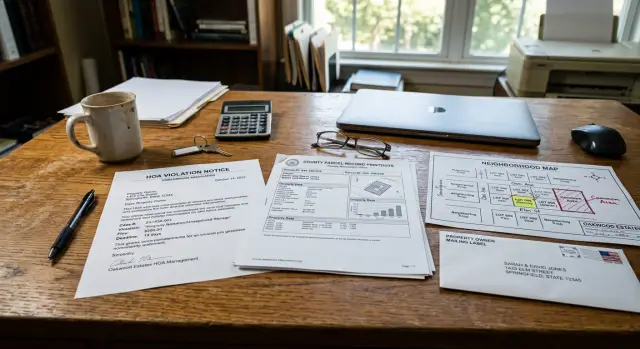
These notices work because they do not start from zero. The sender often has a few real details: the owner's name, the property address, the mailing address on file, and sometimes a parcel or lot number. Those facts are easy to pull from public records and people-search sites, so the letter feels tied to something real.
Paper mail helps. Most people expect scams by text or email, not in an envelope with a return address, a reference number, and a due date. If the street name is right, many owners assume the rest is probably right too.
The amount is usually small on purpose. A demand for $65 or $110 feels irritating, not absurd. That is the sweet spot where someone thinks, "I should just pay this," instead of stopping to verify it.
Uncertainty does the rest. Many owners do not know what a real HOA violation notice looks like, who normally sends it, or whether fines arrive by mail, email, or a resident portal. New owners are easier to rattle. So are landlords who live elsewhere and people who only hear from the HOA once or twice a year.
A simple example shows why this works. You get a letter about an "unapproved exterior issue" tied to Lot 12. It has your full name, your mailing address, and a warning that the fee doubles in five days. The claim is vague, but the document still feels specific enough to trigger worry.
That mix is what makes the scam stick: real ownership details, a formal delivery method, and a low fine with a short deadline. The scammer does not need perfect records or a flawless story. They just need enough truth to lower your guard and enough pressure to keep you from checking first.
A simple case: how one fake notice gets built
A scammer may start with nothing more than a street address in a neighborhood that looks like it has an HOA. Often, that is enough.
A county parcel search can fill in the basics. In many places, the record shows the owner's full name, parcel number, property address, and tax mailing address. If the mailing address is different from the home itself, the scammer may guess the owner is a landlord, travels often, or lives out of town.
From there, the notice gets much more believable. The scammer ties the parcel to the subdivision name, plat, or neighborhood name listed in public records. Even if the real HOA name is not obvious, a neighborhood sign, a community Facebook page, or an old real estate listing can provide enough detail to fake it.
Say the owner is Maria Chen, and the parcel record shows she lives elsewhere. The scammer creates a letter saying her property at 214 Pine Ridge Lane violated community rules. The made-up issue is usually plain and hard to disprove from memory: trash bins left out, weeds over the limit, or an unapproved exterior change.
Then come the details that make the letter look official. The scammer adds the parcel number, the lot number if available, and the mailing address exactly as it appears in county records. The deadline is short, often 48 to 72 hours, and the amount is modest enough to seem believable.
That last part matters. A fake fine for $187 may get paid faster than one for $1,800.
The notice might arrive by mail, email, or as a PDF attachment. On paper, it looks routine. In reality, it is just a bundle of public facts, one invented violation, and a push to act fast. That is why these letters fool even careful people.
Where the data usually comes from
Scammers rarely need a data breach to build a convincing owner profile. Much of what they use is already public, cheap to buy, or easy to find in a few searches.
A common starting point is the county assessor or recorder site. These pages often show the owner name, property address, parcel number, sale date, and document history. If the home is a rental or second property, the tax mailing address may be different from the property itself, which gives the scammer both locations at once.
Tax records make the job even easier. In many counties, you can look up a house and see where the bill gets sent. That matters because a fake notice works better when it goes to the address where the owner actually opens mail.
Data brokers fill in the gaps. They may add an age range, past addresses, relatives, phone numbers, and likely email addresses. One record can connect a property owner to a spouse, an old apartment, and a mobile number that still works. Suddenly the scam feels personal instead of random.
Real estate sites add context. Old listings may show photos, purchase dates, square footage, and agent remarks. Neighborhood posts can reveal HOA names, common rule disputes, and the kind of violations residents complain about. Even a casual post about trash can warnings gives a scammer a believable theme.
Search results often expose the last missing pieces. A phone number from a people-search page, an email on a club roster, or a cached profile from years ago can turn a basic property record into a full contact sheet.
This is why data broker removal matters. Public records may stay public, but broker listings and exposed contact details can often be reduced. Services such as Remove.dev focus on that layer by finding and removing personal information from data brokers and monitoring for relistings, which cuts down the extra details scammers use to make a notice feel real.
How scammers stitch the details together
A fake notice does not begin with the threat. It begins with a clean owner profile.
Take one house in a gated community. First, the scammer pulls the parcel ID from county property records. That helps confirm the lot, street address, and tax entry. If the subdivision has similar street names or multiple units, the parcel record clears that up quickly.
Next, they check the owner name in more than one place. The county assessor may show one spelling, a deed index may show a middle initial, and a people-search site may show a current or former resident. If the same name keeps appearing, the scammer knows they probably have the right person.
The mailing address matters just as much. Many owners do not live at the property, so sending the notice to the house itself may fail. A better scam uses the mailing address listed in tax records, because that is often where official county mail already goes.
The HOA name is usually easy to copy. A scammer can grab it from a neighborhood sign, a management company document, a cached community page, or a resident post in a local group. Once they have the association name, the rest is simple: a made-up parking issue, a lawn complaint, a late fee, or a warning that the amount will increase if ignored.
That is why these notices can look so ordinary. Each fact may come from a different source, but together they feel official. There is no hacking involved. It is just scattered data collected, matched, and turned into a story that sounds plausible enough to get paid.
What to check when a notice arrives
Start with the outside of the letter, not the threat inside. Scam notices try to rush you, so the sender name and return address deserve a close look first. If the HOA name is slightly off, the logo looks wrong, or the return address does not match anything in your records, stop there.
Next, compare the notice with a real HOA letter you already have. Look at the amount, due date, property address, and account details. Many fake letters get your name and mailing address right, but the fine amount feels random, the deadline is strangely short, or the wording does not sound like your HOA at all.
A few checks catch a lot of bad notices:
- Match the sender name and return address against an older statement, coupon book, or welcome packet.
- Compare the amount and deadline with past HOA letters.
- Look closely at the payment method. Wire transfers, gift cards, crypto, and payment app requests are major red flags.
- Keep the envelope, the letter, and screenshots of any related text or email.
The safest move is simple: call the HOA using a number from your own records. Use a past statement, your closing paperwork, or the resident portal you already know. Do not call the number printed on the suspicious notice unless you have already confirmed it.
A quick example makes the point. A homeowner gets a letter claiming they owe $185 for a trash bin violation and must pay within 24 hours. The name, lot number, and mailing address are all correct, so the notice feels real. But the return address is different from past HOA mail, and the payment request goes to a personal payment app. One phone call to the HOA office clears it up: there is no fine on the account.
Keep every piece of evidence, even if the letter is fake. The postmark, envelope, payment instructions, and screenshots can help later if you report the scam or warn neighbors.
Signs the notice is probably fake
A scam letter can look convincing because the sender may already know your name, mailing address, parcel number, or even your lot number. That still does not make it real.
The payment demand is often the clearest clue. Most HOAs collect money through a known management company, a resident portal, or a mailed invoice that matches past statements. If the notice pushes you to pay with a gift card, bank wire, crypto, or a payment app, assume something is wrong.
The alleged violation may also be thin on details. A real notice usually says what rule was broken, when it happened, and how to fix it. A fake one may mention a rule number but skip the actual rule text. It may claim you owe a fine for parking, trash bins, or lawn care but give no photo, date, or time.
Small mistakes matter more than most people think. Scammers often combine records from different places, and errors slip through. You might see your correct last name but the wrong street spelling. Or the lot number is close, but not quite right. A notice that mixes up your middle initial, parcel details, or mailing city deserves a hard second look.
Watch the timeline too. Scam notices often lean hard on panic. If the letter threatens a lien, legal action, or loss of access within a day, that is a bad sign. Real associations usually follow a slower process with written notice, time to respond, and a clear way to dispute the charge.
A good rule is this: the more pressure and the less proof, the less likely the notice is real. If it wants fast money and gives weak details, treat it like a scam until you verify it.
Mistakes that make the scam easier
The fastest way to lose money on one of these notices is to help the scammer fill in the blanks.
A common example is a new owner posting in a local group, "We just moved in, closing was Friday, still waiting for mailbox keys." That short message tells a stranger that the home was recently sold, the owner expects mail from the HOA, and the timing is perfect for a fake notice.
Another mistake is leaving personal data exposed on broker sites. Those pages often show a full name, age range, past addresses, relatives, and a mailing address that differs from the property address. That gives a scammer enough to match one person to one parcel and make the letter sound specific. A wrong detail can expose a scam. A real detail can hide it.
The worst move is paying before checking with the HOA. These scams often ask for a small amount on purpose. A demand for $89 or $140 feels easier to pay than fight, especially if the letter warns about late fees.
Calling the number printed on the letter can also make things worse. If the notice is fake, that phone number belongs to the scammer. The moment you call, they know the target is reachable, worried, and willing to engage. Many will ask for card payment first, then try to "verify" extra personal details.
One small mistake gets overlooked all the time: throwing away the envelope too soon. The envelope may show a strange return address, a postmark from the wrong state, or mailing marks that do not fit a local HOA.
If your owner data is already exposed in a lot of places, you are easier to profile. That is why some homeowners remove personal details from broker sites or use a service that handles the opt-out work and keeps watch for relistings. Less public data means fewer real facts for a scammer to work with.
Quick checks before you pay or reply
Scammers want speed. Your job is to slow the moment down for ten minutes.
A correct address does not prove a notice is real. Owner names, parcel details, and mailing addresses can all be pulled from public records, so one accurate fact should not buy much trust.
Start with the HOA name. Compare it with your closing papers, past dues notices, coupon book, or welcome packet. Scam letters often use a name that is close, but not exact. Sometimes they swap in an old management company or the name of a nearby subdivision.
Then match the property details to your deed and your own records. Watch for small mix-ups: the right street with the wrong unit number, the right owner with the wrong lot, or a mailing address that belongs to a former owner.
Read the claimed violation twice. A real notice should name the rule, say what happened, and give a date. Compare the payment path with past HOA bills too. If you usually pay through a resident account or local office, a sudden demand by wire, gift card, crypto, or a new payment app is a major warning.
Check for a normal paper trail. Real fines often mention prior warnings, hearing dates, or a ledger entry. The amount should also make sense. A flat, round number with no breakdown should make you pause.
One more step matters most: verify the notice with a trusted contact you already know. Use the phone number from prior statements, your closing documents, or the community directory. Do not call the number printed on the suspicious notice.
Picture a letter saying you owe $375 for a trash bin violation. The house number is right, but the HOA name is slightly off and there is no date for the violation. One call to the real management office settles it in two minutes and saves you from paying a scammer.
What to do next to reduce future risk
After a fake notice, the goal is simple: make the next one easier to spot and harder to build.
Start with your HOA or property manager. Ask what a real violation notice looks like, how it is usually delivered, where payments are actually made, and which phone number owners should use for verification. A saved sample letter or screenshot helps far more than vague advice.
It also helps to keep your own trusted contact list. Save the HOA office number and management company number in your phone. Keep the billing portal name and mailing address in a note you control. Write down who handles fines, payments, and appeals. Then use those saved contacts every time a new notice shows up.
If you already sent money or shared bank details, move quickly. Call your bank or card issuer the same day, ask whether the payment can be reversed, and watch for new charges. If you gave away login details, change that password right away, especially if you reused it elsewhere. Then alert your HOA so other owners do not get hit by the same scam.
The longer-term fix is less visible, but it matters. Scammers often build these letters from names, parcel records, mailing addresses, and contact details pulled from people-search sites and data brokers. Removing those listings will not make you invisible, but it does give strangers less raw material.
You can handle those opt-outs one by one, or use a service that automates the process. Remove.dev removes personal information from more than 500 data brokers and keeps monitoring for relistings, which can make it harder for scammers to pad a fake HOA notice with phone numbers, alternate addresses, and other personal details. That will not stop every scam, but it does make the profile-building part harder, and that is the part these letters depend on.
FAQ
How can a fake HOA notice know my name and lot number?
Usually from county property records, tax mailing records, old real estate listings, and people-search sites. Those sources can expose your name, property address, mailing address, parcel number, and sometimes relatives or phone numbers.
A scammer only needs a few real facts to make a made-up violation feel believable.
What should I check first on a suspicious HOA letter?
Start with the envelope and sender details. Check whether the HOA name, return address, and payment instructions match older mail or your resident portal.
If anything is slightly off, pause and verify before you call or pay.
Do real HOAs ask for payment by gift card, crypto, or a payment app?
A sudden request for a wire, gift card, crypto, or a personal payment app is a bad sign. Most real HOAs use a known management company, a resident portal, or the same billing method they have used before.
If the payment path changed, confirm it through your own records first.
If the address and parcel number are correct, is the fine probably real?
No. Correct ownership details do not prove the notice is real. Property and tax records often give scammers exactly the facts they need.
Treat the letter as unverified until the HOA or management company confirms the charge through a trusted contact.
Should I call the phone number printed on the notice?
Not until you confirm it another way. If the letter is fake, that number may go straight to the scammer, and the call tells them you are reachable and concerned.
Use a phone number from past statements, closing papers, or your official portal instead.
What details are often missing from a fake violation notice?
Real notices usually say what rule was broken, when it happened, and how to fix it. Fake ones often stay vague, use a very short deadline, and threaten fast penalties without much proof.
Missing dates, missing photos, and no clear dispute process are common warning signs.
What should I save if I think the HOA notice is fake?
Keep the envelope, the full letter, and screenshots of any related texts or emails. The postmark, return address, and payment instructions can help if you report it.
Do not toss the envelope right away. Small mailing details can expose the scam.
I already paid a fake HOA fine. What should I do now?
Call your bank or card issuer the same day and ask whether the payment can be reversed. If you shared card, bank, or login details, secure those accounts right away and change reused passwords.
Then tell your HOA or management office so other owners can watch for the same notice.
Can removing my data online lower the chance of getting one of these scams?
Yes, it can help. Public records may still exist, but removing your contact details from data brokers gives scammers less material to work with.
Services like Remove.dev focus on that layer by removing personal data from over 500 brokers and monitoring for relistings, which can make fake notices less convincing.
Who is most likely to get fooled by fake HOA fine notices?
New owners, landlords who live elsewhere, and people who rarely hear from the HOA are common targets. The scam also works better when someone expects mail after a move or does not know how real HOA notices normally look.
That is why a small fine with a short deadline catches people off guard.