Fake roadside assistance calls after a breakdown search
Fake roadside assistance calls often start after a breakdown search. See how lead forms and data resale turn one request into weeks of spam.
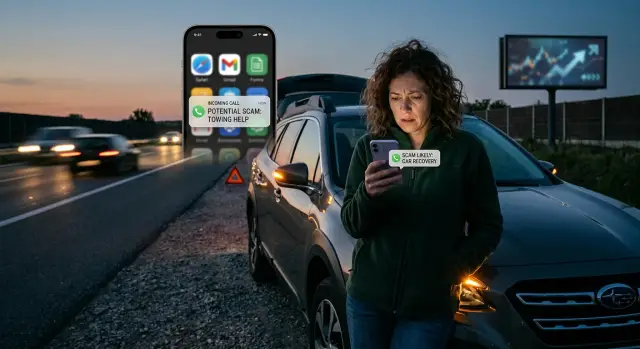
Why one roadside search can lead to nonstop calls
When your car dies on the side of the road, you're not reading every line on a website. You search fast and tap the first result that looks close enough. That rushed moment is often where the trouble starts.
Many roadside pages are not real dispatch pages. They are lead forms built to collect your name, phone number, location, car details, and the fact that you need help right now. That last part matters. It tells anyone who gets the form that you're stressed, in a hurry, and likely to answer the phone.
If the form is tied to a middleman instead of a real local operator, your details can be sold almost immediately. One submission may go to several buyers, not one business. After that, your number can spread through call lists, text campaigns, and resale databases.
That is one reason fake roadside assistance calls often feel sudden and nonstop. The calls may start with towing, battery help, locksmith service, warranty offers, or vague "dispatch" updates you never asked for. Some sound local. Some know just enough about your breakdown to feel real.
A driver with a flat tire in a store parking lot might submit one form and get three calls in ten minutes. By that evening, unfamiliar texts start coming in. Two days later, the same driver is getting roadside assistance scam calls and unrelated auto service offers because the lead has already been shared around.
The first step feels tiny. You shared one number, one time, under pressure. The fallout can last much longer than the breakdown.
How lead forms collect more than you expect
A lot of roadside help pages are not there to send a truck. Their job is to collect details and sell them to companies that pay for calls, texts, or customer leads.
That works because breakdown searches happen under stress. If your car will not start, you are far more likely to fill out the first form that looks official. A clean page, a big phone number, and phrases like "24/7 help" can make a lead form look like direct assistance.
What they usually ask for
The questions often look harmless. You may be asked for your phone number, your location, your car make, and what went wrong: flat tire, dead battery, locked keys, engine trouble. Some forms also ask whether you are stranded now or just comparing prices.
Each answer makes the lead more useful to strangers. Your phone number gives them a direct way in. Your location tells them where you may be stuck. Your car problem tells them what script to use. A caller who knows you searched for a tow in Phoenix for a dead battery can sound believable very quickly.
The site may not clearly tell you who gets your information. That detail is often buried in fine print near the button, where you give broad consent to share your details with "partners" or "service providers." In plain language, that can mean resale.
Imagine a driver searching for help before work. They enter a phone number, say the car will not start, and add a ZIP code. Ten minutes later, three callers claim they can send someone right away. By evening, more calls come in. Those fake roadside assistance calls feel personal because the caller is not guessing. They are reading from a lead handed over in a moment of stress.
What happens after your details are sold
Once your phone number lands in a lead marketplace, it can move fast. A recent breakdown search tells buyers something specific: you may be stressed, stranded, and ready to answer any call that sounds helpful.
The first buyer is often not the last one who uses it. A towing referral company, a call center, an insurance seller, or a shady lead buyer can all end up with the same form. That is why the calls may keep going after your car is home and the tow is done.
The record can also get fuller as it moves around. A broker may take the phone number and name from the form, then match it with other easy-to-find details from public records and commercial databases. That can include your city, past addresses, vehicle data, age range, household details, or other phone numbers tied to you.
Now the next caller sounds less random. If they know your area, your car type, or the road where you broke down, they can sound real enough to lower your guard. So roadside assistance scam calls can feel convincing even when the company name is unfamiliar.
There is also a simple resale problem. Some buyers keep lists. Others resell them. If your number gets tagged as someone who recently needed urgent help, that label can keep circulating for days or weeks because fresh distress leads still sell.
A quick example shows how this works. You search for a tow at 9:40 p.m., fill out a form, and get help. The next morning you get a call about roadside coverage. Later that day, another caller offers reimbursement help. Two days later, someone says they are following up on your service request. Those are not always separate companies with separate relationships to you. Sometimes they are all working from the same sold lead.
That resale chain is a big reason the calls do not stop when the emergency ends.
Why these calls sound real
The most convincing scam calls do not sound random. They sound like the next step you expected.
If your car will not start or you are stuck with a flat tire, a call about a tow truck or battery jump feels normal. The caller may mention the exact problem you were just dealing with. After a stressful breakdown, your brain is looking for help, not warning signs.
Scammers use that moment well. Sometimes they use a local number or a caller ID name that looks like a real dispatch office. None of that proves they are nearby. Spoofing a local number is easy.
A few patterns show up often. The caller talks as if a driver is already on the way, even though no service is confirmed. They ask for a card payment, deposit, or "dispatch fee" before you get a truck name, ETA, or job number. They keep the call moving so you do not stop to check the company. They lean on urgency with lines like "We need payment now or you lose your spot."
That pressure works because fast feels safer when you are stranded. Scammers do not need a perfect story. They need a story that fits the moment.
A real provider can explain who they are, what company dispatched them, and what happens next. A scam caller usually tries to lock in payment before any of that is clear. That is when the call stops sounding helpful and starts sounding expensive.
A simple breakdown scenario
Maya is driving home after work when her car starts pulling to one side. She stops and finds a flat tire. It is late, she is on the shoulder, and her phone battery is low.
She does what most people would do. She searches "roadside tire help near me" and taps one of the first results.
The site looks normal enough. It asks for her name, phone number, ZIP code, car model, and a short note about where she is stuck. A large button promises fast quotes, so she fills it out.
A few minutes later, the first call comes in. The caller says a truck is already nearby and asks her to confirm her location. Then another number calls. Then a third. Within an hour, several people claim they can send help right away.
Now Maya has a new problem. She cannot tell who is real. One caller asks for payment before dispatch. Another says the first company is delayed and he can get there sooner. A third sounds calm and professional, but keeps pushing for more details.
For that reason, fake roadside assistance calls are easy to believe. They show up right after a real breakdown, when the person answering is tired, stuck, and trying to get home.
The tire gets handled that night, but the calls do not stop. For the next two weeks, new numbers keep calling and texting. Some mention towing. Some offer "driver support" or "emergency help." A few know her city and the type of car she drives.
One quick search and one quote form were enough to spread her details. Instead of reaching one local company, her information likely reached several buyers at once. After that, it may have been passed around again through lead sellers and data brokers.
The breakdown was a one-time event. The contact trail it created can last much longer.
What to do right after you search
After a breakdown, speed matters. So does stopping your details from spreading any further.
The first move is simple: once you find one real provider, stop filling out forms. Many scam chains start when a driver submits the same phone number to three or four "help now" pages in a panic.
If possible, stop using search results and contact a company you can verify another way. Call your insurer, your motor club, or a tow company with a number you can confirm in more than one place. If a page pushes you into a form before it clearly shows a real business name, treat that as a warning.
Before anyone shows up
When you get a call back, slow the conversation down for 30 seconds and ask direct questions. A real dispatcher should be able to tell you who is coming and what to expect.
- What is the company name?
- What is the driver's name?
- What kind of truck is coming?
- What is the ETA?
- What will it cost before towing starts?
If the caller gets vague, changes the price, or pressures you to pay before the truck arrives, hang up and start over with a verified company.
Do not prepay with a gift card, wire transfer, or a payment app link sent by text. Those payment methods are common in roadside assistance scam calls because they are hard to reverse. A real tow company may take a card, but it usually will not demand an unusual payment method while you are still on the shoulder.
Save everything while it is fresh. Take screenshots of the form you submitted, the page you found, any text messages, and your recent call log. If the price changes later, or if more callers start contacting you, that record helps you trace where the leak likely started.
A short pause after the search can save a lot of trouble. One verified call, a few blunt questions, and a folder of screenshots often keep a bad lead form from turning a breakdown into a bigger mess.
Mistakes that make the problem worse
The biggest mistake is panic-filling every form in the search results. When you need help now, five quote forms can feel like five chances to get a tow faster. In practice, it often means five copies of your name, phone number, location, and car details moving through lead sellers at once.
Trusting a caller because they sound local is another common mistake. Scammers often mention your city, a nearby highway, or even the weather to sound believable. That does not prove they are tied to a real towing company. If they bought your details from a lead form, they may already know where you broke down.
Speed can fool people too. A caller who rings two minutes after your search can feel legitimate. Sometimes the opposite is true. Fast contact often means your details were routed into a lead system right away.
The most expensive mistake is paying before you verify the company. A rushed card payment, instant transfer, or deposit for a truck that never shows up can be hard to recover. If the caller refuses to give a business name or will not explain where the truck is coming from, stop there.
Public help requests can make things worse as well. Posting "stuck on the shoulder near Exit 12, call me" in a public group gives strangers your number and live location at the same time. That is enough for copycat callers to jump in and pretend they are on the way.
A safer approach is dull but effective: use one trusted source, verify the company name, and call back through a number you found yourself. If your number is already circulating after a breakdown search, cleaning up old broker listings can reduce the next wave.
Quick checks before you share anything
Fake roadside assistance calls often start before the phone rings. They start on a page that looks like a towing company but is really a lead form collecting your name, number, car details, and location.
Before you type anything, pause for 20 seconds and check the page itself. A real business usually makes it easy to see who it is. A lead page often keeps that blurry on purpose.
Look for one clear business name that stays the same across the page. Check whether the same phone number appears consistently. See if the company tells you where it operates and gives even a rough price range. Be wary of pages that hide all pricing and push you to request a callback instead of calling a listed business directly.
If someone calls you back, ask simple questions right away: "What is your company name?" "Where are you based?" "What will the visit cost before towing?" A real operator should answer without dancing around it. If the caller avoids those questions, changes the company name, or pushes for payment before giving details, end the call.
One small clue is not always enough. Two or three together usually are. A vague site, no clear pricing, and a caller who will not name the company is a bad mix.
Picture this: you search from the side of the road, tap the first result, and enter your number because the page promises fast help. Ten minutes later, two different callers claim they can send a truck. Neither gives a business address. That is often your sign that the page was built to sell your details, not solve your breakdown.
When you are stressed, simple checks matter more than speed. One extra minute can save you from days of scam calls after the car problem is over.
Next steps to cut down future exposure
Once the breakdown is handled, there are two jobs left: deal with any immediate fraud risk and reduce how much of your information is still floating around.
Start with the short-term cleanup. Block repeat numbers. If you shared card or bank details, call your bank or card issuer right away and ask them to watch for fraud or replace the card if needed. Turn on your carrier's spam filtering and check your phone's built-in spam and unknown caller settings.
Then deal with the bigger privacy problem. If your phone number, email, and address sit on people-search and data broker sites, one bad lead form can turn into weeks of calls because buyers can match your breakdown search with other records they already have.
Manual opt-outs can help, but they take time, and some sites relist your details later. If you want help with that part, Remove.dev removes private information from over 500 data brokers, uses a mix of direct integrations, browser automation, and privacy-law removal requests, and keeps monitoring for relistings. Subscribers can also track removal requests in real time through a dashboard.
A breakdown is stressful enough. Once the car issue is over, spend a little time closing the loop on your phone, your payments, and your public data. That is often what stops one bad search from turning into the next round of calls.