Fake storage unit billing emails after a move: what to do
Fake storage unit billing emails often show up after a move when quote requests, address updates, and old inboxes expose enough detail for convincing scams.
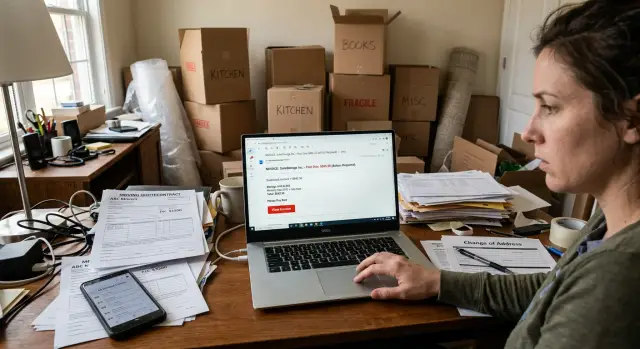
How the scam starts after a move
A move creates the kind of confusion scammers love. You're paying movers, switching utilities, updating your address, comparing storage prices, and watching for deposits and final bills at the same time. When money is going in five directions at once, one more invoice can feel normal.
That is why fake storage unit billing emails often show up right after a move. The timing does most of the work. If you recently asked for quotes, rented a unit, changed your address, or checked messages across an old inbox and a new one, a storage bill does not look out of place.
Stress makes it worse. Moving comes with deadlines, late fees, access codes, pickup windows, and too many small decisions. If an email says your payment failed or your unit may be locked, a lot of people react fast. They want the problem gone before it turns into another call, another fee, or another thing to fix before the weekend.
Scammers do not need much to make a message look real. They often only need a few correct details: your name, an old or new address, the month you moved, the name of a storage company you contacted, and a believable amount due.
With that, the email can sound convincing. It might say your rate changed after an address update, your autopay needs to be confirmed, or a reservation turned into a charge. Those stories feel plausible because billing mix-ups do happen during moves.
A common trap is the old inbox. You may still receive quote follow-ups, account notices, and random move-related mail there. So when a message lands in that account and mentions storage, it can feel like unfinished admin instead of a scam.
The scam works because it blends into a messy week. People are not careless. They are busy, tired, and trying to keep their plans on track. That is exactly when a fake bill has the best chance of getting paid.
Where scammers get the details
A move leaves a trail. You share your contact details with movers, storage companies, utility providers, landlords, and anyone sending a quote. That gives scammers plenty to work with when they send fake storage unit billing emails.
Quote request forms are one of the easiest starting points. People often enter a full name, phone number, email address, move date, and the cities involved. That is already enough to make a fake invoice feel real. If the form gets passed around, sold, scraped, or exposed in a breach, a scammer can write a message that sounds like it came from a storage company you almost used.
Address changes add another layer. When you update records after a move, you confirm two things at once: where you lived and where you are now. A scam email gets more convincing when it mentions the old street, the new city, or the month you moved. Even a small detail like "unit payment for your July move" can catch you off guard.
Old inboxes are a weak spot too. Many people keep an older email account for years, even if they barely check it. That inbox may still receive storage reservations, moving quotes, and billing notices from past sign-ups. If you forgot which company you contacted, a fake bill landing there has a better chance of slipping through.
Data brokers make this easier than most people realize. They build profiles that can connect past addresses, current and older email accounts, phone numbers, relatives, household members, age ranges, and move history. A scammer does not need every detail from one place. They can piece together information from several sources and end up with a message that feels specific enough to trust.
Picture a simple case. You request three storage quotes, update your address, and keep using an old Yahoo inbox for backup logins. A scammer who gets hold of those bits can send a payment reminder with your old ZIP code, your new city, and a move date that looks right. Most people will not remember which company had which details.
That is why data broker exposure matters after a move. When your old addresses, email accounts, and phone numbers stay easy to find, scam messages get much more believable.
What the email usually looks like
Most fake storage unit billing emails do not look dramatic. That is why they work.
The subject line is usually plain and routine, something like "Balance due," "Invoice ready," or "Final notice for your unit." It sounds like a normal billing message you meant to deal with later. After a move, when your inbox is full of utility bills, address updates, and account notices, that kind of subject line can slip past your guard.
The amount is often small on purpose. A scammer might ask for $28, $47, or $86 instead of a huge charge. That feels believable. Many people would stop and question a $900 bill, but a small fee can seem like a late charge, lock fee, or final cleanup cost. The low amount creates a dangerous thought: "I'll just pay this and move on."
The message usually pushes you toward one fast action. It may include a payment button, a phone number, or both. The wording often tries to rush you without sounding too extreme. Common lines include "Pay today to avoid collections," "Your access has been suspended," "Final attempt before account closure," or "Call billing now to prevent added fees."
A real-looking detail is what makes the email stick. The scam may include your old address, your new city, part of your phone number, or the month you moved. That is enough to make it feel familiar. But the company details are often fuzzy. The sender name may be generic, the logo may look slightly off, and the email may never mention a unit number, rental date, or branch location you can verify.
That mix is common in fake storage unit billing emails: specific personal details, vague business details. If the message knows a little about you but says very little about the actual account, slow down.
A good rule is simple. The more urgent the payment request sounds, the more exact the company details should be. If those details are missing, treat the bill like a trap, not a normal reminder.
A realistic example
Jenna is getting ready for a move, so she asks several storage companies for quotes. She fills out a few web forms, replies to two sales emails, and uses an older inbox she keeps for bills and move-related messages. Around the same time, she updates her address with her bank, her phone carrier, and a few shopping accounts, but not every account gets changed at once.
A few weeks later, that old inbox gets a message with the subject line "Payment due for your storage unit." The sender name looks plain enough, and the email says her unit has an overdue balance. It lists her old ZIP code and shows the last few digits of her phone number. That is enough to make the bill feel familiar, even though she never signed a storage contract.
The timing is what almost gets her. She really did compare storage prices recently. She really did move out of that ZIP code. The charge is not huge, either. It is the sort of amount people pay fast just to clear one more moving task off the list.
Jenna hovers over the payment button and starts to second-guess herself. Maybe she reserved a unit and forgot. Maybe one of the quote requests turned into an account. Scam emails often work this way. They do not need a full file on you. A couple of correct details can do the job.
She stops and checks her records first. There is no lease, no welcome email, no gate access message, and no receipt for a deposit. The company name in the email is close to one she contacted, but not the same. The payment page asks for card details right away and does not show a unit number or move-in date.
That is how these scams land. Quote requests, address changes, old email accounts, and exposed contact details give scammers just enough to build a believable bill.
What to do before you pay
Do not pay a storage bill just because it looks familiar. After a move, your inbox is full of quotes, confirmations, forwarding notices, and account updates. That clutter makes fake billing emails easy to miss until the payment request feels almost normal.
Start with the basic question: did you ever sign a storage contract? A quote request is not a contract. A half-finished booking is not a contract either. If you only asked for prices during your move, that bill may be built on scraps of real information.
Search your inbox for the company name, but do it carefully. Look for older quote emails, move-related messages, and any receipt or signed agreement. If all you find is a price estimate or a sales follow-up, that is not proof you rented a unit.
Then check your bank or card history. A real storage rental usually leaves a trail: a deposit, a setup fee, an autopay record, or at least some past payment. If there is no payment history and no signed paperwork, the bill deserves a hard look.
Do not use the payment button or phone number inside the email. Find the company's contact details another way, such as your paperwork, an old invoice you already trust, or a number you saved when you first compared options. Ask them whether you have an actual account, a unit number, a move-in date, and a balance due.
Look closely at the sender too. On a phone screen, a slightly wrong domain is easy to miss. A message might look like it came from a known storage company while actually coming from a random address that has nothing to do with the business.
If the message says your access is suspended, your account will be closed, or extra fees will be added today, slow down even more. Pressure is part of the scam. A real company can confirm your account details when you contact it directly.
If you already clicked or paid
Act fast. The first hour matters more than figuring out every detail.
Start by saving proof before anything changes. Take screenshots of the email, the full sender address, the payment page, any receipt, and the charge on your bank or card account if it already posted.
A short checklist helps:
- Save screenshots and download the email if your inbox allows it.
- Change the password for the email account that got the message.
- Turn on two-step verification for that email account.
- Call your bank or card provider right away if money was sent.
- Change any other password you entered on the fake payment page.
That email account matters most because it often holds the rest of the trail. If a scammer gets into it, they can reset other accounts, read moving quotes, and watch for real bills. If you reuse passwords, change those too.
When you contact your bank or card provider, keep it simple. Say you may have paid a fraudulent storage invoice and want the charge reviewed, reversed, or blocked if possible. Ask whether they should replace the card, stop future charges, or add extra fraud monitoring.
Do not assume the scam ends with one email. Fake storage billing emails often lead to follow-up texts or calls using the same story. The person may claim your unit is overdue, your access will be locked, or a second payment failed. Treat every follow-up as suspicious until you verify it through contact details you already trust.
Also check whether the same message reached anyone else in your household. A spouse, parent, or adult child may have received the same fake bill if they were copied on moving quotes, used a shared family inbox, or helped with the booking.
If you find more copies, save those too. Put everything in one folder with dates, times, amounts, and screenshots. That makes it much easier to dispute the payment and spot the next attempt before someone else pays it.
Mistakes that make the scam easier
The easiest win for a scammer is a rushed payment. After a move, people expect loose ends: storage fees, final utility bills, deposit notices, and forwarding charges. The message lands at the right moment, and the person clicks before checking who sent it.
Another common mistake is trusting the bill because it includes an old address. That detail feels private, but it often is not. Old addresses show up in broker databases, move-related quote forms, leaked mailing lists, and public records. If an email mentions the apartment you left three months ago, that does not prove the sender is real. It may only prove your data is easy to find.
Old inboxes create another weak spot. Many people stop checking the email account they used during the move, or they keep it open but rarely sign in. That leaves a perfect place for scam messages to pile up without context. When you finally open that inbox and see a storage charge, it can feel like something you meant to handle weeks ago.
People also get tripped up by fuzzy memory. Maybe you contacted four companies. Maybe one called back and another sent an estimate. After a while, the names blur together. Scammers count on that. If a company name feels vaguely familiar, that can be enough to lower your guard.
The fix is not complicated, but it does require a pause. Before paying, ask yourself whether you remember an actual contract, not just a quote form or sales email. That one question catches a lot of scams.
Quick checks before trusting any bill
A move creates confusion on its own. You may have asked for quotes from three companies, changed your address twice, and forgotten which inbox you used for each step.
Before you pay anything, slow down and check the basics. A real bill should match a real account you know you opened, not just a company name that looks familiar.
Ask yourself five questions:
- Do I know this company from a signed rental contract, or only from a quote request?
- Does the sender's email domain match the business name on my paperwork and past messages?
- Is the message pushing me to pay today or lose access to a unit right away?
- Can the company confirm my account by phone or through its main customer support channel, without me using the email link?
- Did this show up in an old inbox I barely check?
The first question matters more than most people think. A quote is not proof that you rented a unit. If you contacted five storage companies during your move, any one of those names may still feel familiar weeks later.
Check the sender carefully too. A small change in the domain can be enough to fool you, especially on a phone screen. If the storage company is real, call the number from your contract, past invoice, or another trusted record. Do not use the number or payment button inside the email.
Pressure is another bad sign. Real businesses do send reminders, but scam messages often jump straight to threats about late fees, lockouts, auctions, or lost access. That urgency is there to stop you from checking.
If even one detail feels off, pause the payment and verify the account another way.
Next steps to reduce your exposure
Once the move is over, clean up the loose ends. Fake storage billing emails get easier when scammers can reach you through an old inbox, find a past address, or match your name to a quote request you forgot about.
Start with email. If you still have old accounts you never check, either secure them or close them. Change the password, turn on two-factor authentication, and review forwarding rules. An abandoned inbox is easy to take over, and that gives a scammer a place to catch bills, password resets, and old booking emails.
Do the same with accounts you made during the move. Delete unused logins from storage quote sites, moving marketplaces, truck rental tools, and any form where you entered your contact details once and left. Many people compare prices across five or six sites, then forget those accounts exist.
It also helps to keep one short record of the companies you actually used. Save the company name, the email address or phone number they used, the date you booked or paid, and any invoice number you kept. That small record makes it much easier to check a bill fast. If a new message does not match your notes, slow down.
Then look beyond your inbox. People-search sites and data brokers often publish your name, phone number, old address, new city, and family links in one place. That gives scam emails a lot of detail, which makes them feel real.
If you want to reduce that exposure without doing every opt-out by hand, Remove.dev removes personal data from over 500 data brokers and keeps monitoring for re-listings. It will not stop every scam, but it can cut down the personal details criminals use to build convincing storage or moving scam emails.
One last habit is worth keeping: once a month, check which old accounts still exist, which companies still have your details, and which addresses are still showing up online. Half an hour of cleanup now can spare you a fake bill that looks real months later.
FAQ
How can I tell if a storage bill email is fake?
Start with one question: did you ever sign a storage contract? If the email feels familiar but you cannot find a lease, deposit, unit number, or past payment, treat it as suspicious.
Fake bills often know a little about you, like your old address or move month, but stay vague about the account itself. That mix is a common warning sign.
Why do these scams often show up right after a move?
A move leaves a lot of data behind. You share your name, phone number, email, old address, new address, and move date with movers, quote sites, utilities, and storage companies.
That gives scammers enough detail to make a bill look normal when you are already dealing with too many payments and account updates.
Does asking for a storage quote mean I owe money?
No. A quote request is not the same as renting a unit. Asking for prices, starting a booking, or replying to a sales email does not mean you opened an account.
If all you can find is an estimate or follow-up message, you should not pay a bill just because the company name rings a bell.
What details should a real storage bill include?
A real bill should match an account you know you opened. You should be able to verify the company name, unit number, move-in date, branch, and some payment history or signed paperwork.
If the email asks for money but skips those details, slow down and verify it another way.
Should I call the number or use the payment link in the email?
No. Do not use the payment button, reply address, or phone number inside the message. If the email is fake, those details send you straight to the scammer.
Use contact information from your own records instead, like a past invoice, your contract, or a number you saved earlier.
If the email mentions my old address, does that prove it’s real?
Not by itself. Old addresses, ZIP codes, and move dates can be found in broker records, quote forms, leaks, and old mailing lists.
That detail may make the message feel personal, but it does not prove the sender is real. You still need to verify the account.
What should I check before paying any storage bill?
Check your records before you do anything else. Search for a signed lease, welcome email, gate access message, receipt, or a past charge on your bank or card.
If you cannot find a contract or payment trail, contact the company through a trusted number and ask them to confirm whether you have an actual account.
What should I do if I already clicked or paid?
Act fast and save proof first. Take screenshots of the email, sender address, payment page, receipt, and the charge if it posted.
Then change the password for the email account that got the message, turn on two-step verification, and call your bank or card provider to report the payment and ask about blocking or reversing it.
Why are old email accounts risky after a move?
Old inboxes often still get move quotes, billing notices, and password resets. If you rarely check that account, a fake bill can look like unfinished admin from weeks ago.
They are also easier to neglect. If the password is old or reused, that account becomes a soft target for more fraud.
How can I reduce the chance of getting these fake bills again?
Clean up the accounts and data trails from the move. Secure or close old inboxes, remove unused quote-site accounts, and keep a short record of the companies you actually used.
It also helps to reduce how much personal data is easy to find online. Remove.dev removes personal data from over 500 data brokers and keeps checking for re-listings, which can make scam emails less convincing.