Giveaway entry privacy: what contest forms do with your data
Giveaway entry privacy is not just about one form. Learn how sweepstakes can spread your phone, email, and home address across many marketers.
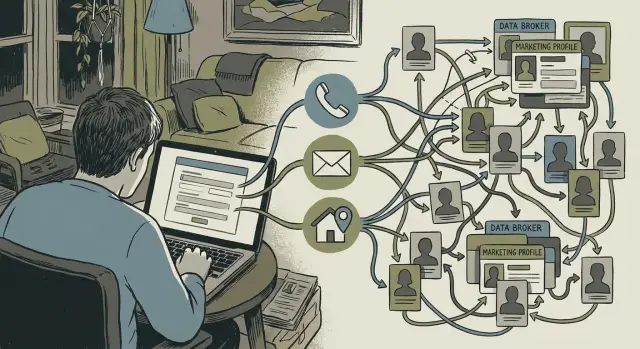
Why a simple entry can create a long privacy problem
A giveaway form looks harmless. You type your name, email, phone number, maybe your home address, and click submit. The whole thing takes five seconds.
The privacy cost can last a lot longer.
Many contests are built to collect leads, not just choose a winner. The company behind the giveaway may keep your details for future campaigns, share them with marketing partners, or add them to a customer database used across several brands. That is why one entry can turn into weeks or months of promo texts, sales calls, and "special offers" from companies you barely recognize.
The real price is often your contact data. A coffee machine, concert ticket, or gift card might be worth $50. Your phone number and email can be worth more to marketers because they can use them again and again. If you include your home address, the trail gets wider. Direct mail, profile matching, and broker listings can follow.
That is what makes giveaway entry privacy messy. You are rarely handing data to just one brand. You may also be feeding an ad agency, an email platform, affiliate partners, and outside lists mentioned in tiny print near the button. Once that data starts moving, it is hard to pull back.
A common pattern is easy to spot after the fact. You enter a vacation sweepstakes for a hotel chain, then start hearing from travel clubs, insurance sellers, and "partner promotions" within a few days. Nothing was hacked. You gave permission without realizing how broad it was.
Before you enter, pause for a second. If the form asks for more than a winner would need, if the marketing box is already checked, or if the fine print mentions "partners," "affiliates," or "trusted third parties," assume your data is part of the deal.
What giveaway forms usually collect
Most giveaway forms start with the basics: your full name, email, phone number, and home address. That can sound reasonable if there is a prize to ship or a winner to contact. But those fields do more than identify you. They also make it much easier to match you with marketing records that already exist.
The next layer often gets more personal than people expect. A form may ask for your date of birth, gender, ZIP code, or details about your household. Do you rent or own? Do you have children? How many people live with you? Each answer seems small on its own. Together, they narrow down exactly who you are.
Some sweepstakes go further by adding survey questions that look optional or fun. They may ask what you plan to buy next, what car you drive, how much you spend on travel, or what products interest you most. Those answers help marketers sort people into audience groups. A giveaway can double as a cheap way to build targeted lists.
That is why a simple contest form can collect much more than an entry. It can gather contact details, demographic clues, shopping signals, and enough information to link you to outside records later.
How your details spread beyond one brand
Most people think they are giving details to one company. That is often not what happens.
A contest page may be run by one brand, promoted by another, and backed by a group of co-sponsors. When you submit your name, email, phone number, or home address, the same entry data can be shared across that group. The privacy problem starts there, not months later.
The broad permission usually sits inside one small checkbox or one line of legal text. It may say you agree to hear from the sponsor, its partners, affiliates, or "selected third parties." That sounds limited, but the real list can be long and buried in the rules. One click can cover far more companies than most people expect.
After that, your details may move into the lead-buying market. A company that collects giveaway entries can package those contacts and sell or license them to marketers. Those buyers can use the data for email campaigns, phone calls, text messages, paper mail, or ad targeting.
This is why one sweepstakes entry can turn into spam from brands you have never heard of.
It also does not stop with the original form data. An email address or phone number can be matched with records held by data brokers. Once matched, your entry can connect to a much larger profile that may include past addresses, age range, household details, or shopping habits. Even a simple form can feed that matching process.
Picture a realistic example. You enter a prize draw for a free stroller from a baby brand. A month later, you get emails from insurance sellers, coupon sites, and home security companies. Then paper mail starts showing up. The stroller brand may not have sent all of that itself. Your details likely moved through co-sponsors, lead buyers, and broker matching.
That is what makes contest form privacy tricky. The form looks like a quick trade: your details for a chance to win. In practice, it can turn into a long chain of sharing that reaches well beyond the brand on the page.
A realistic example of how it plays out
Picture this. You see a social ad for a free weekend trip: two nights in a beach hotel, airfare included, no purchase needed. The form looks simple, and the brand name feels familiar enough to trust.
You tap through and enter your first and last name, email, phone number, and full home address. That last field feels odd for a giveaway, but it is marked as required, so you fill it in and move on.
Under the submit button, there is a block of small print. It says you agree to receive offers from the sponsor and its "marketing partners" or "trusted third parties." Most people do not read that line closely. They are trying to enter before the ad disappears.
For a day or two, nothing happens. Then the follow-up starts.
You get a text about travel deals from a company you have never heard of. A call comes in about vacation clubs. Your inbox picks up promos for hotel packages, insurance quotes, and discount memberships. A week later, paper mail shows up too, because that full address did not stay with one brand.
What likely happened is simple. The giveaway form collected more than an entry. It collected a clean bundle of contact details that could be shared, sold, or matched with other lists. Once your phone, email, and address move into that system, other companies can use them for outreach, and data brokers can connect them to even more records.
That is where giveaway entry privacy gets expensive in a real way. One fun entry can turn into months of spam calls, marketing texts, and extra exposure for your home address.
How to spot trouble before you submit
Start at the bottom, not the top. Before you type your name or email, read the consent line near the button. That one sentence often tells you more than the rest of the page.
If it says your entry also signs you up for marketing, texts, or messages from "partners," slow down. Vague words matter. "Partners," "affiliates," and "special offers" often mean your details can move far beyond the company running the giveaway.
Watch for forms that ask for a phone number or home address before there is any real reason to need them. A shipped prize may need an address, but usually only for winners. A phone number is often there for marketing texts, not for the contest itself.
A simple test helps: ask what the company actually needs right now to contact a winner. In many cases, an email address is enough. If the form wants your full address, birth date, and mobile number for a small chance to win a $10 gift card, that is a bad trade.
Pre-checked boxes are another warning sign. They rely on speed and habit. If one box signs you up for emails and another allows data sharing, uncheck both unless you truly want that.
The wording matters as much as the box itself. Clear language is fine. Broad phrases like "from us and selected third parties" or "for relevant opportunities" should make you pause. If they will not plainly say who gets your data, assume the list is longer than you would like.
How to enter more safely
You do not need to stop entering giveaways. You just need a little distance between contest forms and your everyday life.
The safest habit is simple: give the minimum. If a brand wants your home address, phone number, birth date, and marketing consent just for a chance to win a tote bag, skip it.
A few habits help a lot:
- Use a separate email address for contests, coupons, and one-off signups.
- Leave optional fields blank, especially phone number, street address, and birthday.
- Check every box before you submit and clear anything related to partner offers or SMS marketing.
- Save a screenshot of the form and the consent text in case you need it later.
- Watch what happens over the next few days. One confirmation email is normal. A wave of texts and unfamiliar brand messages is not.
This takes a couple of extra minutes. It is usually worth it. A separate contest email alone can save a lot of cleanup later.
If you enter often, be picky. Stick to brands you know, read the consent line near the button, and skip any giveaway that feels nosy. Prevention is still easier than cleanup.
Common mistakes people make
Most people do not get into trouble from one giveaway. The mess usually starts when small casual choices pile up.
The most common mistake is using your everyday contact details for every entry. If you use the same email address for banking, shopping, work, and family messages, it gets much harder to see what caused the flood of mail later. The same goes for your main phone number.
Another mistake is giving more information than the prize is worth. A chance to win a $25 gift card should not need your full birth date. Yet many people type it in without stopping. Full date of birth, home address, and other identity details can stick around far longer than the contest itself.
People also run into trouble when they enter the same promotion across multiple partner sites, fill every optional field because it feels faster, or assume "we may contact winners" means one message and nothing more. In reality, that same form may include marketing consent, partner offers, or broad sharing terms tucked into the fine print.
There is also a volume problem. If you enter ten or twenty sweepstakes in a month, you increase the odds that one company shares your data widely, stores it badly, or leaves it sitting with outside ad partners. That is how a small risk turns into a repeating problem.
A better rule is to treat every contest form like a trade. If the prize is minor, give as little as possible. Use a separate email, a secondary number if you have one, and skip any field that feels too personal for a random giveaway.
A quick checklist before and after you enter
A fast check takes less than a minute. That is often enough to tell whether a giveaway is harmless fun or a bad trade.
Before you submit, ask a few plain questions. Is the prize actually worth giving out your phone number, main email, or home address? Are you only filling required fields? Did you read the small line near the button? Did you save proof of what you agreed to?
That screenshot matters more than most people think. If spam emails or sales calls start a week later, you have something concrete to compare against instead of trying to remember what the form said.
After you enter, watch what changes. One new promo email is normal. A sudden wave of texts, calls, and unfamiliar sender names is not.
A simple follow-up routine works well:
- Notice whether new spam starts within a few days of the entry.
- Check if messages mention "partners," "special offers," or brands you do not recognize.
- Keep a short note of new calls, texts, or emails tied to the date you entered.
- Start opting out early instead of waiting for it to get worse.
Good giveaway entry privacy habits are mostly about friction. Use a secondary email when you can. Skip entries that demand a street address for a digital prize. If a form wants more than it needs, that is usually the real deal on offer.
What to do if your data keeps spreading
If one giveaway entry turns into a steady stream of emails, texts, and sales calls, do not treat it like a random annoyance. It usually means your details moved past the original brand and into other marketing lists.
Start with the companies already contacting you. Unsubscribe from emails, reply STOP to marketing texts when that option is offered, and use each brand's privacy or data request process to ask them to stop using or sharing your information. This will not fix everything, but it can slow the spread.
Keep a simple record as you go. A notes app is enough. Write down which company contacted you, when it happened, what channel they used, and whether you opted out. After a week or two, patterns often show up.
The next step is checking whether your phone number, email, or home address now appears on people-search or broker sites. That is often where contest data keeps living long after the giveaway ends. Search a few variations, especially an older email address or mobile number you used on entry forms.
Manual cleanup works, but it gets old fast. Broker sites often relist people after an opt-out. If the problem has grown beyond one noisy brand, a service like Remove.dev can help by finding and removing personal information from data brokers and continuing to watch for relistings.
The real issue is not one annoying email. It is your details getting copied, sold, and reposted in places you never meant to share them. If new outreach keeps showing up after you opted out, assume the data spread wider than the original form and act early.