Insurance claims privacy: how vendors spread address data
Insurance claims privacy matters because adjusters, processors, and partner systems can copy your address far beyond the insurer. Learn where it goes.
Why a claim can spread your address
A quote usually stays inside one insurance company. A claim rarely does.
Once money, repairs, documents, and deadlines enter the picture, your file starts moving between people and systems. Your address is not only used to identify you. It can show up on intake forms, repair estimates, payment records, police reports, medical paperwork, and mailed notices. Most people do not realize how many routine claim documents repeat the same home address.
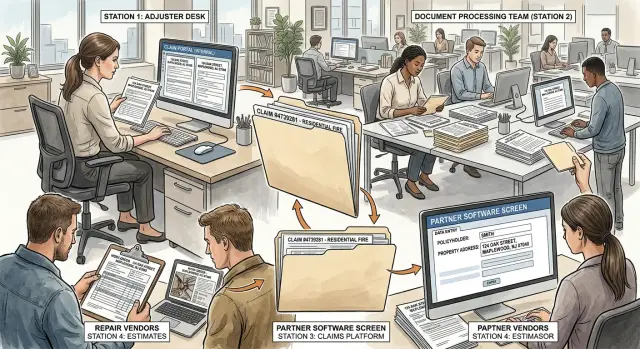
That spread is often ordinary, not shady. Claims move fast because work is split across adjusters, repair shops, payment teams, document processors, and outside vendors. The problem is simple: every handoff can create another copy of your address in another inbox, database, scan archive, or software tool.
A car accident claim makes this easy to see. You report the loss, upload photos, send a registration document, and get a repair estimate. Your address may now sit in the insurer's file, the adjuster's notes, the body shop's system, the payment record, and printed claim letters. That is a much larger trail than a basic quote form.
The real issue is not bad intent. Claims work depends on sharing. If you do not expect that, it is easy to send more personal information than the claim actually needs.
Who may handle your claim behind the scenes
When you file a claim, the insurer is often only the first stop.
A staff adjuster may review the report and policy details. If the loss needs an inspection, the insurer may bring in an independent adjuster or field contractor. That contractor may use separate mobile apps, upload tools, and reporting software.
You may also deal with teams you never hear from directly. If you upload a police report, repair estimate, medical bill, or signed statement, someone may sort it, scan it, rename it, or tag it so other systems can read it. Sometimes that work is done by the insurer. Sometimes it is done by a vendor.
As the claim moves forward, more companies can see parts of the file. A repair shop may get your contact details and claim number. A rental car partner may get dates, pickup information, and billing details. A payment processor may handle mailing records or bank-related information. If the claim becomes disputed, legal or medical review vendors may see supporting documents.
Each handoff may look minor by itself. Put together, they create more places where your address can be stored, copied, or kept long after the claim closes.
How the data trail gets longer
A claim rarely stays in one neat record. The first report usually starts in the insurer's claim system, then parts of it move into tools used by adjusters, repair shops, document teams, payment vendors, and partner companies. Each move can carry your address, even when the next team only needs one page.
Claims also collect more than a simple form. Photos can catch a house number, street sign, or mailbox in the background. Repair invoices often include a billing address. Police reports, towing receipts, medical paperwork, rental forms, and mailed letters can repeat the same address over and over. In a few days, one claim can create a thick stack of records.
The transfers are not always tidy. One vendor may use a portal. Another wants email attachments. Another works inside a shared claims platform. Some files are still printed and mailed. Once a PDF is downloaded, forwarded, scanned, or saved into a separate folder, there is another copy to manage.
A few copy points show up again and again: intake notes from a call center, document scans sent to processing teams, exports shared with repair or payment partners, and archived claim files kept for audit or legal reasons. Some of these copies are easy to miss because they happen in the background when systems sync with each other.
That is what makes claims privacy hard to judge from the outside. The risk is not only the main insurer record. It is the extra copies created during routine work.
A simple example from one car accident claim
A minor crash happens on the way home. The driver opens the insurer's app, reports the accident, uploads photos, and enters a home address so the claim can move forward.
That first step feels routine. But the address can start traveling before the claim is even settled.
An adjuster reviews the file and sends the photos to an outside service. The same claim may also go to a repair network so a body shop can inspect the damage, order parts, or schedule work. At that point, the driver's address may already sit in the insurer's system, the photo review vendor's system, and the repair network's system.
Then a rental car is needed. The booking partner may receive the address for pickup details, billing, or identity checks. If the claim ends with a paper check or reimbursement letter, a payment processor or mail vendor may receive name and address details to print and track delivery.
Months later, the trail can keep growing. A survey company may contact the driver after the repair. If fault is disputed, a recovery team may receive part of the file while chasing payment from another insurer. They may not need every detail, but address data often travels with the rest of the case.
No single handoff looks dramatic. Together, they create a long trail across separate systems.
What to ask before you send documents
Claims move quickly. That is exactly when people send too much.
Before you upload a form, photo, police report, or repair invoice, ask a simple question: who is actually receiving this file? The person on the phone may work for your insurer, but the upload itself could land with a document intake vendor, an adjusting firm, or a software provider.
Then ask whether your full street address is needed for that step. Often it is included by habit, not because the task requires it. A repair estimate, damage photo, or signed statement may be easy to process with your name and claim number.
A few direct questions help:
- Who besides the insurer can see this file?
- Can my claim number replace my full address on this document?
- How long do outside vendors keep copies?
- Will any part of this be sent by paper mail?
That last point matters more than people think. Paper mail creates more printed labels, more physical copies, and more chances for your address to move into another system. Digital delivery is not perfect, but it often leaves a shorter trail.
Retention matters too. Some vendors keep files only while the claim is active. Others hold copies for months or years under their own rules. If a windshield claim needs one invoice and one photo, for example, the shop may not need your full home address at all. Asking that one question can keep it out of one more database.
You are not being difficult. You are checking where your information goes before it starts moving on its own.
How to limit exposure during a claim
The best time to protect your address is the day the claim opens. Once files start moving, they are harder to track.
Keep a simple list of every company that touches the claim. Include the insurer, any adjuster firm, the repair shop, the rental car company, and the document portal named in emails and forms. Save screenshots of consent boxes, privacy notices, upload pages, and vendor names while they are still easy to find.
Use a plain rule: send only what is needed for the current step. If the adjuster asks for a repair estimate, send the estimate, not a full policy packet and old claim papers. If a form asks for supporting records, check whether it needs every page or only the page with the date, claim number, and service details.
Before you upload or mail anything, read it like a stranger would. Forms often include extra details in headers, footers, and attached pages. Old addresses, family names, unrelated account numbers, and prior claims can sit there for no good reason. If a detail does not help process the current request, remove it when you can.
Email is where many claims get messy. If the insurer offers a portal, use it instead of open email when possible. A portal is not perfect, but it usually keeps files inside one claim record rather than scattering them across inboxes, forwarded chains, and downloads.
Printed forms need the same care. Check every page, including anything prefilled. Insurers and vendors reuse templates all the time, and stale information can slip in without you noticing.
Common mistakes that widen the trail
Most claim data spreads because people send more than the claim needs.
One common mistake is sending a full policy packet when one page would do. If the adjuster only needs proof of coverage, sending the whole packet can expose old addresses, household names, billing details, prior vehicles, and other information unrelated to the loss.
Email makes this worse fast. People reply to a long chain, attach the same files again, and add a few new ones. Now the insurer, the adjuster, the repair shop, and anyone copied into the thread may all have multiple versions of the same documents.
Another mistake is sharing details about other people in the home when they are not tied to the claim. If your spouse, parent, or adult child was not involved, their names, phone numbers, and address history usually do not help. They just add more personal data to the file.
Old forms create problems too. Reused PDFs may still contain a previous address, old phone number, or hidden autofill data. That stale information can move through partner systems just as easily as current information.
It also helps to drop one common assumption: outside vendors do not always follow the same workflow as the insurer. A repair network, transcription service, intake contractor, or mail vendor may keep records differently.
A safer habit is simple. Send only the specific page requested, strip old attachments from email replies, leave out household details that do not matter, and review every form for outdated information before you upload it.
Quick checks after the claim starts
Once a claim is open, your address can spread faster than you think. A few simple checks make that easier to spot.
Start by writing down every company that now has your address, not just the insurer you called first. Include the claims brand, any third-party administrator, the body shop, rental company, roadside service, medical review firm, and anyone who asked you to upload or sign documents.
Keep one folder for every letter, PDF, text screenshot, and email tied to the claim. If you need to clean this up later, you will want a map.
Then watch for signs that the file has moved. Paper mail from a company you do not recognize is often the clearest warning. So are survey texts after an inspection, repair updates from a new number, or signature requests from a different brand name. If the claim gets reassigned, ask directly: "What company has the file now, and who else can see my documents and address?"
You do not need a long debate. Just get names and dates, then save them.
What to do if your address starts spreading
If your home address starts showing up in more places after a claim, act quickly. The longer the data sits in vendor systems, the more chances it has to be copied again.
Start with the insurer. If your local law gives you the right, ask for a record or plain-language summary of who received your claim data and why. You may not get a perfect map, but even a partial list of adjusters, repair partners, document processors, payment vendors, and mail providers gives you somewhere to start.
Then contact the companies that handled part of the claim. Ask whether your file is still active, how long they keep claim documents, and whether they still need to use your address now that their part is finished. Keep notes with dates, names, and case numbers.
After that, look for spillover outside the claim itself. Over the next few weeks, check whether people-search sites or data broker listings start showing your address next to your name, age range, relatives, or past locations. One listing may look minor, but it often means the information has spread further.
If that cleanup starts turning into a project of its own, Remove.dev can help. It removes personal information from over 500 data brokers and keeps monitoring for relistings so new removal requests can be sent when your data shows up again.
You may never get a full vendor tree from every company, and some records have to be kept for legal or fraud reasons. Still, asking early questions, limiting what you send, and tracking who touched the file can keep one insurance claim from turning into a long-term address problem.
FAQ
Why does a claim spread my address more than a quote?
A quote often stays inside one insurer. A claim moves through adjusters, repair shops, payment teams, document processors, and outside vendors, so your address can end up copied into far more files and systems.
Who besides my insurer might see my address during a claim?
It can be seen by staff adjusters, independent adjusters, body shops, rental car partners, payment or mail vendors, and sometimes legal or medical review firms. Even if you never speak to them, they may still handle part of the paperwork.
Do repair shops or rental car companies always need my full address?
Not always. Sometimes a claim number, name, and service details are enough for that step, so it is worth asking before you send the full address by habit.
What should I ask before uploading claim documents?
Ask who receives the file, whether your claim number can replace your street address, how long outside companies keep copies, and whether anything will be sent by paper mail. Those questions usually tell you how far the file may travel.
Is email riskier than using a claim portal?
Usually, yes. A portal is not perfect, but it tends to keep documents inside one claim record instead of spreading them across inboxes, forwarded threads, and downloads.
What claim documents most often reveal my address?
Police reports, repair estimates, invoices, reimbursement forms, mailed letters, and payment records often repeat it. Photos can expose it too if they catch a house number, mailbox, or street sign.
How can I limit address exposure after a claim starts?
Start a simple record of every company involved and save screenshots of upload pages, privacy notices, and consent boxes. Then send only the pages needed for the current step and review each file for extra address details before uploading it.
What mistakes make the data trail worse?
People often send full policy packets, keep replying to long email chains, or reuse old PDFs with stale details still inside. That creates extra copies and spreads more personal information than the claim needs.
How can I tell if my claim file has been shared wider than expected?
Watch for paper mail from companies you do not know, survey texts after inspections, repair updates from a new brand, or signature requests from another company name. When that happens, ask who has the file now and save the answer with the date.
What should I do if my address starts showing up online after a claim?
Contact the insurer first and ask who received your claim data and why, then ask vendors whether they still need your address and how long they keep the file. If your address starts appearing on people-search sites, Remove.dev can remove it from over 500 data brokers and keep checking for relistings.