Jury duty warrant scam: remove the details they use
A jury duty warrant scam feels real when callers know your old address and phone number. Learn how they find that data and clean it up.
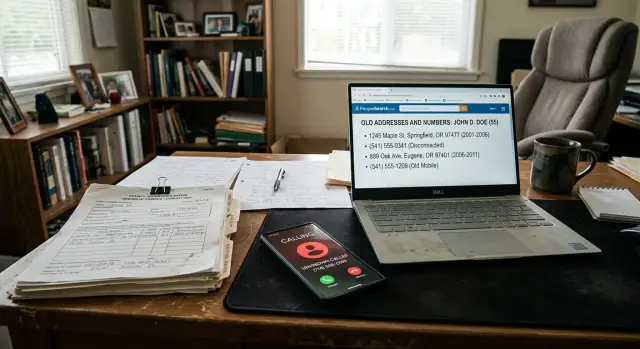
Why this scam sounds so believable
This scam works because the caller does not sound random. They sound prepared. The voice is calm, the job title sounds official, and the wording is close enough to real court language to make you stop and listen.
The part that tricks people is often not the threat itself. It is the personal detail. If someone says your full name and an old street address you forgot was still online, your brain starts treating the call as real before you have time to slow down.
That old address carries more weight than most people expect. A scammer can say you missed a notice mailed to a former apartment, or claim a court record still shows your old county. Even when the detail is outdated, it feels specific, and specific often sounds true.
An old phone number does the same thing. If they mention a number you used years ago, or ask if you still have a line ending in certain digits, it can feel like proof they reached the right person. Really, it only proves they found a people-search page or data broker listing with your history on it.
Search results make this easy. In a few minutes, a scammer can gather enough facts to sound official: a current or past address, phone numbers tied to your name, relatives or former roommates, and the counties where you have lived. None of that means they have a real court file. It means your personal data is easy to find and easy to repeat back to you.
That is why this hits so hard. It mixes pressure with familiar facts. Once the caller can quote your old addresses or match you to a past number, the story stops sounding like a cold call and starts sounding personal. And when it feels personal, people rush. That is exactly what the scammer wants.
What real court contact usually looks like
A fake jury duty call borrows the tone of authority. The caller sounds calm, uses legal words, and may repeat your old address or phone number. That still does not change the basic rule: a real court does not call and demand payment while you are on the line.
The pressure is the giveaway. If someone says you must pay a fine right now, stay on the phone, keep the matter secret, or buy gift cards, treat the call as fake. Courts do not handle missed jury duty like an overdue utility bill.
Caller ID does not prove anything either. Scammers can make a call look like it came from a courthouse, police department, or local number. People trust the screen because it feels familiar. That is why spoofing works.
Real contact is usually slower and less dramatic. You may get a mailed notice. You may be told to contact the court through its public number. You are not pushed to fix everything in the next 10 minutes while a stranger waits for your card details.
If you get a call like this, keep it simple:
- Do not pay anything during the call.
- Do not confirm personal details beyond your name.
- Hang up, even if the caller sounds official.
- Find the court's public number yourself and call back.
That last step matters most. Do not use a number the caller gives you. Do not press a number from a voicemail. Look up the court yourself, then ask whether there is actually a jury issue tied to your name.
A real check is boring, and that is good. You call a number you found on your own, reach the clerk's office, and ask for confirmation. If there is no record, you just stopped a scam before it got worse.
Where they get your old address and phone number
Most callers behind this scam do not have secret access to court files. They usually pull details from people-search sites, data brokers, and old directory pages that still show up in search results. That is enough to sound convincing for the first 30 seconds of a call.
People-search sites often show past homes, old cell numbers, landlines, and relatives linked to the same address. A caller who says your old street name, your age range, and your sister's name can sound official even when every detail came from a public profile page.
That data spreads fast. One broker collects a record from a public filing, a store loyalty program, or an old phone directory. Other brokers copy it, repackage it, and sell access to the same record again. If one listing has your 2018 address and an old number, that pair can end up on site after site.
Old directory pages make the problem worse. Search engines can keep those pages visible for years after you move, change numbers, or remove one listing. A scammer only needs one outdated result to build a script that sounds personal.
Say you moved three years ago but an old profile still shows your former apartment and a number you no longer use. A fake court caller can open with that address, ask if you still live there, and act like they are "verifying" your identity. Once you answer, they have a live person and a believable story.
This is why cleaning up one page rarely fixes the whole problem. The same record tends to bounce between many people-search sites. If a stranger quotes your old address back to you, treat that as a sign your data is exposed, not as proof they are real.
How the call usually plays out
These calls often start quietly. The caller says you missed jury duty, failed to appear, and now there is a warrant tied to your name. They sound patient at first. That is part of the trick.
Then they prove they "know" you. They read back a street where you used to live, maybe an apartment from eight years ago. You know that address is real, so your brain starts filling in the rest. If they have that, maybe they really are calling from a court office.
Next comes a phone number you still recognize. It might be an old cell number or a landline from a past move. Again, the detail is real. That is what makes the lie feel solid.
A call like this can sound like:
"You missed a jury summons and the judge has issued a warrant. We have you listed at 214 West Elm Street, correct? And we also have your prior number ending in 4421. To stop the warrant, you need to make a payment today while I keep you on the line."
That last part matters most. The scam turns fast. Once they think you believe them, they push for payment before you can slow down, hang up, or verify anything yourself. They may say you cannot call the court directly yet, or that disconnecting will make things worse.
That is when real panic starts. You are not reacting to the threat alone. You are reacting to the old address and old phone number that made the caller sound real.
Those details are often easy to find on people-search sites and data broker pages. If strangers can pull up your old contact trail in a search, a scammer can use it as a script. The less old information floating around online, the less they have to quote back to you when they want you scared and in a hurry.
What to do during the call
The moment the caller mentions money, a rushed deadline, or arrest if you do not stay on the line, treat it as a scam. Real courts do not take payment by gift card, crypto, wire transfer, or a payment app to clear up jury duty.
Keep your replies short, or stop replying at all. If they read out an old address or phone number, do not correct them and do not confirm your current one. That detail is often what makes the story sound real.
A safe response is enough:
- "I do not handle this on incoming calls."
- "I will contact the court myself."
- Hang up.
Do not debate with the caller. Do not answer "yes" questions. Do not give your date of birth, employer, address, or the last four digits of anything. Even a small correction like "I moved last year" tells them they reached the right person.
After you hang up, contact the court using an official number you find yourself, such as the number on a real summons or the public number listed by the court. Never call back the number that just called you, even if the voicemail sounds formal or uses legal language.
Save the details before you delete anything. Keep the phone number, voicemail, call time, and a screenshot of the caller ID if you can. If more calls come in from new numbers, those notes make the pattern easier to spot.
It also helps to warn people close to you. Family members sometimes get the follow-up call, especially if the scammer found old household records online. A quick heads-up can stop the next attempt.
If the call shakes you up, that is normal. These scammers want panic because panic makes people talk. End the call first. Check the facts second.
How to see what strangers can already find
Start with a simple self-search. If a caller can quote your old street, your age, or a phone number you forgot about, they usually did not hack anything. They found it in search results and people-search sites.
Use a private browser window so past searches do not shape what you see. Then search the way a stranger would. Try your full name in quotes with your city and state. Try your full name with places where you used to live. Search old phone numbers, even if you no longer use them. Search old addresses with and without your name.
Check the first two pages of results for each search. That is often enough to spot the sites that copy and resell personal details. Open results that look like directory pages, people-search sites, or profile pages. If a result shows your age range, relatives, address history, or phone number, make a note of it.
Keep a plain list as you go. Write down each site that lists you, what details it shows, and whether the page is public without a login. Do not trust yourself to remember it later. Ten minutes of notes now can save a lot of backtracking when you start removing listings.
Take screenshots before you submit any requests. A full-page screenshot is best, but even a clear shot of the name, address, phone number, and site name helps. If a page changes later, asks for proof, or puts your listing back, you have a record.
A small test makes the risk clear. Search your old mobile number from five years ago. If it appears next to your current city and two past addresses, that is enough for a fake court caller to sound convincing on the phone.
How to clean up the details they quote back
Scammers sound convincing when they can read back facts that look personal. To make this kind of call less believable, cut down the details strangers can pull up in a quick search.
Start with the biggest people-search sites first. Those are the pages most likely to appear when someone searches your name, city, or phone number. Look for listings that show a mobile number, old home address, age range, and relatives.
Remove the phone number first. A live number turns a public record into a direct call, and it gives the scammer an easy way to sound informed.
A simple order helps:
- Search your full name with your city and old phone numbers.
- Open each site's opt-out or privacy request form.
- Remove listings tied to your current or past phone number first.
- Save the date you sent the request and any confirmation number.
- Move to the next site instead of waiting on one reply.
After that, go after past addresses and age ranges. Those details help a caller guess which county to mention or which version of your name to use. Even an old address from ten years ago can make the script sound real for a few seconds.
Keep a simple log in a notes app or spreadsheet. Write down the site name, the date you sent the request, the email you used, and when you plan to check again. Without a log, it is easy to forget what was removed and what still shows up.
Check again in a week or two. Some sites update fast. Others leave the page up for days, or copy the same record from another broker and post it again later.
If you do not want to handle every request by hand, Remove.dev automates removals across more than 500 data brokers and keeps checking for re-listings, so old records are less likely to keep resurfacing.
Mistakes that keep your data easy to use
One common mistake is trying to prove the caller wrong. The moment you argue, you may start filling in gaps for them. You correct your address, confirm your county, mention your age, or explain when you moved. Now the caller has fresher facts than they had at the start.
A better move is simpler: stop talking, do not confirm anything, and contact the court through a number you found yourself.
Another mistake is thinking one opt-out fixed the problem. It rarely does. Your old addresses can sit on dozens of sites at once, and one site may copy from another. Remove one listing and your information can still stay easy to find elsewhere.
People also miss records connected to someone around them. A listing under a parent, spouse, former roommate, or sibling can still expose your address history and phone number. Scammers do not care whose page gave them the clue. If it helps them sound real, they will use it.
The biggest cleanup mistake is treating removal as a one-time task. Data gets reposted. Old records come back. New brokers pick up the same details months later. If you never check again, the same information can be used in the next call.
The safer habit looks like this:
- Do not pay or verify facts during a surprise call.
- Do not correct wrong details the caller mentions.
- Remove records from more than one people-search site.
- Check listings tied to relatives and old households.
- Recheck later for relisted records.
A simple checklist for this week
You do not need a full privacy reset to make this scam less believable. The fastest win is to cut down the personal details a caller can find and quote back to you.
Let unknown calls go to voicemail for the next seven days. Real court staff can leave a message. Scammers do worse when they cannot keep you reacting in real time.
Search your full name with your city and state. If an old address still shows up near the top results, start removing it from the people-search sites that list it. The goal is simple: make stale details harder to find on page one.
Search your main phone number too. If broker pages show it, remove it where you can. For new signups, use a secondary number when that makes sense.
Save one verified court phone number for your county in your contacts. If anyone claims you missed jury duty or have a warrant, hang up and call that number yourself.
Tell the people close to you how the script usually sounds: a missed summons, a threat, a fine, and pressure to stay on the line. A five-minute warning can stop a rushed payment.
A small cleanup makes a real difference. When a caller cannot name your old street, your current number, or a relative tied to your profile, the story feels thinner. That pause is often enough for you to hang up, check the facts, and avoid a bad mistake.
What to do next
Make this a small monthly habit. Set a reminder to search your full name, old phone numbers, and any address where you used to live. The goal is simple: see what a stranger can pull up in two minutes.
When you find a listing, save a screenshot before you remove it. Keep one note with the site name, the date you sent the request, and the date it disappeared. That makes follow-up much easier when the same record shows up again a few months later.
A routine like this is enough for most people:
- Search your name once a month.
- Check major people-search sites first.
- Re-submit removal requests when records come back.
- Save screenshots and dates in one folder.
This scam works best when the caller can quote details that sound private. An old street name or a phone number you have had for years can be enough to make a fake story feel real.
Tell other people in your family how this works. Older relatives may trust an official-sounding caller. Younger adults often assume old information is harmless because it is already "public." It is not harmless when someone uses it to pressure you into paying fast.
The next step does not need to be big. Start with one search, one screenshot folder, and one reminder on your phone. Less personal data online means fewer details a scammer can quote back to you on the next call.
FAQ
How did the caller know my old address and phone number?
Most of the time, they found it on people-search sites, old directory pages, or data broker records. An old address or phone number can look private, but it is often sitting in public search results.
Does a courthouse caller ID mean the call is real?
No. Caller ID can be spoofed, so a fake call can look like it came from a courthouse or police department. Treat the number on your screen as unverified until you hang up and call the court through a number you found yourself.
Will a real court ask me to pay over the phone for missed jury duty?
Usually not. Real courts do not demand instant payment on a live call, and they do not ask for gift cards, crypto, wire transfers, or payment apps to fix jury duty issues. If the caller wants money right away, assume it is a scam.
What should I say if they read back my old address?
Keep it brief and do not correct them. Say you will contact the court yourself, then hang up. Even a small correction can tell them they reached the right person.
Should I call back the number they left in the voicemail?
Do not use the number from the call or voicemail. Look up the court's public contact details on your own, then ask the clerk whether there is any real issue tied to your name. That breaks the scammer's script.
How can I see what strangers can find about me online?
Open a private browser window and search your full name in quotes with your city and state. Then search old phone numbers and past addresses. If you find pages with your age range, relatives, or address history, save screenshots before you submit any removal request.
Which details should I remove first?
Start with phone numbers, then move to past addresses. A working number gives scammers a direct way to reach you, and an old address helps them sound believable fast. After that, remove age ranges and relative links where you can.
Why does my old information show up on so many people-search sites?
That is normal. One record often gets copied across many sites, so one opt-out rarely fixes the whole problem. Keep a simple log of your requests and check again in a week or two for reposts.
Can scammers use my family members to make the story sound real?
Yes. A scammer may call a parent, spouse, sibling, or former roommate if an old household record connects you. Tell people close to you about this script so they do not confirm details or send money in a panic.
Is it better to remove these records myself or use a service like Remove.dev?
Doing it yourself can work if you have time and keep good notes. If you want less manual work, Remove.dev automates removals across more than 500 data brokers, keeps checking for relistings, and lets you track requests in a dashboard. Most removals are completed in 7–14 days.