Lost pet ransom scams: how posts expose your details
Lost pet ransom scams often start with public posts that reveal your phone number and area. Learn what to hide, what to share, and how to respond.
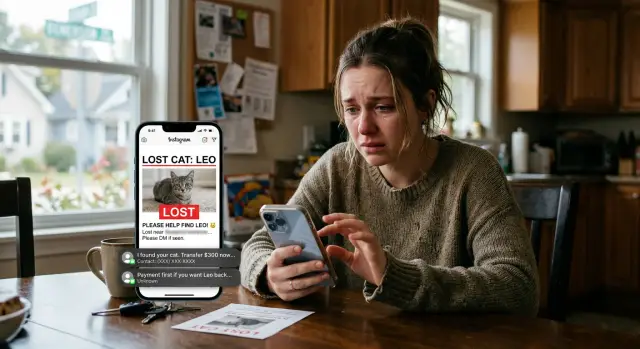
Why a lost pet post can attract scammers
When a pet goes missing, people post fast. That makes sense. You want as many eyes on the situation as possible.
The problem is that urgency also creates an opening for lost pet ransom scams. A public post rarely stays inside one small circle. Friends share it. Local groups copy it. Community pages and search feeds can push it much farther than you expected. Within hours, details meant for nearby neighbors can end up in front of strangers with no connection to your area.
That spread gives a scammer what they need most: context. They do not need much to sound believable. A pet's name, the neighborhood, the time it went missing, and a public phone number can be enough. With only a few clues, they can send a text like, "I think I found Bella near the park by Maple Ave." It sounds local, even if they have never seen your pet.
Fear makes the trick work. If someone claims your dog is safe but asks for money before they will share a photo, many people hesitate a second too long. The thought of losing more time can override common sense. A demand for cash, gift cards, or payment for "vet bills" would sound suspicious on a normal day. In the middle of a search, it can feel like a chance you cannot ignore.
There is another reason these scams keep working. Worried pet owners are easy to read. A missing pet post often shows panic, hope, and urgency all at once. To a scammer, that means a better chance of getting a fast reply and a fast payment.
The post is honest. That is exactly what makes it useful to bad actors. It gives them a script, a target, and a person under stress in one place.
The details scammers scan for first
A scammer does not read your post the way a neighbor does. They scan it like a checklist. Their first goal is simple: gather enough detail to sound real, then use your panic against you.
The phone number is often the biggest target. Many people upload a flyer with the number printed in huge text across the bottom. That makes it easy to spot, save, and pass around. If that same number appears on public records or old social posts, a scammer can learn even more in a few minutes.
Names help them sound convincing fast. A pet's name lets them open with "I found Bella." If your post also includes your name, your child's name, or a partner's name, the message feels more personal. That alone is often enough to get someone to reply before stopping to think.
Reward offers also change the tone. A line like "Cash reward, no questions asked" tells a scammer there is money on the table and that you are stressed. Urgent wording makes it worse. If your post says your dog needs medicine, misses the kids, or may not survive the night outside, the scammer knows exactly which pressure point to push.
Small timing and meeting details matter too. Notes like "Call after 6," "I'm searching the west side," or "Meet me by the park entrance" can tell a stranger when you are likely to answer, where you are focused, and which location to mention back to you. Even harmless details can become part of a believable script.
The less you share in public at the start, the harder it is for someone to fake a real sighting.
How neighborhood clues point back to your home
Scammers do not need your full address. A lost pet post often gives them enough to narrow it down. One park name, a nearby store, or the bus stop where your pet was last seen can shrink a whole city to a few blocks.
Photos make this much easier. People focus on the dog or cat and miss the background. A mural, an apartment gate, a house number, a parking sticker, or part of a license plate can turn a broad area into one likely street.
Say you post, "Missing near Cedar Park," with a photo taken on your sidewalk. In one corner, there is a bus shelter ad and half of a bakery sign. A scammer can search the park, check map images, match the bakery, and figure out which streets sit between both. What felt vague to you may be plenty for them.
The most common clues are ordinary ones: park signs, trail maps, storefront names, bus stop numbers, house numbers, mailbox labels, murals, fences, permit stickers, and partial plates. None of them seems serious by itself. Together, they can point much closer to your home than most people realize.
The problem gets worse when those clues meet information already online. Data broker sites, public records, and old people-search pages can fill in the gaps. A phone number from your post plus a neighborhood clue can help someone connect your name to an address. That is often how a scam starts to feel credible.
The message sounds specific on purpose: "I think I saw your cat by the red mural behind the pharmacy." If your post showed that mural, the scammer did not rescue your pet. They mined your post for details.
A simple example of how extortion starts
Take Mia. Her cat slips out one evening, and she does what most people would do. She posts a photo in a local group and asks neighbors to keep an eye out.
The post feels harmless. It includes her phone number so people can call quickly, and the photo was taken outside her house. In the background, you can see the corner store near her street.
An hour later, Mia gets a call. The man says he found the cat, but he will only share the location after she sends money first. He sounds believable because he repeats details from her own post. He mentions the corner store, says the cat was seen "near your area," and describes the same collar shown in the photo.
That is enough to make the story feel real. When someone sounds local, panic fills in the gaps. Mia is upset, tired, and afraid that waiting could mean losing her cat for good.
This is how many of these scams begin. The scammer may know nothing beyond what was posted in public. A phone number gives direct access. A photo with a store sign, street corner, or apartment gate gives just enough neighborhood detail to fake credibility. He does not need the pet. He only needs a scared owner and a few clues.
The pressure usually builds fast. He might say someone else is about to take the cat, that he needs gas money to drive over, or that Mia has ten minutes to pay. That time pressure is part of the trick. It keeps her focused on sending money instead of asking for proof.
A real finder can usually do one simple thing: send a current photo, describe a detail that was not in the post, or arrange a public meetup without demanding payment upfront. The moment money comes before proof, treat the call like a scam.
How to write a safer lost pet post
A good post helps neighbors spot your pet fast. It should not give strangers enough detail to pressure you.
Start with one contact method you can shut off later. A temporary phone number or a throwaway email works better than your main number. If the post spreads across local groups, you can turn that contact off once your pet is home instead of dealing with weeks of random calls.
Keep the location broad. Name the neighborhood, a nearby park, or a general area of town. Skip your street, building name, regular walking route, and nearby cross streets. A real neighbor does not need your exact block to recognize your dog from the photo.
Photos need a quick cleanup too. Crop out your house, mailbox, street signs, car plates, school logos, and anything else that pins the image to one address. Even a background store can tell a scammer where to look.
A safer public post is simple. Include a clear photo of the pet, the pet's name and type, the general area, the date last seen, and one temporary way to contact you. If there is a medical issue or temperament concern, keep that note short.
Leave reward details off the public post. Public reward offers attract bluff messages because they tell scammers money is available. If you want to offer a reward, save that for private conversations after someone gives proof they really found your pet.
That proof should be simple. Ask anyone who claims to have seen or found your pet to send a fresh photo first. You can also ask for one detail you did not post, like which side the leash clip is on or whether the collar has a tag.
Instead of posting, "Lost beagle on Oak Street near house 214, call my personal cell, $500 reward," post, "Lost beagle near the north side of Maplewood. Message this number with a current photo if seen." It still helps honest people. It gives scammers much less to work with.
How to check whether a sighting is real
A real sighting usually comes with small, plain details. A scammer often stays vague, pushes you to act fast, or jumps to money before giving proof.
Start by slowing the conversation down. If someone says they saw your pet, ask exactly when and where. "Near the park" is not enough. You want a street, corner, store, or landmark, plus a time that makes sense.
Then ask for proof from that moment, not something old from their camera roll. A quick photo or short video taken right then can tell you a lot. If they claim the pet already ran off, ask them to photograph the area where they saw it. A real person can usually do that.
One of the best tests is to ask for a detail only a real finder would notice. Keep it simple. Ask which side the collar tag hangs on, whether the leash is still attached, or if the pet has a white patch on one paw. Do not give away the answer in the question.
Watch for the pattern. A believable sighting has a specific time, a specific place, and some kind of proof. A fake one tends to come with pressure, guilt, or a payment demand.
If someone texts, "I found your dog by the school. Send $100 and I will return him," take that as a warning sign. A real finder can answer basic questions first.
If you decide to meet, do not go alone. Bring another person, meet in a busy public place, and tell someone where you are going. If the story keeps changing, end the conversation.
What to do if someone demands money
A ransom message can make people panic fast. That is what the scammer wants. Slow down, keep the conversation, and treat it like evidence first and a rescue lead second.
If someone says they have your pet, save everything: texts, call logs, voicemails, usernames, payment requests, and screenshots. Do not send money first, whether they ask for cash, gift cards, wires, or app payments. Ask for fresh proof that they really have your pet right now. If the person makes threats or keeps pressuring you, report it to local police. If you live with other people, tell them not to reply on their own if strange calls or messages keep coming in.
Fresh proof matters because old photos are easy to steal from your post. Ask for a new photo or short video with a detail only a real finder could show, like your dog wearing today's collar, your cat reacting to its name, or the pet next to a handwritten note with today's date. If the person dodges that request and keeps asking for payment, that is a bad sign.
Fake urgency is common. Someone might say they are on the way to a shelter, out of gas, or about to hand the pet to another person unless you pay in ten minutes. That pressure is the scam. Real finders usually want to confirm the pet and arrange a safe return.
When fear spikes, keep your next step simple: ask for proof, save the record, and do not pay first.
Common mistakes that make the scam easier
The worst part of a missing pet search is the rush. People post fast, share everywhere, and fix it later. That is exactly what scammers count on.
One common mistake is putting your everyday phone number inside the image itself. Once that flyer gets reposted, your number can travel far beyond the first group. Even if you delete the original post, screenshots and copied images can keep moving.
Another mistake is giving away more location detail than you mean to. A street name, nearby school, favorite park, or usual walking route may seem harmless on its own. Put together, those clues can tell a stranger where you live, where you walk, and when you might be away from home looking for your pet.
Posting the same flyer in every public group makes this worse. It spreads your pet's photo, your contact details, and parts of your routine to people who are nowhere near the area. A wider post is not always a better post. Sometimes it just gives scammers more chances to reuse your information.
The riskiest part often comes after someone replies. Panic makes people answer every message and keep talking. They may confirm their full name, send extra photos, mention they are home alone, or say exactly where they are searching. A scammer can turn that into pressure very quickly.
A safer approach is plain and a little boring. Use a separate contact method if you can. Keep the location broad. Avoid reposting the exact same flyer everywhere. Before you share anything else, ask for one specific detail that proves the person is real.
Picture a simple case: someone says they "found" your dog near the school two blocks from your house. You panic, call back, and confirm your street, your car, and that you are out searching alone. Now they know how to sound believable and how to scare you.
When a pet is missing, more detail feels helpful. Usually it is not. Share enough for real neighbors to help, and keep the rest to yourself.
A quick check before you post
Panic makes people post too much. A two-minute review can keep your post useful for neighbors without handing strangers your routine, your address, or the phone number tied to your daily life.
Before you publish, check four things. First, use a contact method you can drop later. A spare email address or a secondary phone number is better than the number used for work, banking alerts, or family logins. Second, look at every photo like a stranger would and crop out anything that points back to one home. Third, share the area, not the exact spot. "Near Oak Park" helps people look. "Behind 214 Cedar Lane near the side gate" gives away too much. Fourth, if you are overwhelmed, ask a friend to handle replies for a few hours. They can sort real sightings from nonsense and notice when someone keeps pushing for money or private details.
That buffer matters more than people think. A scammer does not need much. Your pet's name, a rough neighborhood, and a phone number tied to your daily life can be enough to start pressure. They may claim they found your dog, ask for payment to "release" it, or tell you to text back a code that can be used against your accounts.
Safe lost pet posts still work. Most helpful strangers only need a recent photo, the general area, when the pet was last seen, and one safe way to reach you.
If a post feels a little less personal than you first wanted, that is usually a good sign. You are trying to bring your pet home, not give a stranger a shortcut into the rest of your life.
What to do after the emergency is over
Once your pet is home, clean up the trail you left online. A lot of people forget this part. Old lost pet posts can stay public for months, and they often include a phone number, street names, cross streets, and photos that give away where you live.
Start with the obvious places. Delete public posts or edit them so they no longer show your phone number or exact area. Do the same for flyer images. A photo of a paper flyer can still expose your contact details long after the crisis is over.
Then search your own details the way a stranger would. Try your full name, your phone number in quotes, and your address. Save screenshots of pages that still list your information, then send removal requests where you can. It takes time, and doing it one site at a time is tedious, but it cuts down the amount of personal information floating around.
This matters because scammers reuse old information. A number posted during a stressful weekend can still get calls weeks later. Sometimes the scam starts after the pet is already found, simply because the post stayed up and the contact details were easy to grab.
If you want help with that cleanup, Remove.dev is one option that fits naturally here. It removes personal data from over 500 data brokers and keeps monitoring for relistings, which can cut down the extra details scammers use after finding an old public post.
One last step is easy to miss: ask friends or local groups to remove reposts they made for you. Those copies linger. One forgotten image with your number on it is enough to keep the problem going.
FAQ
How do lost pet ransom scams usually start?
Most start with a public post that gives away just enough detail to sound believable. A scammer uses your pet’s name, area, photo details, or phone number to claim they found your pet and then pushes for money before giving proof.
What should I leave out of a public lost pet post?
Leave out your main phone number, exact street, house number, building name, regular walking route, and any reward amount. Share a clear pet photo, the general area, the date last seen, and one contact method you can shut off later.
Is it safe to post my phone number?
It is better to use a temporary number or a spare email instead of your everyday phone number. Once a flyer or screenshot spreads, your main number can keep getting calls and texts long after the search ends.
How specific should my location be?
Keep it broad at first, like a neighborhood, park, or side of town. That gives nearby people enough to help without making it easy for a stranger to work back to your home.
What proof should I ask for if someone says they found my pet?
Ask for something current, not a story. A fresh photo, a short video, or one detail you did not post, like a collar mark or a small patch of fur, usually separates a real sighting from a fake one.
Should I put a reward in the post?
No. A public reward can pull in bluff messages because it tells people money is available. If you want to offer one, save that for a private conversation after the person gives solid proof.
What are the warning signs in a ransom message?
Watch for pressure, vagueness, and money talk. If someone refuses to send proof, keeps changing the story, or says you must pay in minutes, treat it like a scam.
What should I do if someone asks for money before returning my pet?
Do not pay first. Save the texts, call logs, usernames, and payment requests, ask for fresh proof, and report threats or ongoing pressure to local police.
How can I make my pet photos safer to share?
Check the background before you post. Crop out house numbers, street signs, store names, license plates, school logos, mailboxes, and anything else that could point back to one address.
What should I do after my pet is found?
Take down or edit the posts, remove your contact details, and ask friends or groups to delete reposts too. It also helps to search your name, phone number, and address online and remove old listings; if you want help with that cleanup, Remove.dev can remove your data from over 500 data brokers and keep checking for relistings.