Masked phone numbers: why delivery app privacy still fails
Masked phone numbers can still be tied back to you through app logs, address data, and repeated account details. Learn where the gaps are.
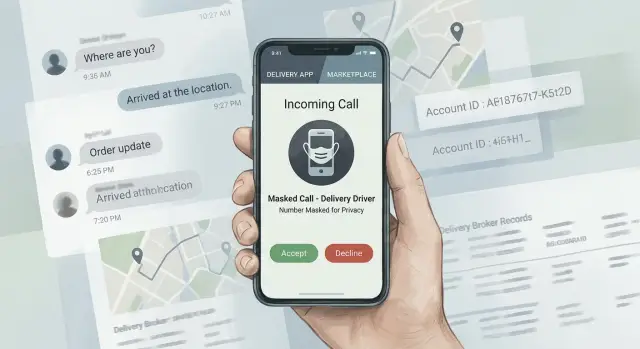
Why a masked number is not the same as anonymity
A masked number hides your real phone number from the person on the other end. That's useful, but it's a narrow kind of privacy.
The app still knows who placed the call or sent the message, who received it, and which real account sat behind the relay number. Think of it as a switchboard, not a disguise. The temporary line keeps a stranger from seeing your direct number. It does not erase the rest of your trail.
That trail is often enough to identify you anyway. A delivery or marketplace app can connect a masked call to your profile, login history, device, payment record, saved addresses, and order details. On their own, those facts may look harmless. Put together, they get specific fast.
In practice, delivery app privacy usually fails for a simple reason: the hidden number is only one field. The app may still log when the call happened, which account sent it, which device and IP address were active, and which order or listing it was tied to. If that same account has used the same home address, card, or verified phone before, the match is easy.
This is the part many people miss. The other user may not know your real number, but the company running the app often does. It may also keep the routing data that shows how the masked number connected back to you.
So the privacy promise is smaller than it sounds. You're hidden from another user for that moment. You're not anonymous inside the app.
The bigger risk is matching. A name on one order, a saved address on another, the same device on both, and a support message from your real email can all be tied together later. Once those pieces meet, the masked number matters a lot less.
What apps can still log about you
In delivery and marketplace apps, a masked number changes what another user sees. It does not change what the platform itself can store.
Many apps keep the real phone number used to sign up, verify an account, recover access, or contact support. If you later remove or replace that number, the old link may still remain in account records.
The app can also log the device and network around each session. That can include a device ID, IP address, login times, operating system, and app version. A single data point is weak. A handful of them can point to the same person over and over.
Messages and call records
When a service routes a call through a temporary line, the visible number may be hidden, but the routing log still exists. The platform can still know who called whom, when the call started, how long it lasted, whether it was missed, and whether it happened right before or after a delivery or sale.
Messages can reveal even more than calls. People casually share details that are easy to match later: "leave it by the blue side gate," "I'm off work after 6," or "call when you're outside building C." Those details tie an account to a place, a routine, or both.
Support chats add another layer. If you contact support about a refund, missing order, or account problem, you may share your real email, another phone number, or details that match older records.
Address and payment records
Saved addresses are often the strongest clue. Home addresses, work drop-offs, pickup spots, delivery notes, gate codes, and repeat locations can connect an account to a real person very quickly. Even a pattern helps. Orders to the same building at the same time each week are easy to recognize.
Payment records can narrow things down even more. The app may not store a full card number in plain view, but it can still keep the cardholder name, billing postal code, last four digits, refund history, and billing records tied to the account. That's usually enough to link one profile to another.
This is the weak spot with temporary phone numbers. They hide one visible detail, not the rest of your account history. If the app has your verified number, device data, chat logs, address history, and billing records, it can still connect the dots.
Where temporary numbers start to fail
A temporary number sounds safer than sharing your real one. The catch is simple: many apps still begin with your real number. They send an SMS code, tie that number to your account, and only hide it later during chats or calls. The mask covers the conversation, not the identity behind the account.
That is why masked phone numbers often give less privacy than people expect. The visible number may be temporary, but the platform can still keep a stable record of who you are.
Voice calls can leak more than people realize. A relay or bridge may hide both numbers on screen, but it can still log the real numbers involved, call times, duration, missed calls, and support notes tied to the contact.
The weakest point is often human behavior. A driver asks you to text directly when they arrive. A buyer says the in-app chat is buggy and wants regular SMS instead. One direct message can drop the mask completely.
Some apps also reuse the same masked contact for more than one order, or for longer than users expect. If the same relay number keeps appearing, another person can connect separate interactions to the same account. They still may not know your real number, but they now have a thread they can follow.
A simple example makes the problem obvious. You order food twice in one week, and the app shows the same masked line both times. On the second order, the courier asks you to text from your regular phone because they can't find the entrance. Now the app has the verified number, the relay has call records, and the courier has your direct contact.
Expiry doesn't erase much either. The number may stop working, but older records often remain in account history, relay logs, screenshots, saved contacts, or support notes. Expiration stops future use of that number. It does not remove the trail it already created.
How matching still happens
Masked numbers hide one detail. They do not stop phone number matching if the rest of your data stays consistent.
Most matching is not sophisticated. A service compares a few small facts, then joins them into one profile. If the same apartment number shows up across food orders, resale pickups, and support messages, the hidden number matters less and less.
Small clues add up fast
A few repeated details are often enough:
- the same home or work address appears again and again
- the payment name matches other records
- order times repeat often enough to reveal a routine
- older broker listings already tie your real phone number to that address
Picture a common pattern. Orders arrive at the same building on weekday evenings, usually within the same 40-minute window. The card name stays the same. An old people-search record already listed that address with your old mobile number. Even if the app shows a temporary phone number today, the match isn't difficult.
Old broker data makes this worse. Those records are often outdated, but outdated does not mean useless. If a broker once connected your number, surname, and address, later systems can use that old link as a shortcut. They don't need perfect data. They just need enough overlap.
Internal records fill in the gaps. A company can combine delivery notes, refund requests, chat logs, payment records, and past orders. Each piece looks minor alone. Together, they can point to one person with high confidence.
That is why temporary phone numbers often create a false sense of privacy. The number is hidden, but the pattern stays visible.
If you want less matching, the goal is simple: break the pattern where you can. Use different delivery locations when that makes sense, avoid attaching your full name to every payment profile, and check whether old broker entries still expose your phone number and address history.
A simple marketplace example
Maria lists a used stroller in a marketplace app. She uploads photos, sets a pickup area a few blocks from home, and signs in with the same account she has used for months. A buyer messages her, asks a few questions, and uses the app's masked call option.
On the surface, that feels private. The buyer does not get Maria's real number, and the call goes through a relay.
But the app still knows a lot. It can log the account Maria used, the IP address she signed in from, the rough pickup area in the listing, the time of the call, and the full chat history. If she used her usual phone number to create or verify the account, that number may still sit in the records even if the buyer never sees it.
Now add outside data. A week later, Maria's details appear in a data broker file that lists her real phone number, neighborhood, and maybe an old category tied to baby items or secondhand furniture. None of that proves the listing is hers on its own. Together, it gets close.
A match becomes easier when the same neighborhood appears again, the account behind the listing traces back to a verified number, the chat timestamps line up with listing activity, and similar items keep appearing from the same area.
Someone with access to both sets of data doesn't need the app to reveal Maria's visible number to the buyer. They only need enough overlap to conclude that the seller account and the broker profile likely belong to the same person.
That is the weak point in marketplace app privacy. The masked call protects one narrow moment. It does not remove account records, location clues, or older phone number links.
How to lower the chance of a match
Masked numbers help a little, but they work best when the rest of your account doesn't point straight back to you.
Start by separating your app identity from your main identity. A shopping-only email is an easy fix and removes one of the simplest ways platforms connect accounts over time. If you buy and sell often, use that email only for delivery and marketplace apps, not for work, banking, or social accounts.
Another common mistake is breaking the mask yourself. People paste their real number into chat, add it to delivery notes, or send it the moment someone says, "call me instead." Once that happens, there is no guesswork left.
Before you place an order or post a listing, check the details the other side can see. Look at your display name, photo, neighborhood, pickup area, and any old profile text. Small clues are often enough when combined.
A short privacy routine helps:
- turn off contact syncing unless the app truly needs it
- delete old addresses you no longer use
- remove saved cards tied to outdated billing details
- clear delivery notes with personal information
- ask for old account data to be deleted when the app allows it
Old data is often the real problem. An account may still hold a previous apartment number, an old workplace, or a card from years ago. Those leftovers give the app more ways to connect fresh activity to older records.
One practical rule is worth keeping: stay inside the app whenever you can. Don't move the conversation to direct text unless you accept the trade-off. Convenience is often what exposes people.
If you also want to reduce matching outside the app, clean up the public trail around you. Old addresses and phone records on data broker sites make it much easier to connect a temporary contact point back to your real identity.
Common mistakes that make tracing easier
Most tracing gets easier because people reuse the same details across apps, messages, and old accounts.
The most common mistake is using the same phone, email, username, and profile photo everywhere. If your marketplace profile uses the same handle as your social account or gaming account, a quick search can connect them. Phone number matching does not always start with the number itself. Sometimes it starts with a familiar username.
Voicemail is another easy leak. A masked call can still hit your personal voicemail, and many people leave their full name in the greeting without thinking about it. Photos can do the same thing. A clear face shot, work uniform, school logo, or even a car in the background can narrow down who you are.
People also panic when the relay line stops working and send a direct text from their real number. That one message can undo the whole setup. Calling back from your regular phone does the same thing.
Routine matters more than most people expect. If you use the same pickup spot every Friday at 6 p.m., that routine becomes easy to observe. One meetup reveals little. Four or five at the same place and time can reveal where you work, where you live, or when you are usually alone.
Old listings create problems too. You may clean up a current account and forget a post from last year that still shows your email, real number, or full name. Screenshots and cached copies can stay around much longer than the original post.
A simple rule helps: if two accounts would look obviously connected to a stranger, separate them.
Quick checks before you use these apps
You don't need a full privacy overhaul before every order. A two-minute review catches a lot.
Check your profile photo as a stranger would. If it shows your face, building entrance, car plate, or house number, swap it for something neutral.
Review app permissions and turn off what you don't need. Contacts, precise location, and microphone access can give the platform far more context than a simple delivery requires.
Delete saved details you no longer use. Old addresses, work locations, and payment cards create extra trails for no good reason.
Read your delivery notes and item descriptions out loud. If a stranger saw them, would they learn where you live, when you're home, or another way to reach you? Search old chats for your real number too. Many people share it once during a rushed handoff and forget the message stays in the thread.
Small details are often enough for phone number matching. A masked number plus a clear face photo, a repeat drop-off point, and a note like "leave it by the blue gate next to unit 14" can narrow things down quickly. If you once wrote, "text my other number if the app fails," the mask is already gone.
The safest account looks a little boring, and that's fine. A plain photo, fewer permissions, trimmed notes, and less leftover data close off a surprising number of easy matches.
What to do if your number is already exposed
If your number is already out there, start by finding every place it appears. Search for the number itself, then search for it next to your name, street, city, or full address. Take screenshots and make a short list of the sites that expose it. That gives you an order of attack.
Next, delete stale marketplace listings, old profile text, and any post that still hints at who you are. A masked number won't help much if an old seller bio still mentions your neighborhood, work hours, or a niche you sell in regularly.
Then deal with broker pages. If a broker site publishes your number, name, and address together, send a removal request and keep a record of when you asked and whether the page disappeared. Some removals happen quickly. Others need follow-up.
If broker listings are the main problem, doing it manually gets tedious fast. Remove.dev focuses on that job. It finds and removes personal data from more than 500 data brokers, sends removal requests under laws such as CCPA and GDPR, and keeps monitoring for re-listings after the first cleanup. That matters because a number that disappears today can show up again after a new signup or data refresh.
Keep checking after new accounts, purchases, or listings. Search again a week or two later. If you find a new exposure early, it is much easier to deal with while it is still limited to one or two sites.
A masked number can reduce direct exposure during a call or chat. That's all. If the rest of your data still points back to you, the privacy gap stays wide open.
FAQ
Does a masked number make me anonymous?
No. It hides your real number from the other person, but the app can still tie the call or chat to your account, device, IP address, payment details, and address history.
Think of it as a relay, not a full identity shield.
What can the app still see if my number is masked?
Usually a lot more than people expect. The platform may keep your signup number, call and message logs, login times, device details, support chats, saved addresses, and billing records.
Even if each record looks harmless alone, they can point back to the same person when combined.
Can a driver or buyer still get my real number?
Yes, if you switch to normal text or call back from your regular phone. That single step can expose your real number right away.
A voicemail greeting can leak it too if it includes your full name or another direct contact detail.
Why do temporary numbers fail so often in delivery apps?
Because many apps start with your real number during signup or verification, then only mask it later during calls or chats. The visible number changes, but the account behind it often stays the same.
That gap is where most of the privacy loss happens.
Do expired masked numbers erase old records?
Not usually. The relay number may stop working, but old logs can still sit in account history, support notes, screenshots, saved contacts, or system records.
Expiry stops future contact through that line. It does not remove the trail already created.
How can apps match me without showing my real number?
Matching often comes from small repeated details, not one dramatic leak. The same building, the same payment name, the same evening order pattern, or the same pickup area can be enough.
If old broker records already link your phone number to an address, the match gets much easier.
What details make tracing easier?
Saved addresses are a big one, especially if you reuse home or work locations. Repeated delivery notes, a verified phone, billing postal code, old support messages, and a familiar profile photo also make linking easier.
Consistency is what gives you away.
Should I move the conversation to regular SMS?
Only if you accept that trade-off. Staying inside the app keeps the mask in place longer and leaves less room for accidental exposure.
If someone asks to move the conversation to SMS, assume your real number may become part of the record.
What is the quickest way to lower the chance of a match?
Start with a plain profile, fewer permissions, and less leftover data. Remove old addresses, clear delivery notes, turn off contact syncing if you do not need it, and use a separate email for shopping or selling.
Also check old chats before you order or post. One forgotten message with your real number can undo everything.
What should I do if my number is already exposed online?
First, search for your number with your name, street, and city so you can see where it appears. Then remove old listings, edit stale profile text, and send opt-out requests to broker sites that show your number with your address.
If you want help with the broker side, Remove.dev can find and remove exposed personal data from over 500 brokers, monitor for re-listings, and handle repeat requests automatically. Most removals finish within 7 to 14 days.