Medicare equipment scams: why age and address matter
Medicare equipment scams often start with lists built from public age and address data. Learn what families should remove first and how to cut the risk.
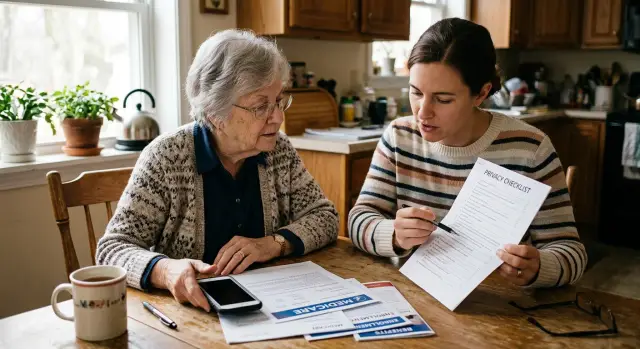
Why this scam is easy to run
Medicare equipment scams work because the story sounds ordinary. A caller offers a knee brace, back brace, glucose meter, or some other item that is supposedly "covered" and only needs a quick confirmation. Sometimes the goal is to bill Medicare for equipment the person never needed. Sometimes it is to collect just enough personal information to set up the next scam.
The ugly part is how little information a scammer needs. If a senior's age range and home address are easy to find online, the pitch gets much more believable. A call that says, "We have your address on file" feels more real than a random robocall. A mailer sent to the right house looks official. Even a doorstep pitch can sound informed when the visitor already knows who lives there.
Public age data lowers the barrier fast. It tells scammers who is likely to have Medicare, who may live alone, and who might expect medical mail. Public address data fills in the rest. It gives them somewhere to send forms, samples, fake notices, and follow-up calls that look connected.
These scams usually show up in a few familiar forms:
- phone calls asking to "verify" Medicare details
- mailers that mimic insurance companies or medical suppliers
- home visits tied to a fake delivery, survey, or wellness check
Families should know that this often does not start with a dramatic hack. It starts with ordinary people-search pages and broker records that make older adults easier to sort, contact, and pressure.
A simple example makes the point. An adult child tosses an odd postcard because it looks like junk mail. Two days later, their parent gets a call about the same brace, and the caller already has the right age range and street address. That small match is often enough to win trust.
That is why these scams spread so easily. The criminal does not need medical records at the start. Public age and address are often enough to make the first contact feel real, and that first contact is where many families get pulled in.
How brokers build senior-targeted lists
These lists usually start with boring public records, not a breach. A broker pulls pieces from people-search sites, voter files, property records, old marketing databases, warranty cards, contest entries, and purchase data. One source may show only a name and address. Another adds an age range. Another includes phone numbers, household size, or whether someone owns a home.
Put those scraps together and the picture gets clear fast.
A single profile might read like this: a 72-year-old homeowner who has lived at the same address for 18 years, has a listed landline, lives with one other adult, and has bought mobility or health-related products before. No single source needs to hold the full story. Brokers build it by combining lots of small pieces.
Once that profile exists, it rarely stays in one place. It gets copied, resold, refreshed, and matched again. A county property record can show up on a people-search site. That site can feed a marketing file. Another broker then buys that file, adds phone data, and sells a new version. Bad data spreads too. If the age is off by a year or the phone number is old, that mistake can still bounce across dozens of sites.
Lists are often grouped in ways that make them useful to scammers. Common filters include age band, ZIP code, homeownership status, household income estimate, and likely Medicare eligibility.
That last filter matters. Brokers do not need a medical chart to make a list useful for medical equipment fraud. If someone is in the right age group, lives at a stable address, and looks likely to use Medicare, that is often enough for a caller to sound convincing.
That is why these calls can feel so personal. The caller may already know the senior's name, age range, town, and whether they live alone. To a family member, it can feel like private information leaked in one big event. More often, it was bought, copied, and sorted over and over.
What scammers do with the data
If a scammer has a full name, an address, and a clue about age, the call gets much easier to fake. They do not need to ask broad questions. They can start with, "I'm calling for Mary Jones at 214 Pine Street about your covered medical equipment," and that alone makes many people stop and listen.
That is why these calls often sound so confident. The caller already knows enough to sound familiar. If the record suggests a person is 65 or older, or living in a home likely tied to a senior, the scammer treats that household as a better bet than a random number.
An address matters more than most families think. It lets the caller sound local, refer to a recent shipment, or claim they are "verifying delivery details" for a brace, walker, glucose monitor, or testing kit. A vague lie gets more believable when it includes the right street and ZIP code.
The script is usually simple. The caller says Medicare covers a knee brace, back brace, walker, or diabetic testing supplies at little or no cost. Then they push for one more detail: a date of birth, Medicare number, doctor name, or a recorded "yes." Sometimes they only want enough information to hand the lead to the next scammer.
Once someone responds, the problem usually grows. A live answer tells the caller the number works. A correction like "my mother lives here" confirms there is a senior in the home. Even a small comment such as "we already have a walker" helps shape the next pitch.
After that, repeat contact is common. The same household may get calls from different company names, texts, mailed offers, or follow-up calls about a "previous request." Lists get copied, sold, and reused. One short conversation can turn into weeks of pressure.
What families should remove first
For Medicare equipment scams, the most risky records are the ones that let a stranger sort someone by age, match them to a home address, and call with confidence. Start with pages that show all of that in one place.
People-search sites usually come first. If a page shows a full name, approximate age or birth year, current address, past addresses, and relatives, it gives a scammer almost everything needed for a believable call. A caller can mention the right street, refer to an adult child, and sound real in seconds.
After that, go after phone numbers. Remove both home and mobile numbers when they appear next to the address or age range. A phone number alone is annoying. A phone number tied to a name, age band, and household is much worse.
Then check records that confirm the same identity from another angle. Property records can show where someone lives and how long they have lived there. Voter records may confirm a full legal name and location. Marketing files can tag a household by age group, income range, or health-related interests.
Old profiles matter more than most families expect. A stale record with a former address, a late spouse's name, or an old landline still helps scammers build trust. Many scam calls work because one detail sounds personal, even if the rest is wrong.
A simple order helps. Remove people-search listings that show age, address, relatives, and phone numbers together. Then work through old profiles with past addresses, spouse names, or alternate spellings. After that, review property, voter, and marketing records that make the person easy to identify.
Focus on the pages that make age obvious at a glance. A listing that says someone is 72 and lives at a certain address is far more useful to a scammer than a bare name in a directory.
How to do the cleanup step by step
Start with a plain search. Type the person's full name in quotes, then add the city and state. If the name is common, add a middle initial or a past city too. You are looking for pages that show age, home address, phone number, and names of relatives.
Do not try to clean up everything at once. Open a note or spreadsheet and record each site you find, what data it shows, and the date you found it. A short list beats a pile of open tabs.
Work in order. Search the full name with the current city and state, then repeat with older locations if needed. Log the sites that expose age, address, phone numbers, or relatives. Start with records that show the current address and direct phone number. Save screenshots before you submit any request, and write down the submission date so you know when to check again.
Put the worst records first. If one listing shows an exact age, current address, cell number, and a daughter or spouse by name, remove that before a page that only lists an old ZIP code. Think like a scammer for a minute: what would make a cold call sound believable in under 30 seconds?
When you submit removals, use the site's opt-out form if it has one. If the site asks for proof, send only what is required and cover extra details when you can. Keep a folder with screenshots, confirmation emails, and the text you sent. That saves time if the listing comes back or the site asks for more information.
Check again in two to four weeks. Many listings return after being copied from another broker or refreshed by the site itself. One round of removals is rarely enough.
If your family does not want to manage repeated opt-outs by hand, Remove.dev handles removals across more than 500 data brokers and keeps monitoring for re-listings. That ongoing watch matters because old records have a habit of reappearing.
A realistic example of how it unfolds
Margaret is 72. She lives alone, uses Medicare, and appears on several people-search sites with her full name, age, home address, old address, and phone number. Her daughter, Nina, has never searched for this before, so she has no idea how easy Margaret is to find.
One Tuesday morning, Margaret gets a call from a man who says he is "following up on a benefits update." He already knows her street address and mentions her age group. That is enough to make the call sound official. He says many people her age qualify for a back brace at little or no cost and asks her to "confirm a few details" so it can be shipped.
This is where the scam gets its edge. The caller does not need every fact. He only needs two or three details that feel private. If he can say, "I have you at 1847 Willow Lane" and "You should have received your senior benefits notice," the conversation feels less like a cold call and more like a real follow-up.
Margaret hangs up because something feels off. Two days later, a flyer arrives in the mail pushing pain relief braces and home medical supplies. Then the voicemails start. One says she may miss a covered benefit if she does not call back soon. Another uses a different company name but the same pitch. The first call likely put her on a more active target list.
Nina finally searches her mother's name and sees why this kept happening. Multiple sites show the same address, age, and phone number. She starts removing the listings, and within a couple of weeks the easy lookup trail gets thinner.
That does not make every scam call disappear. But the callers have less to work with. They are more likely to guess, get details wrong, or sound generic. That changes the feel of the whole scam. Instead of sounding like someone who already knows Margaret, they sound like strangers fishing for an opening.
Mistakes families make
The first mistake is assuming one removal request solves the problem. It rarely does. Senior data often sits on dozens of broker sites, and one listing is enough for a caller to connect a name, age range, phone number, and home address.
Another common mistake is leaving old addresses online. A record from ten years ago may still confirm that the same person lived on the same street, moved nearby, or still has family in the house. For Medicare equipment scams, that is often enough to make a fake call sound real.
Families also pick up scam calls and ask, "How did you get this number?" It sounds sensible, but it tells the caller the line is active and someone is willing to engage. That can lead to more calls, not fewer.
Other misses are easy to overlook. People remove only the senior's profile and ignore spouse records. They forget adult children or relatives listed at the same address. They wait for repeated calls before taking action. Or they do nothing until a package, bill, or false shipment notice appears.
Household links matter more than most people think. If a spouse's age, a relative's phone number, and an old address all point to the same home, scammers can fill in the gaps fast. They do not need perfect data. They only need enough to sound believable for half a minute.
The worst delay is waiting for proof of harm. By the time a fake brace shipment, billing notice, or Medicare-style call shows up, the household data has usually been circulating for a while. Cleaning it up earlier cuts down the number of places scammers can pull from.
A better approach is to treat this as a household cleanup, not a one-person fix. Check current and past addresses, name variations, spouse listings, and close relatives tied to the same home.
Quick checks you can do this week
You do not need a full audit to spot risk. A 20-minute check can tell you whether a senior's details are easy to find and whether scammers have an easy starting point.
Start with a web search for the person's full name, city, and state. Open the first five public results and write down what each page shows. If you see the same address, phone number, or family connection repeated, that is a problem. Repetition makes a profile look current and believable.
Then check for age clues. Some sites show a full age. Some show only a birth year. Others make people do the math from older records. If age or birth year appears on the first page of results, the person is easier to sort into senior lead lists.
Keep the check simple:
- search the person's full name with city and state
- note whether the first page shows age, birth year, or date of birth
- look for public phone numbers, past addresses, and relatives
- ask whether scam calls mention the home address or Medicare
- set a monthly reminder to run the same search again
That fourth check matters a lot. If a caller says they are calling about Medicare and already knows the street name, they are probably not guessing. They likely bought or built a list that tagged the person as older, reachable, and worth calling.
That tells you what to remove first: age markers, home address, phone number, and names of relatives. Those details help a stranger sound believable in the first seconds of a call.
Make the reminder recurring. Broker pages often come back under a slightly different version of the same record. If manual checks start to drag, it may be worth using a service that keeps watch for you.
What to do next
Start with one decision: do you want to remove listings yourself, or do you want help?
Manual removals can work if you have time, patience, and a clear process. Paying for help makes more sense when a parent has dozens of listings, keeps getting scam calls, or does not want to deal with repeated opt-out forms.
For most families, the hard part is not the first cleanup. It is keeping up when age, address, phone number, or relative links show up again on new sites. That is why a shared record helps more than people expect.
Keep one note, spreadsheet, or folder with the site name, the date you found the listing, the date you sent the removal request, whether the listing came back later, and any scam calls, texts, or mail tied to medical equipment offers.
This gives you a clean timeline. You can see what has already been handled, and if the calls keep coming, you can spot what changed and when.
If someone calls about a brace, monitor, test kit, or other equipment, slow the conversation down. Do not confirm a birth date, Medicare number, address, doctor name, or even say the offer sounds familiar. Ask for the company name, hang up, and report the contact through the proper fraud and Medicare complaint channels.
A lot of scam calls get worse after one small mistake. Even confirming an address tells the caller they reached the right person.
If you choose the manual route, block out a short time each week and work through the biggest exposures first: people-search sites that show full name, age, address history, phone number, and relatives. That alone can make a household much harder to target.
If you want less manual work, Remove.dev can automate much of that process. It removes personal data from over 500 brokers, sends new requests when listings return, and lets subscribers track requests in real time through a dashboard.
The practical next step is simple: choose your method, start the shared record today, and treat every medical equipment call like a data check. If the caller wants you to confirm personal details by phone, end the call.