Parcel maps and data brokers: how home details spread
Parcel maps and data brokers are more connected than most people think. Learn how tax and assessor layers spread home details across broker sites.
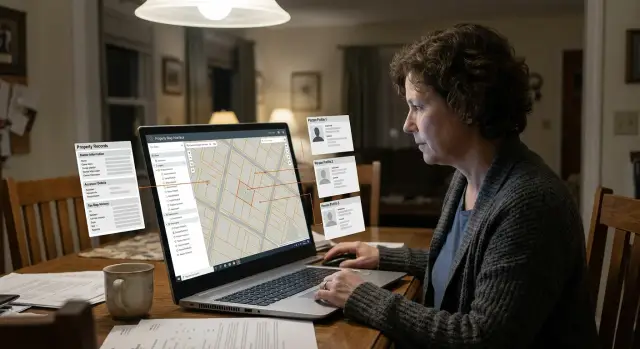
Why your home details can appear online without your help
You do not need to post your address anywhere for your home details to spread online. In many places, county and city offices already publish property data through parcel viewers, tax maps, and assessor pages. One simple address search can reveal much more than most people expect.
A single parcel can connect several facts at once: the owner's name, lot lines, parcel number, sale date, past sale price, land value, building size, and the mailing address tied to the property. Each detail may seem harmless by itself. Put together, they can feel very personal.
That is where public records and data brokers start to overlap. Records do not always stay on the original county website. They get copied, bought in bulk, scraped, matched with other datasets, and republished in private databases. After that, the same property can show up on people-search sites, property lookup tools, marketing lists, and background report pages.
The pattern is common. You buy a house, the sale is recorded, and the county map updates. Soon that same address is tied to your name on sites you have never visited. Someone searching the property may find ownership history, boundary lines, and tax details even though you never made an account or filled out a profile.
That is why deleting one listing rarely fixes the problem. The source is often a public record, and the copies keep moving. Some sites refresh every few weeks. Others keep old snapshots for years.
To understand what is happening, start with the county records themselves. Once you see what they show, the broker pages make a lot more sense.
What public map layers usually show
A parcel map is the county's map of land parcels. Each outlined shape links to a record about that property. You may never have posted anything about your home online, but a public map layer can still reveal a lot.
Tax maps usually begin with the basics: parcel lines, parcel number, site address, and tax district. Some counties also add lot size, land use codes, zoning notes, and a rough building footprint.
Assessor overlays often go further. These are the clickable layers inside county GIS tools that pull in assessor data when you select a parcel. In many places, that opens a property record card, a summary sheet used for tax assessment. It may include a photo, a sketch of the home, building size, year built, and sales history.
A parcel page often shows the owner name, property address, mailing address, square footage, lot size, sale date, sale price, assessed value, or tax amount. Sometimes it gets more specific. Record cards can list bedrooms, bathrooms, garages, pools, additions, or outbuildings. That full set of fields gives a fairly clear picture of a household.
This is enough for a broker to work with. They do not need you to fill out a profile if they can pull from county map layers, assessor records, and tax data. One public source can feed many private databases.
A simple mental picture helps: click your parcel on a county map and imagine seeing your name, lot lines, home size, and last sale date on one screen. That alone gives a broker plenty to match against other records.
How county map data turns into broker records
A county parcel viewer can look harmless, but it often shows owner name, street address, parcel ID, lot size, sale date, tax value, and sometimes building details. Because that record is public in many places, a broker does not need you to post anything to find it.
The first copy usually happens in one of two ways. Some companies license county data in bulk. Others scrape public map tools and assessor pages a little at a time. Once they have the raw record, they clean it up so it fits their own database. A parcel number, mailing address, and owner name are often enough to connect one property to one person.
Then the record stops being just a property record. Brokers merge county data with other files they already buy or collect, such as voter records where available, utility or change-of-address data, old real estate listings, neighborhood files, and marketing datasets built around age ranges, income bands, or likely relatives.
That is when a plain parcel entry becomes something else. A county record can turn into a people-search page showing names, past addresses, estimated home value, phone numbers, and relatives. Many people focus on the county site because it feels like the obvious source. The broker profile is usually the bigger privacy problem.
Imagine a county tax map showing that Maria owns a three-bedroom home on Oak Street. A broker matches that address to a voter file, an old moving record, and a marketing file. Soon Maria appears on several sites, each with a slightly different version of the same facts. One page lists her current address. Another adds a past apartment. A third guesses her income range and family members. None of that required Maria to post anything herself.
The harder part is the copying. One broker may sell, share, or trade data with other brokers, lead companies, and search sites. If the county later fixes a record, or the original page disappears, older versions can stay online for months or years.
That is why these records are so hard to untangle. You are rarely dealing with one source. You are dealing with a chain of copies.
How one listing spreads
Take a simple example. A county parcel map shows 214 Maple Lane. You click the lot, and the parcel page opens with the home's size, year built, lot lines, last sale date, and parcel ID.
That page may also link to the assessor record. Now the same address can show the owner's name, tax mailing address, sale price history, and notes about the building. None of this came from social media or a shopping account. It came from public records that were easy to copy.
From there, the spread is pretty direct. The parcel page gives a clean address and parcel ID. The assessor page adds names and tax details. A property data broker copies both and stores them in its own database. Then a people-search site buys, swaps, or scrapes that data and builds a profile page.
Once that happens, the profile can grow. If the owner's last name matches older records at the same address, a broker may attach a spouse, adult child, or past resident. If the tax mailing address used to be different, that older address can appear too. Over time, one address page starts to look like a household history.
A realistic version looks like this: Julia Ramirez buys a house. The county map shows the parcel. The assessor page shows "Julia Ramirez" as owner and lists a prior sale from six years earlier. A broker copies the page and matches Julia's name with older people-search entries. Soon a site shows Julia at 214 Maple Lane, possible relatives, and even a previous resident who moved out years ago.
That is what makes the process feel invasive. The first source may look dry and bureaucratic. Each copy adds guesses, older records, and loose matches until a simple property listing turns into a personal profile.
It also explains why one opt-out rarely solves everything. If the county record stays public, new brokers can keep rebuilding the same page.
How to check your address
Start with the source, not the broker page. Your county parcel viewer, tax map, or assessor page is usually where the trail begins. If your home details appear in several places, this first record often explains why.
Go slowly and write things down. Many people look at the parcel map, see the lot outline, and stop there. The more revealing part is usually in the record behind the map layer.
- Search your county parcel viewer by street address. If the site allows it, search by owner name too.
- Open the full parcel page and the full assessor or tax record, not just the map pin.
- Note every field you can see, including owner name, mailing address, sale date, lot size, building size, year built, tax amount, and parcel number.
- Take screenshots and save the date in the file name so you can compare later.
- Search broker sites using a few combinations: your full name, your address, your phone number, and your name plus city.
- Repeat the same check for old addresses. Past homes often stay connected to current records.
You do not need a complicated spreadsheet. A simple document with the site name, what showed up, and whether it matches the county record is enough for most people.
Pay attention to the small details. A parcel number, middle initial, or old mailing address can make it easy for a broker to match records from different sources. That is often how a plain county entry turns into a profile with more personal detail than you expected.
Details people often miss in assessor and tax data
Most people notice the address first. The bigger privacy issue is often everything around it.
A full owner name is the clearest example. If a site shows first and last name, that alone can connect a home to people-search listings, age ranges, and past addresses. Add a middle initial or co-owner name, and the match becomes even easier.
Lot size and building notes sound harmless, but they often say more than people realize. A record may mention the number of bedrooms, a finished basement, a detached garage, a pool, or a second unit. Those details help brokers tell one "John Smith" from another. They also tell strangers more about the home than many owners would ever choose to share.
Sale history matters too. A sale date and price can work like a checksum for identity. If a broker already has your name and city, those two facts help confirm they found the right person.
One field people miss all the time is the mailing address. If it is different from the property address, it can reveal where you actually receive mail. That may be your current home, a rental, a business address, or a family member's address. For someone trying to keep one address less visible, that single field can undo the effort.
Older records create a different problem. Prior owners, old co-owners, or even relatives sometimes stay attached in archived views, bulk data copies, or broker pages built from scraped records. That can leave the wrong names tied to a property for years.
When you review an assessor page, check the owner and co-owner names, any mailing address fields, the sale history, building notes, and any historical view the site offers. If you only glance at the map pin, you will miss the fields that brokers use to make matches.
Common mistakes when trying to clean this up
The most common mistake is assuming one removal means the job is finished. With county records and broker sites, one public record often gets copied, split, and reposted across many pages.
A broker may remove one profile while the same address still appears in two others with small differences. One version might say "Robert J Smith," another "Bob Smith," and a third may show only initials next to the parcel number.
Another mistake is checking one broker site and stopping there. The same assessor or tax data can feed many pages, so a clean result on one site does not mean the rest are gone.
People also miss duplicates. Separate records can appear for past owners, co-owners, maiden names, shortened first names, or alternate address formats. Searching only one version of your name leaves a lot behind.
Timing causes problems too. County sites and broker sites do not update on the same schedule. A county page may change today while a broker keeps the old snapshot for weeks. Then a second broker imports the stale version and republishes it all over again.
Address-only searches can be misleading. Some sites create separate pages for owner name, parcel ID, or even a map pin. The address search looks clean, but a live record still shows lot size, sale history, or tax details.
A simple habit helps: keep a short note with the date you filed each request, the exact name and address version you used, and when you plan to recheck. Two follow-ups over the next month will catch many relistings.
Before and after removal
Cleaning up property data works better when you treat it like a paper trail rather than a one-time request. The same home facts can move from a county site to several broker pages, then show up again months later.
Before you file anything, build one simple record for your address. A spreadsheet is fine, but a basic notes document also works.
Write down each public source tied to the address, such as the county assessor page, parcel viewer, tax map, and any sales history page. Note the exact facts shown on each page: owner name, lot size, year built, mailing address, sale date, and parcel number. Save screenshots, page titles, dates seen, and any request confirmation numbers in one folder.
This part is a little dull, but it saves time later. If a broker removes your page and then reposts it with a middle initial or an older address format, you can spot that quickly instead of starting over.
After the first round of removals, check again. Search your name in a few formats, including middle initial, old surname, shortened first name, and address-only searches. Look again after county updates, a refinance, a deed change, or a home sale. Those events often trigger fresh copies.
Compare new listings with your notes. If several pages repeat the same typo, old sale price, or outdated mailing address, they probably came from the same source. Keep every reply you get, even an automated email. It can help if you need to follow up later.
Then set a reminder to review the address again in 30 to 60 days. That is usually enough to catch the next wave.
What to do if it keeps coming back
If your address disappears from one site and shows up again a month later, the broker probably pulled a fresh copy from somewhere else. Public map layers, assessor pages, and partner databases keep feeding new records into the same system. One cleanup pass usually is not enough.
Start by deciding how much time you want to spend on it yourself. If you found only a few listings, manual requests may be enough. If your details keep reappearing across many sites, or you do not want to check them every few weeks, it may be worth getting help.
Keep one note or spreadsheet with the site name, the page you found, the date you sent the request, screenshots before and after removal, any reply you got, and the next date you plan to check again. That sounds simple, but it makes repeat listings much easier to spot.
Check for reappearances every 30 to 60 days. If you recently moved, changed your name, or found your information on many broker sites, check more often for a while.
If the manual work starts taking over your evenings, Remove.dev is one option for the ongoing cleanup. It automatically finds and removes personal information from more than 500 data brokers, keeps monitoring for relistings, and lets subscribers track requests in real time through a dashboard. That kind of follow-up matters because the problem is not one listing. It is the same record being copied again and again.
The goal is not one clean screenshot. The goal is a routine that catches new copies before they spread.
FAQ
Why is my home online if I never posted it?
Because the first source is often a public record, not something you posted. County parcel viewers, tax maps, and assessor pages can show your name, address, sale history, and property details, and brokers copy that data into their own databases.
What can someone see on a county parcel map?
A parcel map often shows lot lines, parcel number, site address, and tax district. When you open the related record, you may also see owner name, mailing address, lot size, building size, year built, sale date, sale price, and tax details.
Are tax maps and assessor pages the same thing?
Not exactly. A tax map usually focuses on the parcel and basic tax details, while an assessor page often goes deeper into the property record, with owner names, sales history, home size, and sometimes photos or building notes.
How does a parcel record become a broker profile?
They start with the public parcel record, then match it with other datasets they already have. After that, a simple property entry can turn into a people-search profile with past addresses, relatives, phone numbers, or income guesses.
Why doesn’t one opt-out fix the problem?
Usually not. One site may remove a page, but other brokers may still have copies, and some will pull fresh data later from the same county source or a partner database.
Which fields on an assessor page matter most for privacy?
Owner names, mailing addresses, sale dates, sale prices, and building notes tend to create the biggest privacy issues. Those fields make it easier to match one property to one person and to connect current and past addresses.
How should I check what my county shows about my property?
Start with your county parcel viewer or assessor site and search by address and, if possible, by owner name. Open the full record, note every field shown, and save screenshots so you can compare later if broker pages appear or return.
Should I search old addresses too?
Yes. Old addresses often stay tied to current records, especially after a move, name change, or home sale. If you only check your current address, you can miss pages that still point back to you through older data.
How often should I look for relistings?
A 30 to 60 day check is a good default. Look sooner after a move, refinance, deed change, or first round of opt-outs, because those moments often trigger new copies or stale records to reappear.
When does it make sense to use Remove.dev instead of doing it myself?
If you found only a few pages, doing it yourself may be enough. If your details keep coming back across many sites, a service like Remove.dev can save time by finding and removing personal data from over 500 brokers, monitoring for relistings, and showing request status in a dashboard.