Why your phone number keeps appearing on new websites
Why your phone number keeps appearing on new websites: one old record can spread through brokers, marketers, and people search pages long after one opt-out.
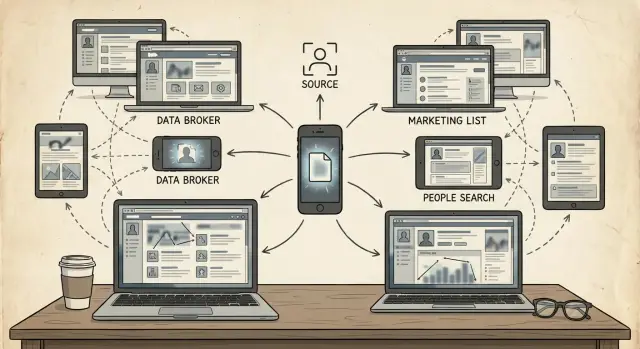
Why this keeps happening
If your phone number keeps showing up on new websites, it usually comes from one old record being copied over and over. Each copy can then live on its own.
Most of these sites did not get your number from you. They pulled it from a broker, a marketing list, a public record, or another people search site. Once that first record exists, it can spread fast. One company stores or buys it, another adds more details, a people search site publishes a profile, and smaller sites copy that profile into their own database.
By the time you find one listing, there are often several versions already online. The details may not even match. One site might show your current city, another an address from years ago, and a third might split your information into two profiles because your name was spelled a different way. Those pages can look unrelated even when they came from the same source.
Removing one page fixes only that page. It does not remove every copy already circulating, and it does not stop a fresh version from appearing later. If the source record still exists somewhere upstream, your number can be published again under a new profile or on a different site.
That is the real reason relisting is so common. The problem is rarely one page. It is a chain of copies.
Where the first record often starts
The first leak is often ordinary. A checkout form, food delivery app, coupon signup, or store account can collect your number long before it lands on a people search page.
Many online stores ask for a phone number even when email would work. Sometimes it is for shipping updates or account recovery. Sometimes it is just another piece of customer data that gets stored, shared, or sold later.
Loyalty programs are another common source. You sign up for a discount, points, or a birthday freebie, and the terms may allow data sharing with marketing partners. That does not always mean your number becomes public right away. Often it starts moving quietly between companies first.
Apps do the same thing. A shopping app, local service app, or some random utility app may ask for your number during setup. Even if you stop using it a week later, the record can stay in a marketing database for years.
Public records make matching easier. If a broker already has your phone number from a signup list, a change-of-address filing, property record, voter file, or court record can help connect that number to your full name, age range, and past addresses.
That is often how a bare phone number turns into a full profile. You enter it during checkout, the store shares customer data with a partner, that partner adds it to a larger file, another broker matches it to public records, and a people search site republishes the result.
Old accounts keep this going longer than most people expect. A shopping account you opened six years ago may still sit in broker files even if you deleted the app or changed your privacy settings later.
How one record moves between companies
Most people imagine one website copying a phone number and posting it. Sometimes that happens. More often, the path is messier. A record gets passed around, matched, filled in, and sold again until it lands on sites you have never used.
A broker might start with a thin contact list from a marketing partner, app, store, survey company, or older lead database. That file may contain only a phone number, an email address, a ZIP code, and a rough age range. Even that can be enough to link you to other records.
The next company does not need to know you directly. It just compares that list with other files it already has, such as name and address data, change-of-address records, purchase histories, or older broker lists. If the phone number matches, the record grows. Now it may include your full name, current address, past addresses, relatives, and other contact details.
Then the richer file moves again. Another company buys it and fills in whatever is missing from its own database. It might add a second phone number, a middle initial, or an old apartment address. Mistakes get copied too. Once bad data gets attached to your profile, it can spread almost as easily as correct data.
People search sites often work this way. They do not need one perfect source. They assemble a profile from several databases and merge the pieces into one page. If you remove your number from one source but three others still have it, the profile can come back.
Another headache is timing. New buyers keep getting refreshed versions of the same record, while some companies hang on to older snapshots. So an opt-out does not always erase every copy already in circulation. One request can remove one listing, but it usually does not stop the record from being repackaged and sold again later.
Why one request rarely fixes the problem
Removing one page can feel like a win. Often, it only removes the listing you can see, not the source record behind it.
A people search site may take down your profile, while the original data broker still keeps your phone number, past addresses, age range, and relatives. If that source stays active, the same details can be sold, shared, or imported again later.
The source usually outlives the page
Many sites do not collect everything themselves. They buy data feeds, trade records with partner companies, or copy batches from other databases. So when one site deletes your profile, other sites may already have their own copy.
That copy can sit for weeks and then appear as a "new" page later. The site did not discover you again. It just published data it already had, or pulled a fresh batch from the same source.
A simple example makes this easier to picture. You remove your number from one people search site in June. In July, another broker imports an older file that still includes it. In August, a partner site builds a page from that broker's file. You did remove one listing. The record kept moving.
Small differences make this worse. One company may list "Jen Miller," another "Jennifer Miller." One record may show your current city, while another uses an old address or leaves out an apartment number. Many systems treat those as separate profiles even when the phone number is the same.
That is why the cycle feels endless. One page disappears, a partner site keeps its copy, a later import rebuilds the profile, and a small spelling change creates yet another page. Deletion works better when it covers likely source brokers, partner sites, and follow-up checks for relisting.
A simple example of how it spreads
Picture an ordinary purchase. You order a desk chair online, and the store asks for your phone number so the delivery driver can text you if they get lost. That feels harmless. Most people would not think twice.
A few days later, the store sends customer data to an outside marketing company. Sometimes that company only uses the number to measure ad results or match shoppers across devices. Sometimes the data goes farther than you expected. Your number is now in one more database.
From there, the profile can grow fast. A data broker gets the record and tries to fill in the blanks. It matches your phone number to an older mailing list and links it to an address you used two years ago. Then it pulls in bits from public records and other broker files. One small record turns into a profile.
A people search site picks up that profile and publishes it. Now your name, phone number, old address, age range, and possible relatives can appear on one page. Even if some details are wrong, the page still gives other companies enough to copy the record again.
That is why a single opt-out often does not hold. You remove one page and it disappears. Weeks later, another site gets the same number from a different broker feed and publishes a fresh profile. No one had to "put your number back." A new company rebuilt the same record from shared data.
What to do step by step
Treat this as ongoing cleanup, not a one-time fix. One opt-out can help, but it rarely stops the whole chain.
Start by searching your phone number in a few ways. Search the number by itself, then pair it with your full name, old city, and past addresses. Outdated records often match on old details, so a search with only your current name can miss a lot.
Then work through a basic process:
- Make a list of every page that shows your number, even if the record looks wrong or out of date.
- Note the site name, page title, and the personal details shown next to the number.
- Start with the biggest people search sites and data brokers, because smaller sites often copy from them.
- Submit each opt-out and save the confirmation email, request date, and a screenshot of the page before removal.
- Check the same pages again after about two weeks, then about once a month for relisting.
Keep your notes in one place. A basic spreadsheet is enough. If a site brings your number back three months later, you can tell whether it ignored the old request or pulled a fresh record from somewhere else.
If you want to do it yourself, focus first on the sites that keep showing up in search results. If you do not want to manage dozens of requests, Remove.dev can handle the repeated work. It automatically finds and removes personal data from over 500 data brokers worldwide, tracks requests in a dashboard, and keeps monitoring for re-listings so new removal requests can be sent when needed.
The follow-up is the part most people skip. It is also where most of the real cleanup happens.
Mistakes that keep the cycle going
The biggest mistake is thinking one page is the whole problem. You remove your number from one people search site, see it disappear, and assume the job is done. In many cases, that page was only one copy of the same record.
Another common mistake is ignoring broker sites you do not recognize. Small, plain-looking brokers often feed larger search pages, ad networks, and background check sites. If those quieter sources stay live, your number can come right back.
Poor recordkeeping causes trouble too. If you send opt-out requests without saving screenshots, dates, confirmation emails, or case numbers, you lose your paper trail. When a listing returns, it becomes much harder to see which company removed it, which one reposted it, and when the first request was sent.
Old details matter more than most people expect. A broker may not show your current profile at all. It may show an older version tied to a previous address, a maiden name, a nickname used online, an old username, or a different phone format with or without country code. Miss one of those variations and the record can stay live under a slightly different identity.
People also stop too soon. The first few removals often work quickly, which makes the problem look smaller than it is. Then new pages appear because other brokers were never contacted, or because a site bought a fresh copy of the same file a month later.
Quick checks after your removals
A removal request is only half the job. Some sites delete the profile quickly. Others make it look gone while the page still exists, or while search engines keep showing an old result for a while.
Start by checking the exact page you asked them to remove. If the saved URL still opens and shows your phone number on the profile itself, the request is not finished. If the page is gone but a search engine still shows a result, that is often just an old cached listing catching up.
What to verify
- Open the old listing URL directly if you saved it.
- Search the site for your phone number, not just your name.
- Try the number in a few formats, such as 555-123-4567, (555) 123-4567, and 5551234567.
- Check for duplicate profiles tied to old addresses, past cities, or an older last name.
Duplicate profiles are a big reason this cleanup drags on. A broker may remove one page but keep another profile built from the same record. If you moved two years ago, your number may still sit on a version linked to that old address.
It also helps to search with small spelling changes. Try your full name, a shortened first name, a middle initial, and common misspellings. People search sites often create separate pages from messy source data, so one profile can disappear while a near-copy stays live.
Do not stop after one pass. Watch for new listings over the next few weeks. Records move between companies on different schedules, so a fresh page can appear after an earlier one was removed.
What to do next
If your number keeps resurfacing, the next step is deciding whether you can keep up with repeat checks yourself. New pages can appear weeks later when another broker buys, copies, or republishes the same record.
Doing it by hand can work if you are organized and patient. But it turns into routine maintenance fast. You need to search again, confirm removals, spot relistings, and send fresh requests when old data shows up under a new site name.
If you manage it yourself, keep one tracking sheet and update it every time you take action. A plain spreadsheet is enough if it includes the site or broker name, the date you found the page, the opt-out date, the current status, and the date you checked again. Without that record, it is easy to repeat the same requests, miss follow-up deadlines, or forget which sites removed the listing and which ones posted it again.
A small test can tell you a lot. Send a batch of requests, then check again a month later. If new listings have appeared, you are not dealing with a one-time cleanup. You are dealing with repeat maintenance.
If that work keeps piling up, using a service can save a lot of time. Remove.dev is built for ongoing personal data removal rather than a single sweep. It looks for your information across broker databases, removes it, watches for re-listings, and lets subscribers track each request in real time. The real benefit is consistency. You do not have to start from zero every time another site republishes your phone number.