Professional license privacy and home address exposure
Professional license privacy matters when board records, copy sites, and people-search pages turn public credentials into home address exposure.
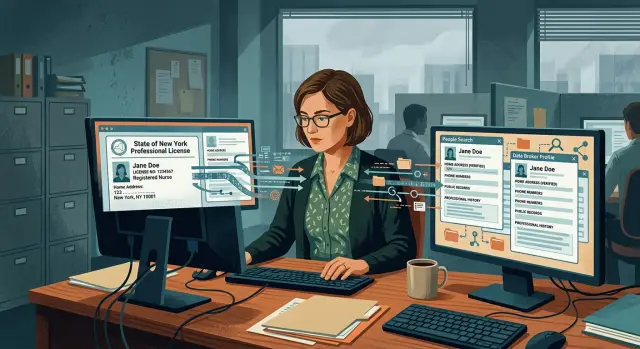
Why a work license can expose your home
A work license can reveal more than your job title. In many states and industries, a public license record may show your full name, license number, status, employer, and mailing address. If that mailing address is your home, the record stops being a routine work detail and becomes a privacy problem.
This usually happens for a simple reason. When people apply for a license, renew it, or update their contact details, they often use the address already on file. For many, that is their home. The board publishes the record so employers, clients, or patients can verify the license. Anyone else can see it too.
Once your full name appears next to a license type, matching gets easier. A distinctive name plus "nurse," "real estate agent," or "contractor" can help someone find the right profile, confirm the city, and connect that record to other public data.
That is where privacy starts to break down. The board may publish only one record, but search engines can index it, copy sites can scrape it, and people-search sites can combine it with phone numbers, age ranges, relatives, and old addresses. What starts as a license lookup can turn into a clear path to your home.
The problem is not the license itself. Public verification has a real purpose. The problem starts when a work credential exposes personal contact details. Once that happens, your work identity and home life are no longer separate.
Where the information starts
For many licensed workers, the first public record is not a broker profile. It is the state licensing board. Boards usually keep a public lookup page so anyone can confirm whether a license is active, expired, or under review.
Trouble starts when that public record pulls from an old mailing address. If you used your home address on an application or renewal form, that same address can end up on the board's site with very little warning. Many people entered it once, years ago, because it was the easiest address to use.
Public records spread from routine paperwork
The lookup page is only part of the story. Some boards also publish PDF rosters, meeting packets, hearing notices, and board minutes. Those files may list your full name, license number, city, and sometimes your full street address.
Renewal records are another common source. A board may ask for a mailing address for notices, and people often default to their home address. If the board does not separate public contact details from internal records, that mailing address can end up in public search results or attached documents.
Old copies make this harder to fix. Even after a board updates a record, archived pages and older PDFs can stay online for months or years. Search engines may still show the older version, and copy sites can grab that information before the edit happens.
A simple example shows how this works. A physical therapist renews a license from home and uses a home mailing address. Later, the board posts a license roster in a PDF committee packet. Months after the therapist switches to a business address, that older PDF is still online and still searchable.
Most exposure starts this way. Not with a dramatic leak, just with routine paperwork that got published and never fully disappeared.
How it spreads beyond the board
Once a licensing board record is public, it rarely stays in one place. A single entry can be copied by data brokers, people-search sites, and search pages that build a profile around your name.
These sites do not need much to make a match. Your full name, city, job type, and license number can be enough. The license number is especially useful because it helps separate you from other people with the same name. From there, sites can attach the right address, phone numbers, relatives, or age range.
The spread usually follows a simple pattern. One broker copies the board record and saves it. Other sites copy that broker instead of the original source. Search pages pull bits from several public records and merge them into one profile. Old copies stay live long after the source record changes.
That second step matters more than most people think. Many copy sites are reposting the same record under new page titles, such as a name page, an address page, or a "possible relatives" page. It looks like several separate exposures, but it is often the same source recycled again and again.
Search pages make things worse because they mix records that were never meant to sit together. A work credential from a public board can end up next to a home address from a property record and a phone number from an old listing. To a stranger, it looks like one clean profile.
Changing the board record does not always solve it. If you replace a home address with a work address, broker sites may keep the old version for months. Some never update unless someone asks for removal. Search engines can also keep stale snippets after a page changes.
If you keep seeing your license number on different pages, that is a strong sign those sites are using it to match the right person and carry the same record forward.
A simple example
Maria is a nurse at a local clinic. During her license renewal, she enters her home address because that is the address she has always used on official forms. She submits the form and moves on.
Soon after, the state board updates her public record. When someone searches her name, the board page shows up near the top of the results. Depending on the board, the page may show enough detail to connect her job to the place she lives.
That is where the spread begins. A people-search site copies the listing and builds a fuller profile around it. It pulls in likely relatives, older addresses, and other bits from public records, so one plain board entry becomes something much more personal.
Then another site copies that profile again. This version adds a map, an estimated age, and a cleaner layout that is easier to scan. Now a patient, upset client, or random stranger does not need to dig through records. They can find Maria's address in a minute or two.
That is why this problem feels bigger than the original record. The board entry may look limited on its own, but copy sites and search pages turn it into a profile that is far easier to use.
For Maria, the risk is no longer abstract. Someone who knew only her first and last name can now connect her workplace, home, relatives, and rough age without much effort.
If your job requires a public license, run a quick search for your name, city, and profession. If the board page appears, check whether people-search sites copied it. A routine renewal form can become a shortcut to your front door.
How to check your exposure
Start by searching for yourself the way a stranger would. Use a search engine first, not your licensing portal login. The goal is simple: find every place where your work credentials lead back to your home details.
Try a few searches one at a time:
- Your full name in quotes plus your license type
- Your name plus your city
- Your name plus your full address, if you think it may already be public
- Your name plus your license number
Do not stop at standard web results. Open PDFs, image results, and any snippet that already shows an address or past address. Licensing boards sometimes publish rosters, meeting records, or old notices as PDFs, and search engines can keep showing text even after a page changes.
Preview text matters too. A live page may look clean while the search result still shows the address under the title. That often happens when a board updates a record but search pages and copy sites have not caught up yet.
As you find pages, save proof right away. A screenshot with the page title and date is usually enough. If the page is long, capture the section with your name and address, then save a second screenshot that shows the full title.
Keep a simple list as you go. Put the original source first, such as the licensing board record or a public PDF. Under that, list every copied page from people-search sites, broker profiles, and search pages that repeat the same details.
That order matters. If the address started on the board site, copied pages may keep returning until the source is fixed or limited. After 15 or 20 minutes of searching, you should know whether you are dealing with one exposed record or something much wider.
What to do with board records
Fix the source first. If a board record shows your home address, check whether the board allows a business address, office address, or other public contact address instead. Many boards still need a private mailing address in their files, but some will let you keep that part off the public lookup page.
Ask direct questions. Can the public record show your business address only? Can your home mailing address stay on file but off the website? Is there a separate form for address suppression if you have safety or privacy concerns? A short phone call often clears this up faster than reading old policy pages.
Then look beyond the main profile page. Old renewals, downloadable PDFs, board meeting attachments, and archived lookup pages can keep the same address online long after the current record is fixed. If your license has been renewed several times, check older documents too. One missed PDF can keep feeding people-search sites for years.
It helps to think of the board as a paper trail problem, not just a website problem.
Keep records as you go
Save the form you submitted, the email or letter you sent, screenshots of the old record, the date of your request, and any reply or case number you receive.
That helps if the address comes back later or if a copied page still shows the old version. You can point to the exact date the source was corrected.
If the board updates your record, do not assume the job is done. Brokers, copy sites, and search pages may keep the old address for weeks or months because they already scraped it. That is common. It does not always mean the board ignored your request.
A realistic example: a therapist changes a licensing board profile from a home address to a practice address. The board updates the main lookup page in two days, but an older PDF renewal notice still shows the home address. A people-search site picks up the PDF instead of the new profile. That is why you need to check both the live record and older public files.
How to deal with broker profiles and search pages
Once your licensing board record is public, people-search sites often copy it quickly. Some then add old addresses, relatives, phone numbers, and map snippets. That is where the real risk grows, because a work credential turns into an easy home lookup.
Start with the pages that show your full street address. A profile that lists only your city is less urgent than one that shows your house number, ZIP code, and names tied to the address. If several versions of your profile appear, remove the most complete one first.
Do not send a removal request until you match the exact profile. Many sites create separate pages for the same person, and a small mistake can slow everything down. Check your full name, age range, past cities, and relatives before you submit anything. If the site has three John Smith listings, choose the one that clearly matches you.
A simple routine works well:
- Search your full name with your city and state
- Open profiles that show an address or map
- Use each site's opt-out or removal form
- Save the request date and any case number
- Recheck the page after 7 to 14 days
Keep a plain log as you go. A spreadsheet or notes app is enough. Record the site name, the page title, when you sent the request, and when the site says it will reply. Some pages disappear in a week. Others stay up until you follow up.
If a site asks for ID, read the instructions carefully and share only what the form requires. Many people send too much, and that creates a second privacy problem.
Consistency matters more than speed. Ten careful removals are better than thirty rushed ones.
Mistakes that slow removals
The slowest cases are often the ones people accidentally make harder.
A common mistake is changing too many details at once. If you update your address, phone, email, and even name format across different sites on the same day, some brokers treat that as a new person record. Instead of one profile disappearing, you can end up with two. This is especially common when a licensing board updates first and copy sites scrape the old and new versions at different times.
Skipping screenshots is another problem. Before you send any removal request, save proof of what was visible: the page title, your name, the address, and the date. Later, if a site says the record never existed or claims it already removed it, you have something specific to point to.
People also stop too early. The board page changes, so they assume the job is done. Usually it is not. Search pages, people-search sites, and smaller broker pages may keep the old address for weeks or months after the source changes. One cleanup pass rarely finishes the job.
Tracking matters too. If you send requests from three different email addresses, the process gets messy fast. Replies go to different inboxes, ticket numbers get lost, and it becomes harder to match each request to the right profile. One email address, used every time, keeps the paper trail clean.
Family profiles can reopen the same exposure. A therapist may remove her home address from a board record, but her spouse still has a people-search profile showing the same house. Anyone searching the family name can still connect the dots.
A few habits make this easier:
- Change one detail at a time when possible
- Save screenshots before and after each request
- Use one email for all removals
- Recheck copied pages after the source record changes
- Look up close family members at the same address
Quick checks before you stop
A page disappearing once does not mean the problem is gone. Home addresses often stay behind in search snippets, cached PDFs, and people-search pages long after the main source changes.
Before you move on, do one last pass. It only takes a few minutes and can save you from finding the same address online again next week.
What to confirm
Check the licensing board page itself. Your home address should be gone from the live record, not just hidden in one view. Search your name with your city, license type, and old street name. The snippet should not show the street address anymore.
Then look at major people-search sites and broker profiles. If they still list the address, the record can spread again. Search for PDF and image results too. Old board documents, scans, and screenshots can keep the address visible long after the main page is fixed.
Search snippets matter more than most people expect. Even when a page is corrected, Google or Bing may still show part of the old address under the result for a while. If you still see the street there, wait a bit and check again, or deal with the cached version if it is still public.
PDFs are easy to miss. Many licensing boards publish meeting packets, rosters, or archived forms, and those files can rank in search results on their own. Image search can surface screenshots from old directories too.
A simple standard helps: if a stranger can still find your street address by searching your name and license, you are not done yet.
What to do next
Start with the part you can control going forward. When your license comes up for renewal, switch to a business address or a mail service address if your board allows it. That will not erase old copies overnight, but it can stop new records from feeding the same problem again.
Then keep a simple log. A basic note with the site name, the date you found it, the address shown, and the date you sent a request is enough. This matters because broker profiles often come back, and search pages can hold old snapshots longer than expected.
A small routine works better than a one-time cleanup. Check the licensing board record after each renewal or update. Search your name with your city, license type, and old address. Save screenshots before you send any removal request. Then recheck the same sites a few weeks later for relistings.
If your information has spread across a lot of people-search sites, doing it all by hand gets tedious fast. Remove.dev can automate removals across more than 500 data brokers, monitor for relistings, and show each request in a real-time dashboard. Even then, the goal stays the same: stop new exposure, remove old copies, and keep checking the places that tend to republish your data.
FAQ
Why is my home address showing up on my professional license?
Most often, the address came from your license application, renewal, or contact update. If you used your home as the mailing address, the board may have published it on the public lookup page or in a PDF tied to your record.
Is the licensing board usually the original source?
Yes. For many licensed workers, the board lookup page is the first public source. After that, search engines, copy sites, and people-search pages can pull the same details and spread them much further.
If I change my address with the board, will the problem go away?
It helps, but it usually does not fix everything by itself. Once broker sites and search pages have copied the old address, they may keep it for weeks or months unless you remove those copies too.
How do I check whether my license record has spread online?
Search the way a stranger would. Try your full name with your city, license type, license number, and even your old street name. Check normal results, PDFs, image results, and the preview text under each result.
Do old PDFs and archived board pages still matter?
They matter a lot because old files often stay online after the main profile is fixed. A stale PDF can still show your home address, and broker sites may keep copying from that older file instead of the updated record.
Which pages should I remove first?
Start with the pages that show your full street address. A city-only mention is less urgent than a profile with your house number, ZIP code, map, relatives, or phone numbers tied to it.
Why do people-search sites seem so good at matching my record?
Because they do not need much to make a match. Your full name, city, profession, and especially your license number can be enough to connect the board record to the right address, relatives, and past records.
What mistakes make removals take longer?
A lot of delays come from rushing. People often skip screenshots, send requests for the wrong profile, use different email addresses for follow-ups, or stop after fixing only the board page while copied pages stay live.
Should I expect my address to disappear right away?
Usually not. Many sites take about 7 to 14 days to process a request, and search snippets can lag behind even after a page changes. If the street address still shows after that, check whether an older PDF or copied page is still public.
When does it make sense to use a removal service instead of doing this by hand?
If your data is on many broker sites, doing it by hand gets repetitive fast. A service like Remove.dev can automate removals across more than 500 brokers, monitor for relistings, and show each request in a live dashboard, which saves a lot of time.