Home services quote marketplaces and the one-form lead chain
Home services quote marketplaces can turn one request into many broker leads. See how roofing, moving, solar, and insurance forms spread fast.
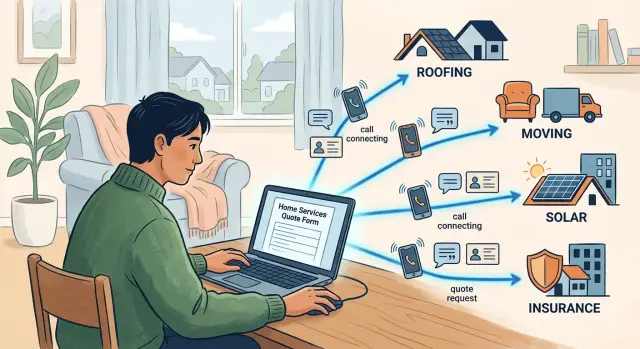
What happens after you submit one form
You fill out a quote form for roof repair, a move, or a solar estimate. It feels like you're contacting one business. On many quote marketplaces, you're not.
That form can send your details to several companies at once. In some cases, it reaches a local contractor, a lead network, and a call center in the same step. Your name, phone number, email, ZIP code, and project notes can move fast.
That's why the calls and texts start almost immediately. One buyer calls right away. Another texts a few minutes later. A third emails before you've even closed the page.
The confusing part is the names. You remember the logo on the site you used, but the calls come from companies you don't recognize. Usually that's because partner names were buried in small print near the button, inside consent text, or on a second screen you barely noticed.
Your contact details can also be sold more than once. Not every site does that, but it happens often enough to explain why one simple request can turn into a full day of interruptions. A Saturday morning search for a moving quote can easily become texts from five numbers by lunch.
Some sites are clear that they share requests with a short list of businesses. Others are built to spread leads as far as the consent allows. If you assume one form equals one company, the surprise comes fast.
Why one inquiry multiplies so fast
The reason is simple: money. In many quote marketplaces, your form isn't sent to one business. It's sold to several buyers because the job behind it might be worth a lot.
That works well for the marketplace. It often works badly for the person who filled out the form.
A request for roof repair, a moving estimate, solar installation, or an insurance quote can turn into a stack of calls and texts the same day. If three roofers buy the lead, all three may call within minutes. If one of them doesn't want it or can't service your area, it may get passed into another exchange and offered again.
That's why one form can feel like ten.
The fine print matters more than most people think. You may believe you agreed to hear from one company about one quote, but the wording might allow contact from "partners," "service providers," or "marketing affiliates." In practice, that can mean far more businesses than you expected, across phone, email, and text.
Some categories attract especially aggressive bidding. A full roof replacement, long-distance move, solar install, or insurance policy can be worth hundreds or thousands of dollars to the company that closes the deal. When the payout is high, buyers move quickly and keep trying longer.
A small plumbing repair usually won't create the same rush. Roofing or solar often will. The contact data is easy to copy, the consent language can be broad, and the potential sale is large enough that repeated follow-up feels worth it to the buyer.
How roofing quotes spread
Roofing is one of the clearest examples of how a single quote request turns into a wave of calls. After hail, wind, or a leak, people want help now. They open the first form they find, type in their details, and hit submit before they stop to ask who else gets the lead.
That first form often asks for much more than a phone number. A roofing marketplace may collect your street address, roof type, home age, the kind of damage you see, and whether you plan to file an insurance claim. Every extra detail makes the lead easier to price and easier to sell.
Storm leads move especially fast. If three or four roofers buy the same record, your phone may start ringing almost at once. One company texts first. Another calls from a local number. A third routes the call through a sales team that doesn't sound like a roofer at all. To you, it feels like the same request somehow duplicated itself.
The insurance question often widens the spread. If you mention storm damage or say you might use insurance, some buyers see a bigger job and act fast. Even if you hire someone the same day, the other buyers may keep calling because they already paid for your details.
Financing can stretch the chain even further. Roof work is expensive, so quote forms sometimes trigger follow-up offers for payment plans or home repair funding. Those messages can keep showing up after you've already chosen a contractor.
That's why roofing quote spam feels so sudden. The page looks like a simple request for one estimate, but the lead can pass through several businesses in a few minutes.
How moving quotes spread
Moving quote forms often collect more detail than people expect. You may enter your current address, your new address, move date, home size, and budget before you ever see a price.
That makes moving leads easy to sort. If a form knows you're moving from a two-bedroom apartment in Dallas to a house in Austin on the 28th, it can tag your inquiry by route, timing, job size, and price range in seconds.
That's one reason moving leads travel so easily. A company doesn't need much guesswork to decide whether your job fits its area or pricing. One form can trigger outreach from local movers, brokers, storage companies, packing services, and truck rental brands.
Some of those contacts make sense. Others feel random because the form never made it clear how widely your details might travel.
A move is useful to lead buyers because it includes two addresses, not one. Your current address shows where the job starts. Your new address shows where you're going. Add the move date, home size, and budget, and the lead becomes much more specific than a basic home repair request.
That specificity keeps the lead active for longer. If you don't book quickly, your details may stay in lead pools for days or weeks. Some buyers try again later. Others re-share the lead inside partner networks.
Picture a normal case. You check prices on Friday night for a move next month. By Saturday morning, you get calls from two movers, one broker, and a storage company. On Monday, a truck rental company emails. A week later, another mover calls because your date is getting closer and the lead was recycled again.
With moving quotes, the spillover isn't just about your phone number. It's about how much useful detail one short form can collect.
How solar and insurance quotes spread
Solar and insurance forms often collect enough information to make each lead expensive. That's why one submission can turn into a long run of calls, texts, and emails.
With solar, the form usually asks for more than "Do you want panels?" It may ask for your address, roof size, average utility bill, and whether you own the home. That gives buyers a pretty complete record. A sales team can estimate your budget, your roof fit, and how ready you are to act.
In many quote marketplaces, the same solar lead can go to several installers, call centers, or quote partners. If the first buyer doesn't close the deal, someone else may still want it. That's why one weekend price check can produce calls for days.
Insurance forms can go even further. They may ask about the property, who lives there, prior coverage, and other household details. That helps with quoting, but it also makes the record easy to reuse across partner networks.
Insurance leads often pay well, so there's a strong reason to keep reselling them. A comparison site may send the same record to several agents or carriers. Some contact you right away. Others wait and try again later.
That's what makes insurance quote traffic feel so persistent. You didn't submit five forms. You submitted one record that could be copied into five systems and then passed around inside each one.
This is also where data broker lead sharing becomes a real problem. The record is current, detailed, and tied to a real person at a real address. Once that kind of data starts circulating, pulling it back is hard.
If you want to stop quote form spam, solar and insurance forms deserve extra caution. They ask for enough detail to make each lead expensive, and expensive leads rarely stay in one place.
One weekend search, step by step
Picture a normal Saturday.
You're planning a move in about six weeks, so you open a few comparison sites to get a rough idea of cost. One page asks for your ZIP code. Another wants your move date. A third says it can save time if you fill out one short form and let movers contact you.
By lunch, that sounds easy enough. You enter your name, phone number, email, current address, and destination city. It feels like one request.
Usually, it isn't.
That same afternoon, your phone rings five times. Two callers say they're local movers. One says it's a moving partner. Another asks if you still need a quote, but you don't recognize the company name at all. Then the texts start: "Still moving this month?" "We can beat any quote." "Reply YES for pricing."
By Monday, the calls slow down and you think it's over. Then more texts show up later in the week from new numbers with slightly different wording. That's the part people miss. The first wave comes fast, but the second wave can keep going as your details move through more lists.
Moving is an easy example because the calls are obvious. Roofing, solar, and insurance quotes can follow the same pattern. You ask for one estimate, but several companies, brokers, or resellers end up with your contact details.
That's how one quick weekend search turns into a much bigger mess than it should.
How to ask for quotes with less spillover
The easiest way to cut down the flood is to be selective before you type anything. If you can, go to a company's own site first instead of a large marketplace. A local roofer, mover, or solar installer may give you a rough estimate without sending your details through a long partner chain.
That doesn't mean every marketplace is bad. It does mean convenience often comes with reach, and reach usually means more calls, texts, and email.
A few habits help right away:
- Use a separate email address for quote requests.
- Give your main phone number only when you actually want a callback.
- Read the consent line before you hit submit.
- Leave optional fields blank unless they affect the quote.
- Stop after a short shortlist instead of filling out every form you find.
The consent line is where many surprises start. If it says your details may be shared with partners, affiliates, or a set number of providers, expect spillover. That one sentence often explains why a roofing request becomes six calls before lunch.
Optional fields are another easy leak. A basic moving quote usually doesn't need your birth date, employer, or alternate phone number. A solar form may ask for a utility bill upload before you even know whether the company is a fit. If the field isn't needed to estimate the job, skip it.
It also helps to set a hard limit. Pick two or three companies, submit those, and wait. A lot of people make the problem worse by filling out ten forms in one night and then wondering why the next week feels like a telemarketing campaign.
Mistakes that make the flood worse
Most people don't mean to create a lead storm. They just want a rough price for a roof repair, a moving truck, or a solar setup. But a few small choices can make the flood much worse.
One common mistake is sending the same details to several comparison sites in a row. It feels like smart shopping, but those sites often share leads with overlapping partners. Instead of four separate quote paths, you may end up feeding the same data into the same network again and again.
Another mistake is using your main phone number for casual research. Once that number gets attached to broker leads from one form, the spillover lands on the phone you use every day.
People also make things worse by accepting every contact option without reading it. Some forms ask for calls, texts, emails, and contact from "partners" or "providers in your area." A few preselect those boxes. If you leave them as they are, you're agreeing to broad follow-up before you even know who will contact you.
Sharing too much too early is another easy slip. For a first quote, a city, ZIP code, and basic project details are often enough. Your full address, alternate phone number, or extra household details usually don't need to go in the first form. The more complete the profile, the easier it is to match, resell, and combine with other data.
A better approach is simple: use one site at a time, use a secondary number for early research, uncheck contact boxes you don't want, and hold back your full address until you're ready to speak with one company. That won't stop all follow-up, but it usually cuts the noise a lot.
A quick check before you hit submit
A quote form takes 30 seconds to fill out. The follow-up can last all week.
Before you send your phone number and email into a marketplace, stop for a moment and ask a few plain questions.
First, who is getting this form? Some sites send your request to one business. Others pass it to several partners, call centers, or lead buyers. If the page is vague, assume your inquiry may travel farther than you expect.
Second, do you really need to share every detail right now? A full street address, move date, roof age, power bill, birth date, or insurance history may help later. It doesn't always need to go in the first form.
Third, would direct contact work better? Calling or emailing two or three companies yourself usually means fewer duplicate calls and fewer surprise follow-ups. If you need a roofer for a leak or a mover for next month, that extra five minutes can save a lot of noise.
A fast self-check looks like this:
- I know whether this site sends my request to one business or many.
- I'm only sharing the details needed for a first quote.
- I've checked whether contacting a few companies directly would be easier.
- I'm ready for calls, texts, or emails over the next few days.
That last point matters. If you submit a solar or insurance form on Sunday night, your phone may start ringing Monday morning. If you're not ready to answer, the same lead can trigger repeat calls, voicemails, and text follow-ups.
When a form feels too broad, it usually is.
What to do if your details are already out there
If a quote site has already spread your details, don't try to fix everything at once. Start by figuring out what's actually happening.
Keep a short log for a week or two. Write down unknown callers, sales texts, and quote emails, along with the company name when they mention one. Patterns show up quickly, and that record helps you tell whether the flood is slowing down or still growing.
A simple cleanup routine works better than random opt-outs:
- Save screenshots of texts, emails, and caller IDs.
- Search your name, address, phone number, and email on people-search and broker sites.
- Use opt-out forms where you find them.
- Check again later, because listings can come back.
- Filter or silence repeat spam numbers so your phone stays usable.
The frustrating part is that one opt-out rarely ends the problem. Some sites repost old records, some buy fresh data, and some share it again after you thought it was gone. Repeats are normal.
Be specific when you search. Try your full name with your city, your phone number in quotes, and your email address on its own. If your quote request included your home address, search that too. In many cases, the public listing is what keeps feeding new calls.
If you still need quotes, use a separate email address and a secondary phone number next time. That won't clean up the old spread, but it can stop the next round from hitting your main inbox and phone.
Manual cleanup is possible, but it takes time. If you're spending hours on opt-outs, a service like Remove.dev can handle much of that work by removing personal data from over 500 data brokers and continuing to watch for re-listings. That's often the difference between a short break in the spam and a real drop in it over time.
FAQ
Why did one quote form lead to so many calls?
Because many quote sites do not send your request to just one business. They may pass it to several contractors, lead buyers, brokers, or call centers at the same time, so one form can turn into a rush of calls, texts, and emails within minutes.
Which quote types usually spread the fastest?
Roofing, moving, solar, and insurance tend to spread the fastest. Those jobs can be worth a lot to the buyer, so companies move quickly and may keep trying for days if they paid for your details.
How can I tell if a quote form will share my info?
Check the consent text right before the submit button. If you see words like "partners," "affiliates," "providers," or a note that your request may be shared with multiple companies, expect your details to travel wider than you want.
Is it better to contact companies directly?
Usually, yes. Going to a roofer, mover, or installer directly often means fewer duplicate calls because your details stay with that business instead of moving through a bigger lead chain.
What details should I avoid on a first quote form?
For a first quote, share only what is needed to price the job. Your main phone number, full street address, alternate number, birth date, or extra household details often do not need to go into the first form unless you are ready for direct follow-up.
Why do roofing quotes after storm damage trigger calls so fast?
Storm leads move fast because people need repairs right away and the job can be expensive. If you mention hail, leaks, insurance, or financing, buyers may see a bigger sale and start calling almost at once.
Why do moving quote requests keep coming days later?
Moving forms collect a lot of useful detail, like two addresses, a date, home size, and budget. That makes the lead easy to sort and resell, so you may get one wave right away and another later as your details move through more buyers.
What should I do if my phone is already blowing up?
Start by logging the callers, texts, and emails for a week or two so you can see the pattern. Then opt out where you can, block repeat numbers, and search your name, phone, email, and address on people-search and broker sites to see where the spread may be coming from.
Will one opt-out stop the calls and texts?
No. One opt-out may stop one sender, but your details can still sit with other buyers or show up again later. That is why quote-form spam often fades in steps instead of stopping all at once.
Can Remove.dev help if my details are already out there?
It can reduce the follow-up if your details have started circulating beyond the original quote site. Remove.dev removes personal data from over 500 data brokers, watches for re-listings, and sends new removal requests automatically, which can save a lot of manual cleanup time.