How data brokers rebuild household links after removal
See how data brokers rebuild household links after a removal by using neighbor, address, and move history signals, and how to lower re-listing risk.
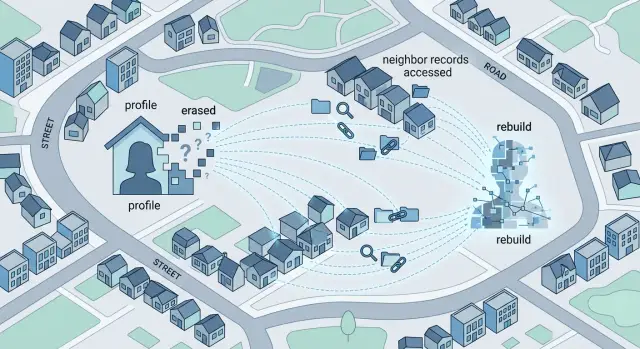
Why a removal is not always the end
An opt-out can remove one profile, but it rarely erases the whole trail. A broker might delete your name from one page and still keep the pieces that point back to you: an old address, a move-in month, people tied to that address, or nearby address matches. Put those clues together and a new profile can appear.
That is why a one-time opt-out often does not last. Brokers do not need the exact same page to come back. They just need enough overlap to make the same connection again.
Picture a simple case. You move into a new house with your partner. One broker removes your record after an opt-out. Another still has your old move date, your partner's name, and the fact that both of you started showing up at the new address around the same time. A separate source still lists people on your block and homes next to yours. None of that looks complete on its own, but together it can support a fresh profile.
The frustrating part is that the return often starts through someone else. Your own entry may be gone, but a spouse, parent, roommate, or former resident can stay live in another database. Once that person is tied to the address again, your name can be pulled back in as a likely household member.
Old move dates make this easier. If two people appear at the same property within the same short window, many brokers treat that as a household signal. If one name was removed and the other was not, the deleted profile can reappear with small changes, such as a new record ID or a slightly different spelling.
So the real problem is not only the original profile. It is the leftover clues around it.
What proximity data really includes
Proximity data sounds technical, but the idea is simple. It is the set of clues that place people near each other in real life. That can mean the same house, the same apartment building, the same parcel, or two addresses a few doors apart.
When brokers rebuild household links, they often start with location patterns rather than family relationships. If two people keep showing up at nearby addresses during the same period, that can be enough to suggest a connection.
Neighbor names are part of this. Many records show who lives on the same block, in the same building, or on adjacent parcels. In a large apartment building, unit numbers can narrow the match fast. If one listing says "Apt 3B" and another shows a move from "Unit 3B" at the same address, that is a strong clue even if the rest of the profile is thin.
Dates matter just as much as names. Move-in and move-out windows can overlap in ways that tell a clear story. If one person left an address in June and another appeared there in May, a broker may treat them as part of the same household history. The match gets stronger when the next address is also nearby.
A lot of this comes from ordinary public sources: property records, voter files, tax and parcel data, some utility-related records that become public in certain places, and change-of-address or rental records sold through other vendors.
Small details do a surprising amount of work. A parcel number can tie a person to one specific house. A building code can separate one entrance from another. A unit number can narrow twenty residents down to one likely match.
So proximity data is more than "who lived here." It also covers when they lived there, how close "nearby" really is, and which public records repeat the same pattern. That is often enough for a broker to reconnect people after a removal, even when direct family links are gone.
Why neighbors sometimes matter more than relatives
A lot of people assume family links are the main way a broker reconnects a profile. Often, they are not. Distance is easier to measure than family, so brokers lean hard on location clues.
If two names keep showing up at the same address, in the same building, or on the same short stretch of street, that alone can be enough to group them. A sibling in another state may matter less than the person next door whose record helps confirm where you lived.
That sounds strange, but it makes sense from the broker's side. Neighbor data is usually fresher and easier to compare. Property rolls, voter files, utility clues, shipping records, and change-of-address data can all point to the same block or apartment complex.
Once one accurate address appears, older records can wake up again. A broker may have removed your direct profile, but if a nearby record still shows your former household clearly, it can use that address as an anchor. From there it starts reconnecting old names, older phone numbers, and people who were once tied to that home.
A simple example makes the point. Say your record was removed after you opted out. A month later, your old neighbor's listing still shows the shared duplex address, and a separate public file shows your name at that same address from two years ago. That overlap may be enough to rebuild the household cluster, even without a current direct record for you.
When a direct record disappears, nearby records can fill the gap. One clean address can refresh several older profiles at once, especially if the broker already has fragments sitting in different databases. That is why neighbor matching can be more useful to them than a cousin, parent, or adult child who lives somewhere else.
How a household link gets rebuilt
A household link usually comes back through one small piece of data that stayed behind. That might be a confirmed street address, a phone number, or an email tied to an old account. Once a broker trusts one of those details, it can start rebuilding the rest.
The next step is simple. Find other people connected to the same place. Brokers look for records tied to the same home, apartment unit, or parcel number. Even if one site removed your profile, another source may still show who lived there, who got mail there, or which phone numbers were attached to that address.
Dates do much of the work. If two people show up at the same address during the same months, that overlap can be enough to treat them as one household. A broker does not need a marriage record or family tree. Shared time at the same location often looks stronger than a relative who lives across town.
This is where proximity data matters. Nearby records can fill in the gaps when a direct link is missing. A broker may compare your old address with neighboring listings, property records, move histories, utility-related traces, or other broker pages that still mention the same building. If one record shows Apartment 3B and another drops the unit number, the match can still stick if the names, dates, and phone history line up.
The rebuilt profile does not always look identical to the old one. Sometimes it appears as a fresh household record under a slightly different version of your data. Your name might come back with a shortened middle initial, an old phone number, or a new "possible associate" label. On the surface it looks new. Underneath, it came from the same cluster of address and timing clues.
A quick example makes this easier to see. Say Ana removes her listing after moving out. Her old mobile number still appears in one database, and her former address still appears in another. A third source shows that Ben lived in the same unit during Ana's last three months there. A fourth source still lists both names near the same parcel. That can be enough for a broker to create a new shared-household record, even if Ana's first profile is gone.
That is why one-time opt-outs often fail. Removing a page is only part of household link removal. The harder part is stopping the same address, overlapping dates, and nearby records from stitching the link back together.
What a re-listing can look like after a move
Picture a renter named Maya who leaves her apartment in June. Before she moves, she sends removal requests and gets her profile taken down from a broker that had her full name, old address, phone number, and a few family links.
For a short time, it looks clean. Search her name, and that old profile is gone.
Then one weak link stays behind. A neighbor in the same building still appears on another broker site with the same street address and a move month that overlaps with Maya's old lease. That record may look harmless on its own, but it gives brokers a time-and-place anchor.
A different broker already has older records showing Maya at that building, plus a note that she was a "possible household contact" for people tied to that address. When fresh data comes in, the broker does not need a perfect match. It just needs enough to guess that the old cluster is still correct.
So Maya's details can return because the same building, the overlapping move month, the old household group, and one or two older contact details all point in the same direction. Soon she shows up again as a past household contact. Her old phone number may return beside her name. A relative from an older record may reappear too, even if that person never lived in the apartment.
That is how this cycle usually works. Brokers do not always start with parents, spouses, or siblings. Sometimes the easiest path is the person next door who never opted out, or a building-level record that still shows who was there and when.
A move does not reset your trail. In some cases it creates new timing data, and timing data is exactly what helps reconnect old records.
Mistakes that make re-linking easier
A removal can work, then slowly undo itself. Brokers rebuild household links from small, repeated signals. They do not need a full family record if your address history, phone history, and nearby profiles still point to the same household.
One common mistake is using slightly different versions of the same address across forms. "123 Oak St Apt 2," "123 Oak Street #2," and "123 Oak St Unit 2" look harmless to a person. To a broker, they often look like the same home with enough overlap to merge records.
Old accounts cause trouble too. A past address can stay attached to retail logins, food delivery apps, newsletters, and utility records long after you move. If those accounts keep feeding updates into broker databases, your old household link can come back even after an opt-out.
People also miss the shared side of the problem. If your roommate, partner, or adult child still appears at the address, that profile can pull you back in through proximity data. One opt-out usually removes one person, not everyone tied to the home.
Moves are a weak spot for the same reason. New lease records, mail forwarding, change-of-address data, and fresh mobile records can create a bridge between the old home and the new one. If the same phone number or email appears on both sides, the match gets easier.
A simple rule helps: treat removals like maintenance, not a one-time fix. After a move, phone change, breakup, or any other household change, check whether old address links reappeared.
Quick checks you can do after an opt-out
After an opt-out, wait a bit, then check whether the same household link is coming back under a new profile. Many people search only their own name. That misses the most common back door: someone else at the same address.
A quick review goes a long way. Search your full name with your current address and at least one old address. Search a partner, roommate, parent, or any other adult who has lived with you. Open any sections labeled associates, household members, relatives, or neighbors. Watch for wrong move dates, duplicate addresses, or an address marked both current and former. If a removed profile returns, save screenshots with the date visible.
Neighbors matter more than most people expect. A broker may remove your page, then rebuild it by matching nearby records with the same move window, age range, and address history. One bad entry, such as an old apartment number or a duplicate street address, can be enough.
Check the people around the household, not just the household itself. If your partner still appears at the address and their page lists you as an associate, that gives another broker a clean path to add you back.
Screenshots help more than people think. They show which field caused the re-listing, whether it was a neighbor match, a bad move date, or a duplicate address. Keep a short log with the broker name and what changed. That makes the next removal easier.
What to do when the link comes back
If the household link shows up again, treat it as a new record, not a failed old request. Brokers often rebuild a profile from fresh address matches, neighbor data, or a duplicate entry that stayed live somewhere else.
Start with the new page you found. Remove that profile first, even if it looks almost identical to the one you already opted out of. A broker may have changed the record ID, split one person into two entries, or attached the same address to a slightly different version of your name.
Then check for duplicate address records. Search your current address and, if it matters, your last one too. If the broker lists the same home under small variations, such as an apartment number written two ways, clean up every version you can find. One leftover entry can pull the link back.
It also helps to check the other people tied to that address. If your partner, parent, or roommate still appears on the same broker site, your details can be stitched back in through them. Do a quick sweep across the whole household, especially adults with matching address history.
Keep a simple log while you do this. Note the broker name, the date you found the new listing, whether you submitted the removal, whether you got confirmation, and when you should check again. A follow-up after 7-14 days, and another a few weeks later, usually tells you whether the record is actually gone or only hidden for a moment.
The system does not need to be fancy. A notes app or small spreadsheet is enough. What matters is seeing patterns. If the same broker keeps re-listing you after another household member appears, that usually tells you where the leak is.
If you want less manual work
A one-time opt-out helps, but it rarely stays one-time. Household links can come back when a broker pulls a fresh file, matches you to an old address, or ties your record to nearby people again. If you manage that by hand, the work adds up quickly.
Start with the details that show up most often in broker profiles: your name, past and current addresses, and the phone numbers that have followed you the longest. Check common name variations, including middle initials and misspellings. Then note which brokers tend to re-list you after an opt-out. That gives you a short watch list instead of turning every search into a full cleanup.
For people who do not want to repeat that cycle across hundreds of sites, an automated service can make sense. Remove.dev removes personal data from more than 500 data brokers and keeps monitoring for re-listings, so new requests can be sent if a profile comes back. You can also track requests in a dashboard instead of piecing everything together from screenshots and notes.
The part most people skip is the follow-up. That is usually where the time goes. A profile disappears, then shows up again weeks later under a slightly different version of the same data. Thinking in rounds works better than thinking in one cleanup.
Remove what is exposed first, keep checking for re-listings, and pay close attention to everyone connected to the address. That is usually where the rebuild starts.
FAQ
Why does my profile come back after I opted out?
Because removing one page does not erase the clues around it. Old addresses, move dates, phone numbers, unit numbers, and nearby records can still point back to you, so a broker can build a fresh profile from that overlap.
Can neighbors really cause my data to reappear?
Yes. Nearby records often help brokers confirm where you lived and when. If a neighbor, roommate, or partner still appears at the same address, that can be enough to pull your name back into a household record.
Does moving make re-listing more likely?
Often, yes. A move creates new timing data, and timing data is useful for matching old and new records. If the same phone number or email shows up before and after the move, the link gets easier to rebuild.
What should I check after an opt-out?
Search your name with your current address and at least one past address. Then check people tied to the home and look for sections like associates, household members, relatives, or neighbors. Wrong move dates and duplicate addresses are common signs that a record is coming back.
Do address variations make re-linking easier?
It helps a lot. Small address changes like "Apt 2," "#2," and "Unit 2" can still be merged by brokers. Using one consistent format lowers the chance of duplicate records feeding the same match.
Can old accounts keep my old household link alive?
Yes, especially if those accounts still carry an old address or phone number. Retail accounts, delivery apps, newsletters, and utility records can keep sending the same household clues into broker databases.
What should I save if a listing returns?
Start by saving screenshots with the date visible. Capture the profile page, the address, the people tied to it, and any wrong move dates or duplicate entries. That gives you proof of what changed and makes the next removal simpler.
How long should I wait before checking again?
Give it about 7 to 14 days for most removals, then check again a few weeks later. Some pages disappear at first and come back under a new record ID or a slightly different version of your name.
What do I do if the household link comes back?
Treat it like a new record and submit a fresh removal request for that page. After that, check for duplicate address entries and for other adults at the same home, because one leftover profile can stitch the link back together.
When does an automated removal service make sense?
If you do not want to repeat the same checks by hand, an automated service can help. Remove.dev removes personal data from over 500 brokers, monitors for re-listings, and sends new requests when a profile returns, so you do not have to keep chasing the same record yourself.