Package redelivery text scam: why it knows your address
Package redelivery text scam messages work better when your address is easy to find. Learn where scammers get it and how to lower risk.
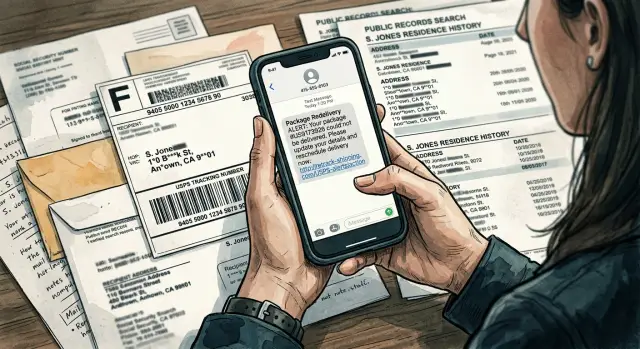
Why this scam works so often
A fake delivery text works because it does not look dramatic. It looks ordinary. The message usually mentions a missed drop-off, a small address issue, or a redelivery fee of less than a dollar. Nothing in it feels extreme, so people lower their guard.
Timing does the rest. A lot of people are already waiting for something: an online order, a birthday gift, a pharmacy refill, a return label. When a text shows up during that window, your brain fills in the blanks fast. "That must be my package" is an easy mistake to make, especially when you are busy.
One accurate detail can make the whole thing feel real. If the text includes your street name, ZIP code, or city, it suddenly sounds tied to an actual shipment. Most people do not stop to ask where that detail came from. They assume a delivery company would already know it.
That is why address exposure matters. If your home address is easy to find online, scammers can turn a generic text into something that feels personal. They do not need a full profile on you. One correct line is often enough.
Where scammers get your address
That address usually comes from places that are much less private than most people think.
People-search sites and data brokers are a big source. They collect names, addresses, phone numbers, age ranges, relatives, and past residences, then post or sell that data across many sites. If your address appears in dozens of broker listings, a scammer does not need to guess much.
Old shopping accounts are another common source. Retail stores, delivery apps, marketplaces, and pharmacy accounts often keep saved addresses for years. If one of those companies had a leak, criminals can pair that address with your phone number or email and build a believable fake delivery text.
Breach data also gets combined. One leak may include your phone number, another an old shipping address, and a third the email address you still use. On their own, those pieces may not look useful. Together, they are enough.
Public records fill in the rest. Property records, voter files, court records, and business filings can be public or easy to buy in bulk. Once data brokers copy that information, it spreads quickly and stays online longer than most people expect.
Then there is social media. A photo of moving boxes, a porch shot with a house number, a caption about a new apartment, or a screenshot of an order confirmation can confirm where you live and whether you are waiting for a package.
Address exposure tends to snowball. One record becomes ten, then fifty, across broker sites, old accounts, leaks, and public files. That is what makes a boring scam text feel oddly convincing.
Why one accurate detail is enough
Scammers do not need deep access to your life. They just need one fact that your brain recognizes.
A text that says "your parcel could not be delivered to Maple Avenue" lands differently than a generic warning. Even if the rest of the message is fake, that one real detail lowers your guard. It makes the scam feel specific instead of random.
This works because people expect spam to be vague. They expect sloppy messages sent to millions of strangers. When a fake delivery text includes something true, many people stop treating it like spam and start treating it like a problem they need to fix.
In most cases, the scammer did not learn that detail through special access. Your address may already be sitting on people-search pages, old shipping records, leak collections, or data broker sites. A scammer can drop that detail into a mass text and wait for a small number of people to react.
That is all they need. If 10,000 texts go out and only a few dozen people click, the scam can still pay.
Once someone taps the link, the next step is usually predictable. The page asks for a small fee, account login, or a one-time bank code. If you reply, click, or pay, you also confirm that your number is active. That can lead to more texts, more calls, and tighter targeting later.
How it usually plays out
Picture a simple example.
Maya orders running shoes on Monday. Two days later, while she is waiting for the package, she gets a text saying delivery failed and a $0.99 redelivery fee is due. The message includes her street name.
That one detail does most of the work. She is already expecting a package, so the text feels tied to a real shipment. She taps it.
The page looks plain but familiar enough. It says a driver tried to deliver the parcel and payment is needed to try again. Small charges lower your guard. People think, "That is annoying," not "This is fraud."
Then the page asks for her card number, billing ZIP code, and phone number. After that, it asks for a one-time code from her bank. The site frames that as a routine verification step.
That code is often the real target. Once she enters it, the scammer can try to charge the card or add it to a digital wallet. Sometimes the first charge is tiny. Larger charges can come later.
The whole trick depends on a believable setup: a real package is already on the way, the text includes one true detail, the fee looks harmless, and the page asks for payment before Maya has time to think.
If she pauses and checks the store or carrier in the app she already uses, the scam usually falls apart fast.
How to check where your address is exposed
If you want to make this scam less effective, start by finding the places where your address is easy to spot.
Begin with a plain search. Look up your full name in quotes with your city, then try small variations such as a middle initial, an old last name, or a previous city. Old records still get used in scams.
Open the first few results and look for pages that show your street address, age, phone number, relatives, or past addresses. People-search sites are the obvious place to start, but old directory pages, cached profiles, rental listings, and property pages can expose the same information.
Write down every page where your address appears. You only need a simple note with the site name, the address shown, and whether it is current or old. The goal is to see how many clean matches exist.
Then check your own accounts. Saved addresses in shopping apps, food delivery services, travel accounts, and old marketplaces often stick around for years. Search old inboxes for phrases like "shipped to" or your street name. That can uncover dormant accounts tied to email addresses you barely use now.
Start with these spots:
- people-search and data broker pages
- old shopping and delivery accounts
- property, rental, or directory listings
- unused accounts tied to old email addresses
- any page that shows your full street address in plain text
Doing this by hand gets old fast, and that is the point. Your data is usually spread wider than you think.
What to do when you get a fake delivery text
When one of these messages lands on your phone, do the boring thing.
Do not tap the link. Do not reply. Do not call the number in the message.
Instead, open the store or carrier app you already use and check your real orders there. If a package truly needs attention, that update will usually appear in your account. It should not depend on a random text.
A simple routine helps:
- Stop for a few seconds and read the message closely.
- Check the sender. A random mobile number or odd email address is a bad sign.
- Look for pressure words like "urgent," "final attempt," or a tiny payment request.
- Open the store or shipping app yourself instead of using the text.
- If nothing is wrong in your account, delete the message and report it as junk.
If you entered payment details, act right away. Freeze or replace the card, dispute the charge, and keep transaction alerts turned on. Small test charges often show up before the bigger ones.
Mistakes that make the scam easier
Most losses happen because the message gets a quick reaction.
Opening the link "just to look" is one of the most common mistakes. People assume they will spot the fake before anything bad happens. Sometimes they do. Sometimes the visit itself is enough to confirm that their number is active or to push them toward a payment page built to steal card details.
Calling the number in the text is another bad move. The person on the other end already knows how to sound calm and helpful. Once you engage, they can ask for your postcode, full address, or the last four digits of your card to "verify the shipment." A weak scam becomes much more targeted.
The small-fee trick works for the same reason. A 99-cent or $2 charge feels harmless, so people rush through it. But that payment is often just a card test. If it works, larger charges may follow, or the card details may be sold and reused later.
People also make things worse by posting screenshots of the text online without hiding their number, address, or tracking code. They are trying to ask if the message is real, but those details can be scraped too. A cropped screenshot is safer. Rewriting the message in plain text is even better.
And if you notice a strange charge after one of these texts, do not wait. A small mystery payment is often the first sign that your card details were taken.
Quick checks before you tap
A fake delivery text works best when you react first and think later. Give it 20 seconds.
Ask yourself whether you actually ordered something and whether a delivery is due. Check whether the sender looks normal. Be suspicious of any message that jumps straight to a payment screen, especially one that asks for both card details and a one-time bank code.
That code is not a harmless extra step. It is often what the scammer needs to approve a charge.
If anything feels off, close the message and verify through a channel you already trust. Open the store app, the carrier app, or a real order email from your inbox. Do not let the text choose the path.
What to clean up next
If you want fewer of these scams to feel believable, shrink the amount of real information that strangers can match to your phone number.
Start with the worst pages first. If a site shows your full name, home address, phone number, and age in one place, put it at the top of your list. That is enough information to make a scam text sound personal.
Then clean up your own trail. Old marketplace posts, giveaway signups, forum accounts, and unused shopping profiles often still hold your address or pickup details. A post from years ago about selling furniture can still expose your street and number today.
Keep a simple spreadsheet as you go: the site name, what was exposed, when you asked for removal, and whether the listing came back. It sounds plain, but it gives you a real before-and-after view of how much information is still out there.
Check again after a few weeks, then every month or two. Relisting is common. A page can disappear, then return when another broker republishes the same record.
If you do not want to file opt-out requests one by one, Remove.dev helps remove personal data from over 500 data brokers and keeps checking for relisting. That will not stop every fake delivery text, but it gives scammers less real information to work with.
Lowering your public address footprint will not end this scam on its own. It does make the message less believable. And that small change matters, because most of these scams only work when one true detail slips past your guard.
FAQ
How did the scammer get my address?
Usually from data broker pages, old shopping accounts, breach data, public records, or social posts. Scammers only need one correct detail, like your street name or ZIP code, to make a mass text feel personal.
Does a correct address mean the text is real?
No. A real detail can be pulled from public or leaked data and dropped into a fake message. Check the order in the store or carrier app you already use instead of trusting the text.
What should I do first when I get a redelivery text?
Open the retailer or shipping app yourself and look for the order there. If the issue is real, it will usually show up in your account without needing the text link.
Can clicking the link alone cause problems?
Yes, it can. Even if you do not pay, the click can confirm your number is active and push you to a page built to collect card details or login codes. It is safer to avoid the link completely.
Why do they ask for a 99-cent or $2 fee?
Because a tiny charge feels harmless, people move fast and think less. That small payment is often just a way to steal card details or test whether the card works before bigger charges appear.
What if I already entered my card details?
Treat it as urgent. Freeze or replace the card, dispute any charge, and turn on transaction alerts. If you gave a one-time bank code, contact your bank right away because that code may have approved a charge or wallet setup.
How can I check where my address is exposed online?
Search your full name in quotes with your city, then try old cities, name variations, and past addresses. Check the first results for people-search pages, directories, property pages, and any site showing your full street address in plain text.
Do old shopping accounts make this scam easier?
Yes, it helps. Saved shipping details often sit in old retail, delivery, travel, and marketplace accounts for years, and those records can surface after a breach. Remove addresses you no longer need and close accounts you no longer use.
Will removing my data from broker sites reduce these texts?
It can lower the hit rate because the scammer has fewer real details to work with. It will not stop every scam text, but messages feel less believable when your address is not easy to find across many broker sites.
Is it safe to post a screenshot of the text online?
A screenshot can expose your phone number, address, tracking code, or other details to more people. If you want help checking a message, crop out personal info or rewrite the text instead of posting the full image.