Registry privacy: what gift sites copy and where it spreads
Registry privacy matters because names, cities, household ties, and event details from gift sites can spread to search pages and broker lists.
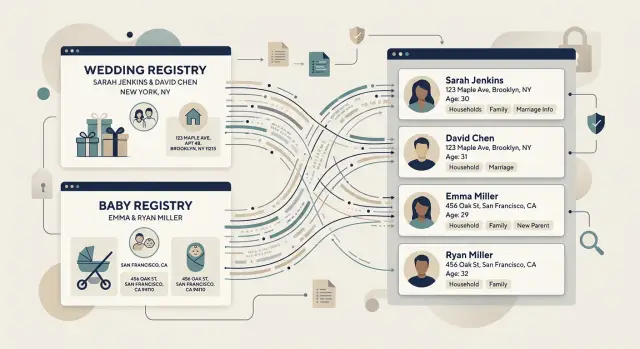
Why registry details spread beyond the gift page
A registry page is built to be easy to find. Guests may know only a last name, a city, or whether the event is a wedding or a baby shower, so gift sites often make public pages searchable by those details.
That convenience creates the privacy problem. A page meant for friends and family can also be easy for strangers, search engines, and copy sites to find.
Once a registry is public, search engines can index it like any other page. Even if it feels temporary, it may still appear in search results, cached pages, or search snippets. Remove it later, and traces can still stay online for weeks or longer.
Other sites often copy that information automatically. Some are people-search pages. Some are data brokers. Some are simple directories that pull public details from many places and republish them. They may copy only a few fields, but a few fields are often enough.
A small registry listing can reveal more than it seems. A full name plus a city can help connect someone to an address history, relatives, or a partner. A wedding registry can suggest a household link. A baby registry can point to a life event, a timeline, and sometimes the names of family members buying gifts. On its own, that sounds minor. Next to other public records, it becomes a much fuller profile.
That is why one gift page can spread far beyond the store where it started. The original page is public, easy to search, and easy to copy. After that, the same details can show up again and again with very little effort.
If you later try to clean it up, you are usually not dealing with one page anymore. You are dealing with the original listing, search engine results, and third-party copies.
What one registry entry can reveal
A single registry page can reveal more than most people expect. Even without a phone number or street address, it can give someone enough detail to identify a real person, narrow down a household, and make educated guesses about what is happening in that home.
Start with the name. A full name is already useful, but many registry pages also show spelling variants, middle initials, or a partner's last name. That helps someone confirm that Emma Larson, Emma Larsen, and Emma N. Larson are the same person instead of three different people.
Location adds another layer. A city, state, and event month may sound harmless on their own. Together, they can narrow the match quickly, especially for people with less common names. If a registry says Portland, Maine and June, that may be enough to separate one couple from several similar names in a wider search.
The page may also show household ties. Wedding pages often list both partners. Baby registries may include parent names, grandparents, or a note from a relative. A short message like "thanks from Mia and Jordan, excited to welcome baby Ava" tells a stranger three things at once: the adults in the home, the expected child, and the family link.
Gift choices tell their own story. A registry full of moving boxes, storage bins, and kitchen basics can suggest that someone is setting up a new home. A list full of bottles, a bassinet, and a baby monitor points to a child arriving soon. That context makes the rest of the details easier to match with social profiles and people-search pages.
Small notes can reveal even more. People often add lines about a shower at mom's house, staying with in-laws for a month, or combining households after the wedding. Those details feel personal and friendly. They also help outsiders map relationships.
That is the quiet problem with registry privacy. One entry may look simple, but names, dates, places, and family clues together can paint a clear picture of a real household.
How copied data spreads across search pages and brokers
A registry page may look small and harmless. Once search pages crawl it, the details can leave the gift site and reappear somewhere else under a different headline.
People-search sites often copy plain text from registries into profile pages. That can include a full name, city, event date, partner or parent names, and clues about a household. The copied page can look like a public record even when it started as a simple gift listing.
Data brokers then combine that scrap with other records they already hold. A first and last name plus a city is often enough to connect someone to likely relatives, past addresses, or other household members. If a registry says "Sarah and Daniel Kim, Austin," a broker may use that to merge two separate profiles into one family group.
The problem grows because copying rarely happens once. One site copies the registry. Another site copies the people-search page. Search engines may keep a cached version too. So even after you edit or delete the original registry, older text can still appear in search results or on mirror pages.
A simple example shows how fast this can happen. A baby registry lists Mia Lopez in Phoenix. Soon after, a people-search page creates a profile with her name and city. Later, a broker page adds two possible relatives and an old neighborhood. Mia removes the registry, but the copied pages stay up until each site updates its records or gets a removal request.
That is why registry privacy problems often spread farther than the original post. The first page is only the starting point. After that, the real work is finding who copied it and stopping the next round of reuse.
How one harmless listing turns into a fuller profile
Take a common example. A wedding registry shows two full names, Anna Morales and James Morales, plus their city, Phoenix. On its own, that may feel harmless. It looks like a simple gift page for friends and family.
A few months later, a baby registry appears on a different site. It lists Anna and James again and may add "parents-to-be," a gift note, or a thank-you message that mentions grandma visiting or the nursery being almost done. Now there is more than one public page tying those names together in the same place and time.
That is where people-search sites become a problem. They do not need a full home address from the registry page. If they already have scraps from older records, the shared names and city can be enough to group Anna and James into one household record.
Once that match is made, a broker page may fill in the rest. It can pull an old apartment address, a past landline, or a mobile number from another source and place it beside the names from the registry. The registry did not post all that information. It simply made the match easier.
The risk grows because each page covers a different part of the puzzle. One page says who the couple is. Another suggests family ties and life stage. A broker page adds where they used to live and how to reach them. Put together, that can support spam, phishing, fake gift delivery texts, or calls that sound more believable than they should.
This is the part many people miss. The problem is rarely one page by itself. The real problem is what happens when separate pages get copied, grouped, and left online long after the event is over.
How to check what is already public
Registry privacy starts with a plain search. Open a private browser window and look yourself up the way a stranger would. If you search only your first and last name, you may miss copied pages, so add your city too.
Try a few versions of the search. Use your full name in quotes plus your city. Search both partners' names together. For a baby registry, search both parents' names together. Then try your name with words like "registry," "wedding," or "baby." Copied listings often keep the same names and city even after the original page changes.
Do not stop at the first results page. Check a few pages deep, especially if your name is common. Look for direct registry copies, people-search sites, gift pages, and cached search snippets that still show old details. A copied page may reveal only a name and city, but that can still connect your household to other records.
If you find something, save it right away. Take a screenshot. Copy the page title exactly as it appears in search results. Note the date, the search you used, and whether the result is a live page or just a cached snippet. That makes follow-up much easier if the page changes later.
Keep your notes in one place, even if the result looks minor. Small fragments often show up on several sites at once.
After you edit a registry, hide it, or ask for removal, run the same searches again. Check a few days later, then again after a couple of weeks. Some pages disappear quickly. Others linger. If broker listings keep reappearing, Remove.dev can help with the repetitive part by sending removal requests to data brokers and monitoring for re-listings over time.
How to limit what gets copied
Registry pages often ask for more detail than you really need to share. The safest move is simple: publish less. A smaller public profile gives copy sites less to grab.
Before you publish, use first names only if the site allows it. A full name plus a city is often enough for another site to build a profile around you. If the registry does not need your exact event date or city, leave those fields blank or make them less specific.
Public search settings matter more than most people think. Some gift sites let you hide the registry from site-wide search while still sharing it directly with friends and family. That extra minute in settings can stop your page from becoming an easy source for copy sites.
Be careful with notes and descriptions. A line like "We just moved to Austin" or "Please ship gifts to our new house near my parents" can reveal more than the registry itself. Small details about a move, a neighborhood, or relatives make it easier to connect one listing to other public records.
It also helps to plan for the end of the event before you publish the page. Keep a simple note of every registry and gift site you used, along with the exact title you chose. Pick a review date now, not later. A week after the event and again a month later is a reasonable routine.
Once the event is over, close, archive, rename, or delete the page if the site gives you that choice. An inactive registry can still be copied months later. Open the page on your phone, read every visible field, and ask yourself one plain question: would I be comfortable seeing this on a third-party search page next year? If the answer is no, trim it now.
Mistakes that keep old entries visible
Old registry pages often stay public for one simple reason: people fix the original page and forget the copies. A wedding registry might get edited or hidden, but mirror pages, gift search tools, and third-party search pages may still show the old version. Once names, cities, or family ties get copied out, changing one page rarely fixes the rest.
Another common mistake is using the same full names across several gift sites. That makes it easy for search engines and people-search pages to connect the records. If one listing says "Maya Patel and Jordan Patel, Austin" and another says the same names on a baby registry, the match is easy. Each page may look harmless on its own. Together, they reveal much more.
Deletion creates another false sense of safety. People assume that removing a registry means the page disappears right away. It usually does not. Search results can keep an old title or snippet for days or weeks, and cached copies may last longer. During that gap, copied data can keep spreading while you think it is already gone.
Public social posts make the problem worse. A registry link shared in an open Facebook post, a wedding hashtag page, or a public forum gives crawlers another place to find it. Even after the event page is gone, those public mentions can leave a trail back to the same names.
The basic rule is to think beyond the first site where you made the list. Search your names, old event titles, and city together. If the information has already reached broker sites, removing the original registry is only part of the cleanup.
What to do when pages keep coming back
One takedown often is not the end of it. A copied registry page can disappear from one site, then show up again on a search page, a people-search site, or a broker that scraped the same details earlier.
Start with the site that hosts the copied page. If the page is still live there, ask for removal there first. That gives you the clearest record of the source being taken down and can slow down fresh copying.
Then work outward. Search pages and people-search sites often keep copied or cached versions long after the first page changes. Treat each site as its own removal job. Save screenshots, note the date you found the page, and keep a short log of which sites removed it and which did not respond.
Screenshots matter more than most people expect. If a page changes, disappears, or comes back with slightly different text, you still have a record of what was posted. That helps when you follow up or need to show that a site added the same details again.
Relistings are common because broker sites scrape each other. One wedding or baby registry entry can turn into several profiles with your name, city, and household ties. You remove two pages, then a third site republishes from an older copy. That is why one-time cleanup often does not stick.
If you are doing this yourself, set a reminder to check again after the first removals go through. Search your name with your city, a partner or family name, and any unusual wording from the original listing. Small changes can hide a page from a quick search.
If broker pages keep returning, Remove.dev is built for that ongoing cleanup. It automatically finds and removes personal information from over 500 data brokers, keeps watching for re-listings, and lets subscribers track requests in real time through a dashboard. The practical goal is simple: remove the source, clear the copies, and keep watching long enough to catch the next repost.
FAQ
What can a registry page reveal about me?
More than most people expect. A registry can show your full name, city, partner or parent names, event timing, and small notes that point to a move, a new household, or a baby on the way. When other sites copy those details, they can be matched with older addresses, relatives, and contact data from elsewhere.
Is my name and city really enough to identify me?
Yes, often it is. A full name plus a city can be enough for search pages or brokers to connect you to the right household, especially if your name is uncommon or the page also mentions a partner, parent, or event month.
If I delete my registry, will it disappear from Google?
Not right away. Removing or hiding the original page helps, but search results, cached snippets, and copied pages can stay up for days or weeks. If another site already copied the details, you usually have to deal with that page separately.
How do I check whether my registry was copied?
Start in a private browser window and search your full name in quotes with your city. Then try both partners' names together, or your name with words like registry, wedding, or baby. Check more than the first page of results because copies often sit deeper in search.
Should I avoid using full names on a registry?
If the site allows it, yes. First names give guests enough to recognize the page without handing copy sites a full match. If you must use full names, avoid adding extra details like an exact city, event date, or personal note.
What settings should I change before publishing a registry?
Turn off public search if the site offers that option and share the page directly with guests instead. Keep visible details to the minimum, and leave out anything the site does not truly need, like an exact event date or a very specific location.
Can registry notes and messages create privacy problems?
They do. A short note about moving, staying with family, or welcoming a baby can help strangers connect names, relatives, and timing. Friendly details are often what make a copied page much easier to match to a real household.
Why do old registry details keep showing up after I changed the page?
Because edits usually fix only the source page. Search engines may keep an older snippet, and third-party sites may still have the copied version. Once the details spread, one change rarely clears every copy.
What should I save when I find a copied page?
Save a screenshot, the exact page title, the search you used, and the date you found it. That gives you a clean record if the page changes, disappears, or comes back with slightly different text later.
What should I do if broker sites keep reposting my registry info?
Handle the live source first, then work through each copied page one by one. If broker sites keep reposting your information, a service like Remove.dev can take over the repetitive part by sending removal requests to over 500 data brokers, watching for re-listings, and showing the status in one dashboard.