School emergency scams: how open data fuels panic calls
School emergency scams feel more believable when strangers can find family names, grades, and phone numbers online. Learn how the trick works and what to do.
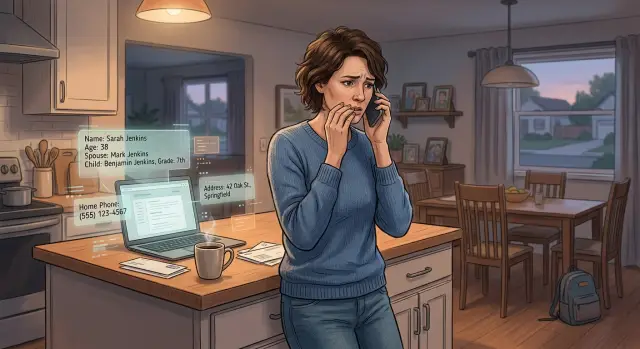
Why these calls work so well
School emergency scams work because they hit before logic does. A parent who hears, "Your child was hurt" or "Your son is in trouble at school" does not pause to test the story. They react first.
That reaction is fast and physical. Panic narrows attention, so people miss gaps, odd wording, and details that do not add up. A calm parent might ask which school, which teacher, or why the school is calling from an unknown number. A scared parent often jumps straight to, "Is my child okay?"
One real detail can make a weak lie sound solid. If a caller says, "This is about Ava," the call no longer feels random. It feels aimed. Add a grade level, and it sounds even more believable. "Your 4th grader had an accident" or "We need you to pick up your 9th grade son now" feels specific, even though it is still broad enough for a scammer to guess.
The trick gets stronger when urgency comes with a rule that blocks verification. The caller says your child is crying, hurt, in the nurse's office, or involved in a discipline issue. Then they push: stay on the line, do not call the school yet, act now, send money, confirm your identity, or share a code. That pressure keeps parents from doing the one thing that would break the lie - checking with the school or another caregiver.
A line as simple as, "This is about Mason in 7th grade, and we need you right now," can be enough to trigger panic. The story does not need to be perfect. It only needs to feel possible for 30 seconds.
That is why open personal details matter so much. A family name, a child's first name, an age range, or parent phone numbers online can turn a cold guess into something that sounds personal. Once the call feels personal, many people obey first and verify later.
What strangers can find online
A stranger does not need your whole life story. For school emergency scams, a few public details can be enough.
People-search pages often show more than parents expect. A parent's full name may appear next to current and past addresses, possible relatives, and one or more phone numbers. If a child shares the same last name on a public school, sports, or club page, the family connection is easy to guess.
That phone number matters a lot. When a mobile number is tied to a home address, the caller can sound local right away. They can mention your street, your town, or even an old address and make it seem like they already know your family. One private-sounding detail often buys more trust than it should.
Age ranges can help too. If a listing shows a parent in their late 30s and a child in the household who is around 10 or 11, a scammer can make a rough guess about school level. They do not need an exact birthday. Close is often enough.
How the scam gets built
A scammer does not need a full dossier. One phone number, street address, or parent name can be enough to start.
That first detail often comes from data broker sites. A profile may show a current address, past addresses, age range, and a list of possible relatives. If the parent has a common last name, the relatives section matters even more. It turns a random contact into a rough family map.
Once they have the family name, the rest gets easier. A home address can point to a school district in minutes. If the child appears to be around a certain age, the scammer can make a decent guess about elementary, middle, or high school. They do not need to be exact. They only need to sound close enough to trigger fear.
The call works because it mixes one or two true details with a lie. A parent who hears their own last name, the right street, or a child's first name is more likely to believe the next sentence. That is the hook.
A fake call might sound like this: "Is this Mrs. Carter? I am calling about Evan. There was an accident near the gym at Roosevelt Middle. He is awake, but you need to come now." Even if Roosevelt Middle is only a guess, the parent is already under stress. The caller can then add a fake rule, a fake nurse, or a fake transport fee to keep control of the conversation.
Pressure is the second half of the scam. The caller wants the parent to stop checking facts, so they invent urgency with a head injury, an early pickup, a missing form, or a small payment that feels easier to send than to question. A demand for $40 or $80 can sound more believable than a wild amount.
Most of these scams are not built on secret hacking. They are built on public scraps stitched together fast. That is why personal data removal matters. If fewer broker profiles expose parent phone numbers, home addresses, and relatives, the caller has less to work with.
A simple example
At 2:17 p.m., a parent gets a call from a number that looks local.
"Hi, this is the school office. Is this Mrs. Reed? We have your son, Tyler Reed, from 6th grade. There was an accident during pickup. He is okay, but the pickup plan changed. Stay on the line so we can clear transport and release him."
That first sentence does most of the damage. It sounds specific. It sounds like the caller already knows the family. In this kind of scam, that is often enough to shove a parent past doubt and straight into panic.
None of those details has to come from the school.
A data broker site may list the parent's full name, home address, relatives, and mobile number. That gives the caller "Mrs. Reed" and a direct way to reach her. The child's last name is easy because relatives often appear together on people-search pages.
The grade can come from a clue that looks harmless on its own. Maybe a first-day photo says, "Tyler starts 6th grade today." Maybe a team roster, choir program, fundraiser page, or school newsletter mentions the student's name and grade. One public post can fill the gap.
Now the caller has enough to build a believable lie. They know which parent to call, they know the child's last name, they can guess the school from the home address, and they know the grade. That last detail makes the call sound internal and real.
The "accident" claim does the rest. The caller says pickup changed, the nurse is tied up, or another staff member is with the child. Then comes the control move: "Do not hang up." That keeps the parent from calling the school, the other parent, or the child.
After that, the demand can change. Some scammers ask for payment for transport, "release paperwork," or a same-day pickup change. Others push for insurance details, account logins, or a one-time code sent to the parent's phone. The ask sounds absurd if you hear it cold. It sounds less absurd after the caller says your child's last name, grade, and afternoon routine.
That is how a vague lie turns into a panic call. Family privacy breaks down in small pieces, and the scammer stitches them together.
What to do in the first minute
The first minute matters because panic is the whole trick. If someone says your child is hurt, in trouble, or waiting for pickup, do not stay inside their version of the story. Slow the moment down.
A real school issue can handle a quick check. A scam caller usually cannot. If they keep talking over you, push for secrecy, or say you must act "right now," end the call.
Use a simple order:
- Hang up if they will not let you verify the story.
- Call the school using the number you already saved.
- Message the other parent, grandparent, or caregiver.
- Ask for your family code word if someone claims a pickup change.
- Save the number, time, and exact words used.
That second step matters more than people think. Do not call back the number that just contacted you. Use the school's main office number, attendance office, or front desk number from your contacts or the school's paperwork.
If another adult helps with school pickups, message them right away. Keep it short: "Did you pick up Ava?" or "Did the school call you?" One clear text can break the whole lie in 10 seconds.
A family code word is worth setting up before you need it. Pick a word your child knows and a stranger would never guess from social media or public records. If a caller says, "Your sister is picking him up," ask for the code word. If they dodge, you have your answer.
What to write down
Even if you spot the scam fast, save the details. Take a screenshot of the number. Note the time. Write down the exact claim, such as "Your son fell in gym class" or "Your daughter missed the bus and is with a teacher."
Those details help if the same caller tries again from a new number. They also help the school warn other families.
A quick example: a caller says your seventh grader had a medical problem and needs pickup now. You hang up, call the school office, and send one text to the other parent. Two minutes later, you learn your child is sitting in math class. That short pause saved you from doing exactly what the scammer wanted.
The hard part is fighting your own adrenaline. Still, one rule holds up well: if they block you from checking, treat the call as fake until you confirm it. A real emergency survives a 60-second check. A scam usually does not.
Mistakes that make it easier
Most school emergency scams do not start with a brilliant trick. They start with small scraps of family information that were easy to find.
A first-day photo can do more than most parents think. If a shirt, sign, or caption shows the school name, a stranger now has a place to mention on a call. Add a public post about "4th grade" or "Mr. Lewis's class," and the lie gets sharper. A vague claim turns into: "There was an incident at Oak Ridge Elementary involving your son in 4th grade."
That is why everyday oversharing matters. The details feel harmless on their own. Put together, they can sound real enough to trigger panic before you stop and think.
A few habits make the job much easier for scammers. Public school photos can reveal names, logos, classroom boards, or bus tags. Casual posts can mention grade level, teacher names, team names, or pickup routines. Reusing the same phone number across social media, school forms, shopping accounts, and public directories makes it easier to connect a parent to a home address and family members. Even security answers such as a pet's name, birth city, street name, or mother's maiden name can often be guessed from old posts or public records.
The biggest mistake often happens in the first 20 seconds of the call. A scammer says, "I need to confirm I'm speaking to Ava's dad." The parent, already scared, replies, "Yes, what's wrong? Is this about Westlake Middle? She was in science lab today." Now the caller has the child's name, the school, and a fresh detail to repeat back.
That is what makes these scams work so well. The scammer often starts with only half the story. The rest comes from public posts, broker listings, and what the target says under stress.
A better habit is simple: give nothing first. Ask for the caller's full name, hang up, and contact the school or your child through a number you already trust.
A quick family check
School emergency scams get easier when a stranger can match a parent name, a child's school, and a working phone number. A quick review of what your family has left in public can close a lot of that gap.
Start with the obvious search. Type each parent's full name, mobile number, and home address into a search engine, then check the people-search and data broker pages that appear. If a listing shows old addresses, relatives, or direct numbers, that is enough to make a panic call sound personal.
Then look at your own posts. A birthday photo with a school logo, a caption that says "first day of 6th grade," or a public team picture can hand over details a scammer would otherwise have to guess.
A fast review usually covers the same few areas. Check both parents' names and phone numbers on broker sites. Review older social posts for school names, grade levels, teacher names, team names, and pickup routines. Check who can see family photos, captions, and tagged posts. Remove your home address and phone number from public profiles when the site allows it. Then make sure the school has your current emergency contacts and backup contacts.
Photos need a closer look than most people expect. The image itself may seem harmless, but captions and comments often do the real damage. "Ella at Westbrook Middle" or "late for 3rd period again" gives a caller just enough detail to sound real.
Privacy settings also drift over time. A post you shared with friends two years ago may now be visible to friends of friends, tagged relatives, or the public. It only takes a few minutes to check, and it is worth doing before someone else connects the dots.
School records matter too. If the school has old phone numbers or an ex-partner listed in the wrong place, a real emergency gets harder to sort out. Make sure the front office knows exactly who can be called, who can pick up your child, and which number should be used first.
How to shrink your public trail
School emergency scams get more believable when a stranger can match a parent name, a phone number, a home address, and a child's grade in a few minutes. You do not need to erase yourself from the internet. You just need to make that quick lookup harder.
Start with the records people forget about
Data broker sites are often the biggest problem. They collect family records, past addresses, relatives, and parent phone numbers, then package it all into one profile. That gives a scammer enough detail to turn a weak story into something that sounds real.
A good first pass is to search your full name and city, your phone number, your home address, and your child's name with the school or grade. If a broker site shows your household, ask for removal. It takes time, but it cuts off one of the easiest ways strangers build a panic script.
Then clean up the pages you may have forgotten. Old team rosters, school event pages, fundraiser posts, church bulletins, club newsletters, and public social posts often reveal more than people think. A page that says "Olivia Carter, grade 4, spring concert" next to a parent contact number is enough to make a fake call sound personal.
Delete what you can. If you do not control the page, ask the school, coach, organizer, or site owner to trim full names, grades, and contact details. Most people will help if you ask plainly.
Make your contact details less reusable
It also helps to separate where your information goes. Use one email for school and another for shopping, sweepstakes, or neighborhood sign-ups. If possible, use a second phone number for forms that may get shared or sold. The less often your main number travels, the fewer places it can surface later.
This is not a one-time cleanup. Broker sites relist people all the time, and older pages get copied into new databases. Check again every few months and search the same terms to see what came back.
If you do not want to handle removals one by one, Remove.dev can automatically remove personal details from more than 500 data brokers and keep watching for re-listings. That can make a real difference here, because fewer public records means fewer details a scammer can use to make a panic call sound personal.
A smaller public trail will not stop every scam call. It does make the caller sound less convincing, and that gap matters. When a stranger cannot confirm your family in 30 seconds, the lie gets much easier to spot.
FAQ
What is a school emergency scam?
It is a fake call or message that pretends to come from a school, nurse, office worker, or pickup contact.
The caller tries to create panic fast, then pushes you to send money, share personal details, or give a one-time code before you check the story.
Why do these calls feel so real?
Fear hits before logic. When someone says your child is hurt or waiting for pickup, most parents react first.
A single real detail like your child's name, grade, or your street can make a weak lie sound personal, even if the rest is guessed.
What details do scammers usually use?
Scammers usually look for a parent's full name, mobile number, home address, and possible relatives. They also look for a child's first name, grade, school name, team name, or pickup routine.
They do not need a full profile. A few public scraps are often enough.
What should I do in the first minute?
Start by slowing the moment down. If the caller will not let you verify the story, end the call.
Then call the school's main office using a number you already trust and send a short text to the other parent or caregiver. Treat the call as fake until the school confirms it.
Should I call back the number that just called me?
No. Use the school's saved number from your contacts, paperwork, or parent portal instead.
Caller ID can be faked, so calling the same number back can pull you right back into the scam.
What should I never say on the call?
Do not fill in blanks for them. Avoid confirming your child's name, school, grade, teacher, address, or daily routine.
Never share account logins, insurance details, payment info, or a one-time code sent to your phone. Ask who is calling, hang up, and verify on your own.
Can social media really make this easier for scammers?
Yes. A first-day photo, team post, school logo, class caption, or public comment about grade level can give away the missing detail a scammer needs.
Older posts matter too. Review tags, captions, and public album settings, not just new posts.
Does a family code word actually help?
A family code word works well if you set it up before there is a problem. Pick a word that is not tied to birthdays, pets, streets, or anything visible online.
Use it any time someone claims there is a pickup change or says another adult is with your child. If they dodge the code word, stop and verify.
How can I shrink my family's public trail?
Begin with a simple search of each parent's full name, phone number, and home address. If people-search or broker pages show your household details, ask for removal.
After that, clean up old public posts, event pages, rosters, and profiles that expose school names, grades, or contact details. Check again every few months because records often come back.
Can Remove.dev help reduce the risk of these scams?
If you want less manual work, Remove.dev can remove your personal details from over 500 data brokers and keep watching for re-listings.
Most removals finish in 7 to 14 days, and you can track requests in real time. Less public data means fewer details a scammer can use to make a panic call sound believable.