Social Security impersonation calls and stale address data
Social Security impersonation calls work because callers recite old addresses from data brokers, making people trust them before the scam is clear.
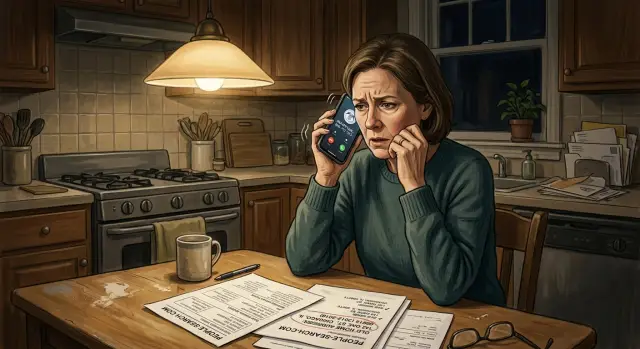
Why an old address sounds convincing
When a caller names a place you lived five or ten years ago, it can feel like proof. Most people assume that kind of detail lives in government files, bank records, or old credit paperwork, not in a stranger's script. Your brain moves fast. Instead of "random scam," you start thinking, "maybe this is real."
That first reaction is the whole point. Social Security impersonation calls often open with one correct fact because one fact is usually enough to lower your guard. The caller does not need your full history. Your full name, an old address, and a serious tone can keep you on the line long enough to ask for more.
Old addresses work especially well because they feel personal without sounding too sensitive. If someone blurts out your bank balance, you may panic and hang up. An old street address lands differently. It sounds dull, administrative, and believable, like something pulled from a file.
Picture a caller saying, "We found suspicious activity tied to your Social Security number. For verification, did you used to live on Cedar Lane in Dayton?" If you did, the next sentence hits harder. In your mind, the caller has already cleared the first trust check.
That is the trick. The call is about trust first and money second. Once you believe the caller has access to official-looking records, the rest gets easier for them. They can push fear, urgency, and fake rules about payments or account checks.
One accurate old address does not prove anything. Most of the time, it means your data was copied, sold, or left sitting in stale broker records for years.
Where the old address came from
That old address usually did not come from a dramatic breach. More often, it came from the quiet trade in everyday personal data. Data brokers collect bits of information from routine sources, combine them into a profile, and resell that profile over and over.
The same sources show up again and again: move-related records added to marketing databases, public filings like property records or court records, mailing lists built from purchases and subscriptions, and other broker databases that copy each other. Once your name is tied to an address in one file, it spreads fast.
A broker sells it to another broker. A people-search site imports it. A lead database picks it up later. Even when the record is wrong or badly outdated, it often stays in circulation because no one has much reason to clean it up.
That is why profiles keep former addresses for years after you move. Some sites even label them as "previous addresses" and leave them visible long after they stopped helping you. For the companies trading the data, old does not mean useless. A past address still helps them match records, group households, and guess who you are.
For a scammer, that stale detail is often enough. They do not need your current home if an old one still sounds personal. In Social Security impersonation calls, a former address can do exactly what they need: make you pause and treat the caller as someone with real records.
That is why stale broker records are such a problem. They turn ordinary old data into believable script material. If one bad record has been copied across dozens of sites, the same outdated address can keep helping scammers long after you forgot it was still online.
Why stale data passes the first trust test
A correct fact can carry more weight than it deserves. When a stranger on the phone knows an old street name, many people treat that as proof of identity. It is a cheap trick, but it works.
An old address still feels private. Most people do not think about how many places keep it for years after they move. Broker databases, people-search sites, old account records, and copied marketing lists can all hold the same outdated address long after it stopped mattering in daily life.
That is what makes stale data so useful to scammers. The detail sounds personal to the person hearing it, even if it came from a messy chain of public records and broker copies. If a caller says, "We have you listed at 48 Oak Terrace," your brain may treat that as confirmation before you ask the better question: "How did you get my number, and why are you calling?"
A former address has another advantage for criminals. It can sound more official than a current one. A friend usually knows where you live now. A caller with a previous address can seem like they are reading from an agency file that has not been updated yet. That small mismatch makes the lie feel more real.
Once that first trust test is passed, fear is easier to trigger. The caller can jump from "we verified your address" to "your Social Security number was used in fraud" or "your benefits may be suspended." At that point, many people stop checking and start reacting.
Take away the stale address, and the scammer loses one of the easiest ways to sound legitimate.
What these calls sound like
Most Social Security impersonation calls start with a sharp claim. The caller says your Social Security number was linked to a crime, suspicious bank activity, or an account opened in another state. They often sound calm at first. That calm tone is part of the act.
Then they add a detail that seems private. It might be an old address, your age range, or the name of a relative. That detail is the bait. It does not prove the caller works for any agency. In many cases, it only proves your outdated information is still sitting in broker records.
A common line sounds like this: "We need to confirm that you previously lived on West Elm Street in Columbus." If you say yes, the caller treats that as proof that they are legitimate. In reality, they just passed the first trust test by reading back stale data.
After that, the tone often changes. The caller starts to rush you or isolate you. They may say the matter is confidential, that local police are involved, or that your accounts could be frozen within hours. They might tell you not to speak to your spouse, to stay on the line while they "verify assets," to move money to a "safe account," or to read back a code sent to your phone.
The pattern is simple. First they use an old address scam to lower your guard. Then they create urgency so you do not stop to check the story. Finally, they steer the call toward money, account access, or a transfer they can control.
A real agency does not solve a supposed Social Security problem by asking for gift cards, wire transfers, crypto, bank login details, or one-time passcodes. If a caller uses an old address as proof and then pushes you to act fast, hang up.
How the scam unfolds
Maria moved out of her apartment three years ago. She updated her bank, her doctor, and the post office. Even so, her old address still shows up on people-search sites because stale broker records can sit online for years.
One afternoon, she gets a call from someone claiming to be from the Social Security Administration. The caller sounds calm, not dramatic. He says there is a problem tied to her Social Security number, then asks, "Do you still live at 1842 West Pine Street?" That was her old apartment.
Maria pauses. The caller adds part of her birth year. Not the full date, just enough to sound official. That is often all it takes. The address feels specific, and the birth year sounds like something only a real office would know. She starts treating the call as real before she has checked anything.
That first moment changes the call. Instead of verifying the caller, Maria starts answering questions. She explains that she moved, confirms the rest of her birth year, and stays on the line longer than she normally would.
The scam becomes obvious only when the caller pushes for something no real office would ask for on a surprise call. He says her account must be "secured" right away. Then he asks her to send money, read back a one-time code, or move funds to a so-called safe account.
That is the turn. The old address was not proof. It was bait. In these calls, stale broker records help criminals sound believable just long enough to get past your first doubt.
If Maria's old address had been removed earlier, the caller would have had a weaker opening and a much harder time sounding real.
How to find your exposed old addresses
Start with a plain search, not a special tool. Search your full name in quotes, then pair it with the city you live in now and each city you lived in before. If your name is common, add a middle initial or age range when a page shows it.
Do not stop at the main results. Search snippets often leak enough to help an old address scam sound real, even if you never open the page. People-search sites are the usual source, but cached snippets, old phone listings, and relative-match pages can also give a caller a believable opening line.
As you check results, keep simple notes: the site name, the address or city shown, whether the detail appears in the snippet or only on the page, and any wrong details mixed in with the right ones.
Wrong data still matters. A scammer does not need a perfect record. An old street name plus your correct last name can be enough to pass the first trust test.
It also helps to search a few name variations. Try your name without a middle name, with a middle initial, and with common short forms if people use them for you. If you moved several times, search each old city one by one. The goal is not to build a huge report. It is to find the records a stranger could spot in two minutes.
When you finish, keep one clean list of the sites that show the old address. That becomes your removal plan.
How to remove the sources
Blocking a number is not enough. If you want fewer convincing scam calls, you need to remove the record that makes the caller sound real in the first place.
Start with the broker and people-search sites that appear first when you search your full name with a past city, state, or ZIP code. Those pages are easiest to find, and smaller sites often copy them.
A steady routine works better than trying to clear everything in one weekend:
- Search for your name, old address, phone number, and one or two past locations. Open only the listings that clearly match you.
- Use each site's opt-out form and save screenshots of the listing, the request, and the confirmation page.
- If the site asks for email confirmation, do it right away. Many removals stall because that message gets ignored.
- Check again after 7 to 14 days. If the listing is still there, submit again and save any case number or confirmation message.
- Repeat the process on copycat sites that show the same address.
Keep a simple tracker as you go. A notes app or spreadsheet is enough. Record the site name, date sent, email used, and whether the listing is gone. That small habit saves a lot of repeat work later.
Be careful with ID requests. Some sites ask for more than they need. If you have to upload a document, cover anything unrelated to matching the record, such as the ID number or photo, unless the site clearly requires it.
Doing this by hand works, but it takes time. If you do not want to manage dozens of opt-outs yourself, Remove.dev handles removals across more than 500 data brokers worldwide, keeps monitoring for relistings, and lets you track requests in a dashboard.
Mistakes that keep records alive
The biggest mistake is treating one removal like the whole job. Data brokers copy from each other, buy old lists, and create near-duplicate profiles. Remove one listing and ignore the lookalikes, and the same old address can pop up again a few weeks later.
Name mismatch causes trouble too. People send one request as "Michael J. Torres," another as "Mike Torres," and forget an old middle initial or a maiden name. That leaves enough loose ends for stale records to stay online under slightly different versions of the same person.
Life changes make this worse. A move, divorce, remarriage, or legal name change often leaves a messy trail. One broker may keep the old address with the old surname, while another combines the new phone number with the old home. To a scammer, that mixed record is still useful.
Another common mistake is never checking again. Some brokers repost data after a few weeks or pull it back in from a partner site. One pass helps, but it rarely clears the whole trail.
A simple example makes this obvious. Someone moves from Ohio to Arizona, updates bank accounts and bills, and assumes the old address is gone. But three broker sites still show the Ohio address under a shortened first name, and one keeps a profile under a former married name. When a caller reads that old address aloud, it still sounds specific enough to lower suspicion.
A better approach is to keep one master list of every name version, old address, and major life change before you send requests. That makes your opt-outs more consistent and makes relistings easier to spot later.
After the removals
A removal request is not the finish line. Many people stop too early, then get surprised when an old address still appears in search snippets or shows up again on another site a week later.
Do a quick follow-up after each round of removals:
- Search for your name and old address again in a private browser window.
- Look at search snippets and cached previews, not just the live page.
- Save every confirmation email and note the removal date.
- Check again after a few days, then again in two to four weeks.
- If the profile returns, send the request again right away.
Do not assume one clean search means the problem is solved. A broker may have removed the public page but kept the record in its system, or another site may still be copying it. Timing matters here. A fast follow-up catches a lot of this.
The goal is simple: make old addresses harder to find, harder to verify, and less useful to a caller trying to sound real.
What to do next
If a caller knows your old address, treat that detail as bait, not proof. Stale records are easy to buy, scrape, or pull from people-search sites. A real agency does not become more trustworthy because it can read back a place you lived five years ago.
The safest move is simple. Hang up. Then contact the agency through a phone number you already trust, such as the one on an official letter or in your own account. Do not call back the number that just called you.
If Social Security impersonation calls keep using old details, the fix is bigger than blocking numbers. You also need to shrink the public trail feeding those calls. Keep a short list of your past addresses and name variations, check broker listings every few months, remove what you find, and recheck for relisting.
Scammers only need one believable detail to buy ten seconds of trust. Take that detail away, and the call gets a lot weaker. The next time someone tries to prove they are real with an old street name, you will know what it usually means: your data is still floating around somewhere, and that source needs to be removed.
FAQ
Does an old address mean the caller is legit?
No. An old address only shows that someone found stale data about you. Data brokers and people-search sites can keep former addresses for years, so that detail should make you more careful, not more trusting.
Where do scammers get my old address?
Most of the time, they get it from data brokers, people-search sites, copied marketing lists, or public records that were resold. They often do not need a fresh breach when old records are already easy to find.
Why does an old address sound so convincing on a call?
A former address feels personal, but it also sounds like something pulled from an old file. That makes the caller seem official, even when they are just reading outdated data from a broker profile.
What should I do if a caller reads my previous address?
Hang up and contact the agency through a phone number you already trust. Do not confirm your details, do not call the incoming number back, and do not stay on the line to argue.
Will Social Security ever ask for money or codes on a call?
No real Social Security problem gets fixed with gift cards, wire transfers, crypto, bank login details, or a one-time passcode. If the call turns toward money or account access, treat it as a scam.
How can I check if my old addresses are still online?
Search your full name in quotes with each city you have lived in. Check the search snippets too, then note every site that shows a former address, even if some of the record is wrong.
What is the fastest way to remove old address listings?
Start with the sites that appear first when you search your name with a past city or ZIP code. Send the opt-out request, save the confirmation, and look again in about one to two weeks.
Why do old address records come back after I remove them?
Because these sites copy from each other, and some repost profiles after a removal. One clean-up pass helps, but follow-up checks are what keep the same address from coming back on a copycat page.
Can wrong or incomplete data still be used in a scam?
Yes. A scammer may only need your last name and an old street name to sound believable for a few seconds. Partial or outdated data can still lower your guard if it feels familiar.
Is it worth using a service instead of sending opt-outs myself?
Doing it by hand works, but it takes time and repeat checks. If you want help, Remove.dev removes records from more than 500 data brokers, keeps watching for relistings, and lets you track requests in one dashboard.