Data removal for streamers facing stalking and swatting
Data removal for streamers helps reduce the trail from fan pages, payment tools, and people-search sites that can lead to stalking or swatting.
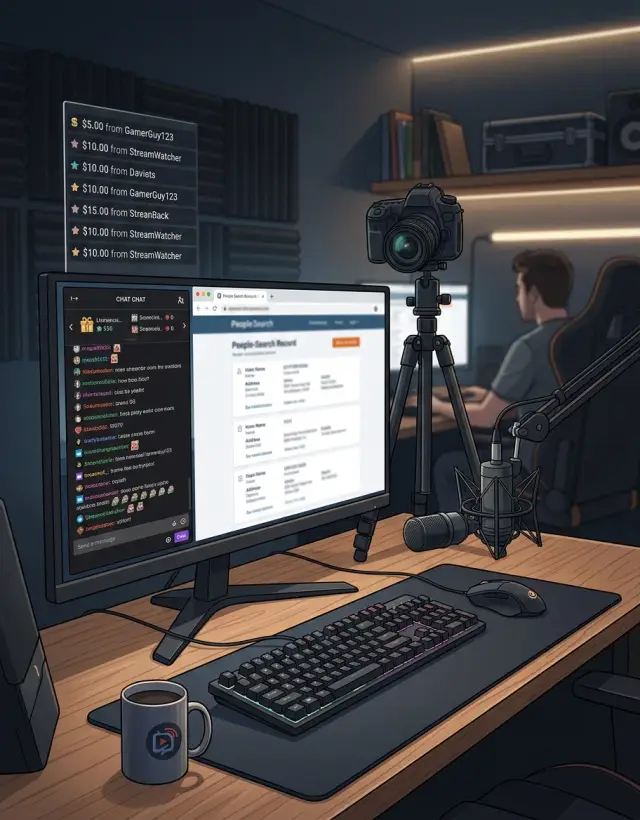
Why streamers and moderators are easier to trace
Streamers and online moderators spend a lot of time in public. Even when they're careful, they leave a bigger trail than most people. A stream schedule, an old username, a voice clip, a giveaway form, or a payment handle can give strangers more to work with than it seems.
Attention is part of the job. Most viewers are harmless, but it only takes one obsessed person to start digging. Moderators deal with this too. They may not be on camera, but they still manage disputes, ban users, and become the person someone wants to get back at.
The problem is rarely one big leak. It's usually a pile of small clues. A first name on a tip receipt, a city mentioned on stream, the same profile photo on another app, and an old people-search listing can connect fast. Once someone finds one solid detail, the rest often gets easier.
Common clues include:
- reused usernames across platforms
- payment names shown in donation or payout tools
- public wishlists, storefronts, or mailing details
- old forum accounts tied to a real name
- people-search listings with past addresses and relatives
None of these look dramatic on their own. Together, they can point to where someone lives, who they live with, or how to contact them offline.
That's where the real risk begins. Doxxing can expose an address or phone number to a hostile crowd. Stalking can move from repeated messages to unwanted deliveries or showing up in person. Swatting is worse. A false emergency report can send armed police to the wrong home, and that can turn dangerous in minutes.
You don't need a huge audience to be easy to trace. You just need enough scattered details in enough places.
The good news is that this usually comes from ordinary exposure, not some advanced hack. If the trail was built from normal accounts, old listings, and public records, you can shrink it the same way: one clue at a time.
Where personal details usually leak from
Most stalking risk doesn't start with one big mistake. It starts with scraps left in different places, often months apart. For streamers and moderators, those scraps are easier to find because fan communities save old pages, screenshots, and usernames.
Old profile bios are a common leak. A fan page, a forum signature, or an abandoned about page can still show a hometown, old handle, school, or full name. Even if you changed accounts, cached pages and reposts can keep those details alive.
Payment tools expose more than people expect. A donation app or payment account may show your legal name to senders, especially if the account was set up before you checked the privacy settings. If that same name appears on invoices, merch payments, or tip receipts, a stranger now has a clean starting point.
Wishlists create a quieter problem. The product page may look safe, but shipping emails, return labels, gift receipts, and support messages can reveal a surname, city, or ZIP code. That may sound minor. Often, it's enough.
Side projects leave a trail too. A personal website, old domain record, business filing, online shop, or freelance portfolio can connect a screen name to a real identity. Many people forget those records stay public long after the project is dead.
Then people-search listings pull it all together. These sites copy public records, broker data, and old marketing lists, then package names, relatives, past addresses, and phone numbers into one profile. In many cases, the listing isn't the first leak. It's the place where scattered clues become easy to use.
A quick self-check usually starts with four places:
- old bios, fan pages, and archived profiles
- payment apps and donation receipts
- wishlists, shipping messages, and label details
- domain records, business filings, and people-search sites
If your real name appears in two of those places, assume someone else can connect them too.
How separate clues turn into an address
Most stalking cases don't start with a full home address. They start with scraps.
A reused username on a streaming site, a Discord account, and a public wishlist can tell someone they're looking at the same person. Add a first name and a city from a profile bio, and the search gets much narrower.
Then one more clue slips out. A payment handle shows a legal name, or part of one. A public thank-you post shows a photo that matches an older Facebook or LinkedIn profile. What looked harmless on its own starts to fit together.
A common chain looks like this:
- the same username appears on two or three platforms
- one account mentions a city, school, or local event
- a payment app or tip page shows a real first and last name
- a profile photo matches another public account
- a people-search listing fills in the street, age, or relatives
That last step is what makes this much easier for strangers than most streamers expect. People-search listings and data brokers collect bits from public records, old signups, marketing databases, and past addresses. Instead of forcing someone to hunt through ten sites, they can hand over a near-complete profile in one place.
Picture a moderator who uses the same handle everywhere. Their fan server shows their first name. A donation receipt shows their last initial. An old public profile photo appears on a personal account from years ago. A broker site then connects that name to a city and a list of past addresses. A person with bad intent may need only one or two more clicks.
This is why removing broker listings matters before there's a direct threat. If those listings stay public, they act like glue between separate clues. Remove them, and the trail gets messier. That won't solve every privacy problem, but it can turn an easy search into a frustrating one.
Remove.dev focuses on that weak point by finding and removing listings across more than 500 data brokers, which can help break the chain before it leads to your door.
A simple example of how it happens
It often starts with two small clues that don't look dangerous on their own.
Picture a moderator named Sam. On Discord, Sam uses the handle "SamRaven." A while back, Sam used the same name on PayPal to split costs for a community giveaway. A viewer notices the match. No hacking, no special tools, no insider access. Just the same name showing up in two places.
The viewer gets curious and keeps searching. On an old gaming forum, Sam once mentioned "finally finding good tacos in Columbus" under that same handle. Now the viewer has a city. That's enough to narrow things down fast, especially if the username is uncommon.
A people-search listing does the rest. The viewer types in the name and city, then gets a page with a street address, age range, and possible relatives. Even if one detail is a little off, the listing usually gives enough to make an educated guess.
Most people don't think this way when they post. They see Discord, payment apps, and old forums as separate parts of life. A stranger sees a puzzle.
Once the address is easy to find, the risk grows. If Sam's stream schedule or mod hours are public, someone can tell when Sam is likely awake, online, or home alone. That's when stalking, fake deliveries, or swatting threats become much more real.
A simple chain like this is common:
- one repeated name across Discord and a payment tool
- one old post that gives away a city
- one people-search listing that fills in the address
- one public schedule that tells someone when to act
This is why privacy work for streamers isn't about hiding one account. It's about breaking the chain before small clues turn into a real-world threat.
How to start removing your data step by step
Start with a plain search session, not guesswork. Look up your real name, gamer tags, moderator handles, phone number, old email addresses, and any usernames you reused on older forums or payment apps. That first pass usually shows the obvious leaks fast.
Use a private browser window so search results are less shaped by your own history. Check regular search results, image results, and a few people-search listings. If you find your age, city, relatives, or past addresses, write down where each result appears.
Before you remove anything, save proof. Take screenshots of the listing, the page title, and the details shown. If a site asks for the exact profile URL, or if the page comes back later, you'll want that record.
A simple tracker helps more than most people expect:
- site name
- profile URL or page title
- what personal details it shows
- date you sent the request
- whether it was removed or came back
Don't stop at the copied listing if you can fix the source. If a people-search site pulled your info from a public voter file, an old business record, a domain registration, or a social profile with too much exposed, the copy may disappear and then return. Remove or limit the original source where possible, then work through the broker copies.
This takes time, so go in waves. Start with listings that show your home address, phone number, relatives, or maps tied to your name. Those details are the most likely to raise stalking risk or make swatting easier.
Keep checking after each round. Some sites remove a page in a few days. Others relist it after a fresh data pull. That's why a tracker matters.
If you don't want to handle every broker one by one, Remove.dev can automate much of this work and keep watching for re-listings. Whether you do it yourself or use a service, the pattern stays the same: find it, document it, remove it, then watch for it coming back.
What to change in payment and fan tools
A lot of stalking cases don't start with a hack. They start with a receipt, a wishlist, or a shipping label. If you stream, moderate a large community, or run fan sales, check every tool that touches money or mail.
Use your channel name or a business name anywhere the service allows it. Put that name on donation pages, store pages, public invoices, and customer emails. Some payment tools still need your legal name for tax setup, which is normal. What matters is whether supporters can see it.
Do one full supporter test instead of trusting the settings page. Send yourself a small donation. Buy one cheap item from your own shop. Open every confirmation email and receipt, and look for your full name, personal email, city, phone number, or home address.
A small leak is enough. A viewer might see "Sarah Bennett" on a payment receipt, "S. Bennett" on a wishlist, and a city on a merch return label. That can be matched to people-search listings very fast.
Check these places first:
- donation and tip tools
- storefront profiles and order emails
- wishlists and gift registries
- payment app display names
- return labels and packing slips
Shipping details need extra care. If you sell merch or mail prizes, review both the sender name and the return address. For swatting prevention, don't use your home as the return point if you have another lawful option, such as a business address or mail service.
Keep creator accounts separate from personal accounts. Use a creator-only email, phone number, and payment profile. Don't connect your public work to an old shopping account, family wishlist, or peer-to-peer payment app you used years ago. Old defaults stick around, and they leak more often than people expect.
This part of privacy cleanup isn't glamorous, but it matters. If your fan tools keep exposing new details, broker removals and privacy settings will only do half the job.
Mistakes that keep exposing your information
The most common mistake is simple: removing one people-search listing, then stopping. Your data often gets copied, sold again, or reposted under a slightly different record. For streamers, that's enough to keep the trail alive. One old listing with the right age range, city, and relatives can still point someone to your home.
Another mistake is using the same email address, phone number, or username in every removal request. That can tie your requests together and create a fresh pattern. If possible, use contact details made only for privacy work. Keep them separate from your stream, your moderator accounts, and your payment tools.
Old usernames cause more trouble than most people expect. A handle you used years ago may still show up on forum posts, giveaway pages, old game profiles, or payment receipts. If that same handle appears on your current channel or mod account, it can connect your online identity to your real name fast. Search your old names in quotes and check image results, cached pages, and archived profiles.
Family records get missed all the time. You may remove your own name and still have your address exposed through a parent, partner, sibling, or adult child who shares the same home. Harassers don't need a perfect match. If they find a relative tied to your street, they may treat that as good enough.
A quick audit should cover four things:
- old usernames you still reuse
- relatives listed at the same address
- emails or phone numbers used across fan and payment accounts
- listings that came back after an earlier removal
Waiting until there's a stalking risk, doxxing attempt, or swatting threat is a bad bet. By then, screenshots may already be saved and passed around in private groups. Privacy cleanup is much safer when it starts early and keeps going.
That's why one-time cleanup rarely lasts. If you do it yourself, put repeat checks on your calendar. If you use a service like Remove.dev, the main benefit is ongoing monitoring, because re-listings are part of the problem, not a rare exception.
A quick monthly safety check
A monthly check takes 15 to 20 minutes, and it can catch problems before they grow. That matters if you stream, moderate large communities, or use public payment tools. One fresh listing on a people-search site is often enough to connect your online name to your real life.
Start with a plain search for your real name, your screen name, and any older handles you still remember. Check the first two pages, not just the top result. A bad result may sit lower down, where you'll miss it until someone determined goes looking.
Use the same habit for old email addresses, usernames, and phone numbers if they've ever been tied to your public work. You're not hunting for every mention of yourself. You're looking for details that can lead to your address, relatives, city, or workplace.
A simple monthly routine works well:
- search your real name, current handle, and old handles
- scan the first two pages of results for broker listings
- check for cached pages that still show removed details
- review payment profiles after any account change
- add newly found emails or usernames to your tracking list
Cached pages matter because a broker page can disappear while the old preview still shows your age, city, or relatives. That's enough for a stalker to keep digging. If you find a cached result, make a note of the page title and what it exposed.
Payment tools deserve a quick look every time you change a display name, payout method, business setting, or donation page. Small account edits sometimes switch a profile back to a legal name or make an email visible again. That's a common leak, and it's easy to miss.
Keep one simple document with old usernames, past email addresses, former cities, and any broker sites where you have appeared before. If you use Remove.dev, this list makes monitoring better because re-listings often show up under older details, not your current ones.
Boring routine beats panic. Once a month is enough for most people, and it's a lot easier than cleaning up a full doxxing trail later.
What to do next
Start with what you can fix yourself in one hour. Search your real name, old usernames, phone number, and home address. If a people-search site shows your details and has a working opt-out form, remove that first.
Then check the accounts you control. Old creator pages, public wishlists, payment profiles, and fan tools often show a legal name, city, or email without you noticing. Small fixes matter. Each one removes another easy path to your home.
A good first pass looks like this:
- remove public people-search listings with clear opt-out pages
- hide your legal name, city, and email in fan and payment tools
- delete or lock old bios, domain records, and abandoned accounts
- save screenshots and dates so you know what changed
After that, set a routine. One cleanup is rarely enough. People-search listings come back, old pages get re-indexed, and data brokers repost details you already removed. Put a monthly reminder on your calendar and search the same terms each time. Keep the list short so you'll actually do it.
If you're dealing with stalking risk, swatting threats, or a large audience, doing every opt-out by hand gets old fast. That's often the point where outside help makes sense. Remove.dev automatically finds and removes private information from over 500 data brokers worldwide. It uses direct API integrations, browser automation, and legally compliant removal demands under CCPA, GDPR, and other privacy regulations. Once your data is removed, it continues monitoring for re-listings and automatically sends new removal requests, so your information stays off the market.
That ongoing check matters more than people expect. One-time cleanup helps, but repeated monitoring is what keeps exposure down over time. Most removals through Remove.dev are completed within 7-14 days, and you can track requests in real time through its dashboard.
The goal isn't to vanish from the internet. That's rarely realistic. The goal is simpler: less public data, fewer loose clues, and fewer easy ways for someone to get close to where you live.
FAQ
Why are streamers and moderators easier to trace than other people?
Because they leave more public clues than most people. A reused handle, a stream schedule, a tip receipt, or an old forum post can be enough to connect an online identity to a real name or city.
What clue usually gives someone a starting point?
Usually it is something small, not a hack. The most common starting points are reused usernames, payment names, old bios, public wishlists, and people-search listings.
Can a donation or payment receipt expose my real identity?
Yes. Some payment and donation tools show your legal name, email, or city in receipts and confirmations. Send yourself a small test payment and read every email and receipt to see exactly what a stranger would see.
How do people-search sites make stalking risk worse?
They pull scattered details into one place. If someone already has your name, city, or a relative's name, a broker listing can fill in past addresses, phone numbers, and household links very quickly.
What should I remove first if I only have an hour?
Start with anything that shows your home address, phone number, relatives, or a map tied to your name. Then check payment tools, wishlists, storefront emails, and old bios that expose your legal name or city.
How can I tell if my fan tools or merch setup are leaking information?
Do a full test like a viewer or customer would. Make a small donation to yourself, place a cheap test order, and inspect the receipt, shipping email, packing slip, sender name, and return address for leaks.
Is removing one broker listing enough?
No. Broker sites copy and repost data, and the same details often appear under a slightly different profile later. You need follow-up checks or ongoing monitoring, or the trail can come back.
How often should I check for re-listings?
Once a month is a good default for most people. Search your real name, current handle, old handles, phone number, and older email addresses, then check whether removed pages or cached results have returned.
Should I separate my creator accounts from my personal accounts?
Yes, that helps a lot. Use a creator-only email, phone number, and payment profile so your public work is not tied to older personal accounts that may still show your legal details.
When does using a service like Remove.dev make sense?
It makes sense when you have a public audience, a stalking concern, or no time to do dozens of opt-outs by hand. Remove.dev handles removals across more than 500 brokers, keeps watching for re-listings, and most removals are finished in 7–14 days.