Subscription box privacy: how addresses map your home
Subscription box privacy matters because repeat deliveries, gift plans, and shared addresses can help data brokers connect people in one home.
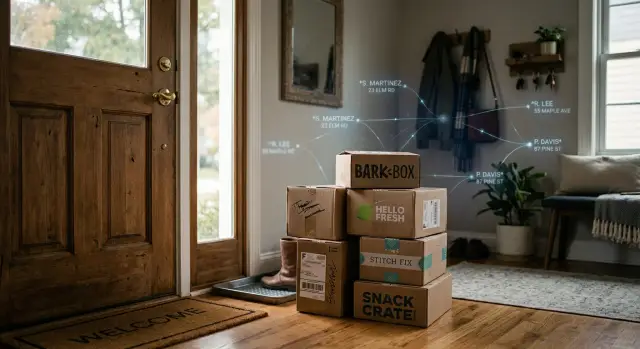
Why a simple delivery reveals more than you expect
A package on the porch feels routine. It looks like one order, one name, one address. For a data broker, it can do much more. That delivery can help confirm who lives at that home, who used to live there, and which people are connected.
That is the idea behind a household graph. It is a record that groups people around one address. If two adults get mail at the same place and a teenager starts receiving packages there too, those names can be tied together. Add a phone number, an email address, or a past address, and the picture gets clearer.
Most people never see this happen. There is no alert saying your home was matched to your partner, your child, or the relative who sent a gift. The tracking happens in the background through shipping records, retail data, change-of-address updates, loyalty programs, and broker databases that trade these details.
That is why subscription boxes matter more than they seem. A one-time order gives a clue. A recurring shipment gives repeated confirmation that a person is still tied to that home. If the box arrives every month, the address looks current. If the recipient name changes but the address stays the same, that can suggest a shared household.
A subscription can also reveal small details that seem harmless on their own. It can confirm the exact spelling of a name, show whether someone gets gifts or regular orders, hint at how long they stay at one address, and show which people receive items at the same home. It can even make a former resident look active there if an old order keeps shipping.
Picture a home where one person gets a meal kit, another gets a pet box, and a grandparent sends a gift subscription to a child. None of that sounds sensitive. Put together, it creates a cleaner map of the household.
That is the part buyers rarely notice. The box is the visible part. The address match, name match, and repeat delivery pattern are the quiet part, and often the more useful part for data brokers.
How brokers build a household graph
A household graph is a simple idea with messy results. A broker takes small bits of shipping data and turns them into a map of who lives at one address, who used to live there, and who is connected to that home.
It often starts with names on shipping labels. One order might say "Maya Chen," another says "M. Chen," and a gift order says "Maya and Alex Chen." A person reading those labels might shrug. A broker stores all of them, matches the shared address, and treats them as likely parts of the same household.
Small address details help a lot. Apartment numbers, unit codes, ZIP codes, and even the way an address is formatted can confirm that two records point to the same place. If "12 Oak Street Apt 4B" and "12 Oak St #4B" keep showing up with related names, the match gets stronger. In a large building, that extra unit detail can be the difference between a weak guess and a confident profile.
Repeat orders matter even more. One shipment could be old data. Five shipments over four months suggest the address is current. That tells a broker the person probably still receives mail there, which makes the record more useful for resale and matching.
Recurring deliveries do not just show a purchase. They show timing, stability, and a live address. That makes the home easier to connect to other records, such as marketing lists, voter files, app data, or old people-search entries.
The graph also keeps history. If a former roommate, ex-partner, or past tenant once got deliveries there, that old name may stay attached to the address long after they move out. Over time, one home can collect a chain of past and present residents. Even when those people are no longer connected in real life, the broker record may still tie them together.
Why subscription boxes give brokers extra clues
A subscription box is more than a purchase. It is a repeated delivery tied to one home, one person, and often the same payment details every month.
A one-time order leaves a small trace. A subscription keeps confirming the same facts. If a meal kit, pet box, or baby product arrives month after month, that tells brokers the address is active and the household details are still current.
The type of box says more than many people realize. Diaper shipments suggest a new parent. Wine clubs point to adult age. Pet treat boxes suggest there is a dog or cat in the home. Hobby boxes can hint at income, interests, and how someone spends free time. Each clue is fuzzy on its own, but brokers work by stacking clues.
Gift plans create an even easier match. The order often includes the buyer's name, billing address, email, and card, plus the recipient's name and shipping address. That gives brokers two people connected by one shipment, sometimes across two homes. Around birthdays or holidays, the timing can also suggest family ties.
Then there is the account data most shoppers never see. Reused email addresses, the same last name, a shared card, and several subscriptions sent to one address all make matching easier. If one person buys a snack box, another gets a skincare box, and both use the same home address, that starts to look like a stable household record.
This kind of data tends to stick because it is fresh, regular, and easy to compare with retailer records, change-of-address files, and other marketing data. One beauty box will not map your whole home. A year of recurring shipments might.
A realistic example from one household
Take one home with two adults and one teen. Sam and Lena live at 114 Oak Street with their 15-year-old son, Eli. Sam signs up for a weekly meal kit under his full name. Lena gets a monthly beauty box under her own account. In December, Eli's aunt sends him a three-month snack gift plan to the same address.
Each order looks small on its own. A shipping company sees a delivery pattern. The box seller has a billing name, shipping name, renewal date, and maybe a phone number. A broker that buys or matches address data can connect those bits fast. Three people with different first names, one shared address, steady deliveries, and holiday gifts are enough to suggest one household.
The timing adds more. The meal kit arrives every Tuesday. The beauty box lands near the start of each month. The gift plan starts in late November and stops after January. That mix tells a story: two adults live there year-round, and a younger person at the home gets seasonal gifts. If one order uses "Samuel" and another uses "Sam," the address can still tie them together. If Lena once used her maiden name on an old order, that record can stay linked too.
Now picture a move. The family leaves Oak Street for a new house across town. Sam updates the meal kit first. Lena forgets to change an old beauty account for two months. Eli's aunt reuses last year's gift order and ships the holiday plan to the old address by mistake.
Old records rarely vanish just because the family moved. Brokers often keep the past address, the new address, and the people tied to both. That can leave Sam, Lena, and Eli linked across two homes at once. One meal kit, one beauty box, and one gift plan can build a neat little map of who lives together, where they lived before, and when the household changed.
How to reduce the trail step by step
The easiest way to cut down the trail is to treat every order like a small data share. A subscription box does not only send a package. It can also store names, past recipients, gift notes, and old addresses.
Start with the account itself. If a service lets you keep several recipients under one login, ask whether you really need that. One account with your name, your partner's name, your child's nickname, and two grandparent addresses gives brokers more ways to connect one home to many people.
A simple rule helps: use only the name that needs the delivery. If the box is for you, use your name and your address. Do not add a spouse, roommate, or child "just in case" unless they need their own shipment. Small extras like that can turn one delivery record into a household graph.
The same goes for gifts. If you keep sending different boxes to the same family address from one main account, you create a cluster of matching signals around that home. That is convenient for checkout. It also makes broker matching easier.
The safest routine is boring. Keep each account tied to one person when possible. Remove old recipients once a gift arrives. Skip nicknames and labels like "Mom and Dad." Think twice before saving a shared address for later. After each purchase, take a quick look at the saved details instead of waiting for an annual cleanup.
If you order often, set a monthly reminder to review the account. Delete addresses you no longer use. Remove gift recipients from one-time events. The less history sitting there, the less there is to connect later.
Common mistakes that make matching easier
Small habits make address matching much easier. The problem is rarely one order by itself. It is the pattern across months, names, and shipment details.
One common mistake is switching between name versions. If one box goes to "Jen Carter" and another goes to "Jennifer A. Carter" at the same address, that still looks like the same person. Add the same phone number or email, and the match gets even easier.
Gift orders create another leak. Many people send a gift from their main account and leave the default billing email, saved card, or home phone in place. That can connect the sender, the recipient, and both addresses in one record.
Old addresses are another easy clue. If a subscription profile still holds your last apartment, your parents' house, and your current home, the account starts to read like a moving history. That makes it easier to tie past and present records together.
Mixing work, home, and family shipping details in one profile causes similar trouble. A single account might include your office for weekday deliveries, your home for weekend orders, and a relative's address for gifts. To a broker, that is not messy. It is useful.
The fix is simple, if a little tedious. Use one consistent version of your name for subscriptions. Check gift-order defaults before placing the order. Delete old addresses you no longer need. Keep work and home deliveries in separate accounts if you can. Every few months, review saved payment, phone, and email details too.
Good privacy usually comes down to less mixing. The fewer loose connections you leave in one account, the harder it is to map your household with confidence.
A quick check before you subscribe or send a gift
A subscription order looks small. In practice, it can add another clean data point to the files that brokers already build around your home. If you care about privacy, pause for 30 seconds before checkout.
A good rule is simple: share the least you can, for the shortest time you can. That matters even more with gift plans, because one order can connect your address, another person, and a recurring buying pattern in the same record.
Before you place the order, ask a few basic questions. Does this need to go to your home address, or would a work address, parcel locker, or pickup point do the job? Are you buying through your main shopping account, where years of order history, saved cards, and old addresses already sit together? Does checkout still show old recipients you forgot to remove, including past roommates, relatives, or an ex-partner? Will this order put a child's name, nickname, or a second adult's name next to your address? And after you pay, can you delete unused addresses and recipient details from the account?
Those checks catch most of the easy mistakes. One of the biggest is using your everyday account out of habit. If that account already holds years of purchases and several saved addresses, a gift box can become one more strong match in a household graph.
Children's names need extra care. A birthday craft box sent to "Mia Johnson" at your home may look harmless, but it gives a seller and any downstream data partner a clean child-to-address link. The same goes for adding a second adult who does not need to be on the order.
Old checkout data is another quiet problem. Many stores keep recipient names and addresses long after the order is done. If you do buy, go back after the purchase and remove anything you no longer need. That small cleanup step can stop the next order from exposing more than you meant to share.
If a gift is truly one-time, treat it that way. Use a separate order when you can, keep the account details lean, and clean up saved addresses right after.
What to do if your address is already in broker databases
Once your address is in broker databases, the goal changes. You are no longer trying to avoid a trail. You are trying to shrink it, correct it, and stop it from growing.
Start with a plain search on people-search sites. Check your full name, old names, current address, past addresses, and the names of other adults tied to the home. If a gift plan or recurring box was sent to your place, search those names too. One shared address is often enough for brokers to connect people who barely belong in the same record.
A simple order helps. Remove listings from the biggest people-search sites first. Ask retailers to delete saved shipping addresses you no longer use. Check old gift subscriptions and household accounts for outdated names. Keep a note of the site, the date, and any confirmation number.
Saved addresses matter more than most people think. A store may still keep an old apartment, an ex-partner's name, or a parent's address from a gift order made years ago. That data can spread again if it is sold, synced, or matched with another account.
Watch for re-listings after life changes. A move often brings your old and new address into the same profile. A breakup or roommate change can do the same thing, because brokers try to rebuild household links from mailing records, public filings, and shopping data. Check again a few weeks later, not just once.
Good notes save time. Use a small spreadsheet or note app with the site name, request date, result, and when to recheck. Without that, it is easy to forget what was removed and what came back.
If you do not want to manage dozens of opt-outs by hand, Remove.dev can automate removals across more than 500 data brokers and keep watching for re-listings. The dashboard also lets you track each request instead of managing the whole process in a spreadsheet.
Next steps if you want less of your home on broker lists
This kind of cleanup is not exciting, but it works. Keep fewer saved addresses, remove old recipients, and do not leave gift settings running after the order is done.
Start with the places you already control. Open your shopping accounts and check saved addresses, gift lists, shared family accounts, and recipient lists. Old entries matter more than most people think, especially if they connect your home to relatives, roommates, or past gifts.
Make the first pass simple. Delete addresses you no longer use. Remove old gift recipients after delivery. Turn off auto-renew on gift plans you forgot about. Check whether family members share one account with many names tied to one address. Avoid saving a recipient address unless you expect to use it again.
It also helps to keep your address footprint plain. Use the version of your address you actually need for delivery, and skip extra notes or nicknames when they are not needed. The more variations attached to one home, the easier matching gets.
If your address is already spread across broker databases, manual opt-outs are still worth knowing about. They just take time. Each broker has its own process, many ask for separate requests, and some listings come back later, which means you may need to check again.
The first step is not complicated. Clean out saved addresses and gift settings first, then decide whether you want to handle broker removals one by one or hand that work off. Either way, less stale address data in your accounts means less fuel for household matching before the next box ships.
FAQ
What is a household graph?
It is a record that groups people around one address. Brokers use shipping names, repeat deliveries, old addresses, emails, and phone numbers to guess who lives together or used to live there.
Why are subscription boxes a privacy risk?
Because repeat shipments confirm that an address is current. Over time, a monthly box can tie your name, your home, and other people at that address into one cleaner broker profile.
Do gift subscriptions expose both the sender and the recipient?
Yes. A gift order often connects the buyer's billing details with the recipient's shipping details. That can create a direct link between two people and sometimes between two homes.
Can old addresses stay linked to me after I move?
Yes, often for a long time. If one subscription updates to your new place but another keeps shipping to the old one, brokers may keep both addresses tied to you and your household.
Does using nicknames or different versions of my name help?
Not much. If the same email, phone number, or address appears across those orders, the records still match easily. A consistent name is usually better for account cleanup, but it does not hide you from brokers.
What is the safest way to handle gift subscriptions?
For gifts, use the smallest amount of saved data you can. Place the order, avoid storing extra recipients if you do not need them, and delete the saved address and recipient details after the gift arrives.
Should my whole family use one shopping account?
Usually no. One shared account can mix partners, children, relatives, old addresses, and work deliveries into one easy record. Separate accounts are cleaner when possible.
How often should I clean out saved addresses and recipient details?
Set a monthly reminder if you order often. Remove old recipients, unused addresses, saved phone numbers, and any payment details tied to past gifts or old homes.
What should I check before I start a new subscription?
Before checkout, check the shipping name, saved addresses, and old recipients. If you can, use a pickup point, parcel locker, or another delivery option instead of your home for one-time orders.
What if my address is already showing up in broker databases?
Start by checking people-search sites and your shopping accounts for old addresses and household links. If you do not want to send removals by hand, Remove.dev can automate opt-outs across more than 500 brokers and keep watching for re-listings.