Tenant screening records can follow you after a move
Tenant screening records can keep showing up after you move. Learn where they come from, how to check them, and what to do when old data returns.
Why this can follow you after a lease ends
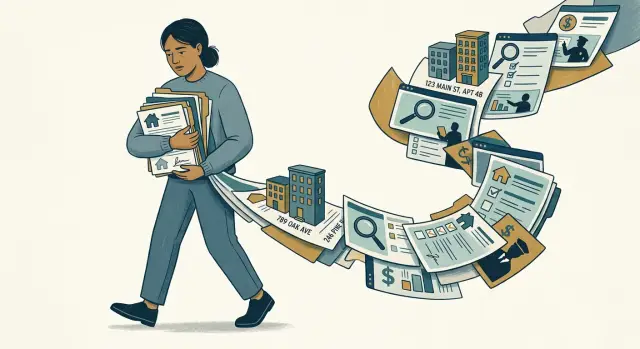
A lease can end cleanly, but the records tied to it often do not. A move creates data in several places at once, and each place may keep its own copy long after you hand back the keys.
A single rental application can leave information with the landlord or property manager, the screening company they use, databases that track address history, and data brokers that collect and resell contact details. Those records do not always disappear when you move out. A landlord may keep the application on file. The screening company may keep the report or the data used to build it. Another company may copy the same address and attach it to your profile for years.
Old addresses are often what keep everything connected. An old unit number or street address can stay tied to your name, phone number, email, or credit header. When you apply somewhere new, that older address can pull old records back into view.
That is why rental application records can feel harder to shake than the lease itself. A new application may not just check your current details. It can also match you against prior addresses, past screening activity, public records, and broker data that still points to places you used to live.
Sometimes the record is not even from a completed lease. An application you started, an inquiry a landlord ran, or a screening report ordered for a unit you never got can still leave data behind. Annoying, but common.
Where these records come from
Most people think a rental application goes to one landlord and stops there. It rarely works that way. One application can create copies across leasing software, screening companies, credit bureaus, public records, and broker sites.
The first source is the leasing office itself. If you filled out a paper form, used an apartment portal, or uploaded documents to a property manager's system, that information may stay in their files long after you move. Even if you were denied or never signed the lease, your name, phone number, employer, and past addresses may still sit in that account.
Then there are screening companies. Landlords often hire outside firms to build reports on applicants, and those reports can pull from several feeds at once. A single check may include credit header data, identity matching, eviction records, criminal record searches where allowed, and address history tied to your name.
That is where things spread. You enter your current and past addresses on an application. The screening company matches those addresses to outside databases. Those databases connect your name to older records. Later reports store that address history all over again.
Data broker sites make this worse. They collect address history from utility data, marketing lists, property filings, and other commercial sources. Once an old address appears on one site, other sites often copy it. Later, a screening tool may use that same address to search for more records, even if you left years ago.
Public records add another layer. Court filings, assessor records, deed records, and property tax databases can tie your name to a past home. If your address appeared in a housing court filing or another local record, that detail can keep resurfacing because public data gets repackaged and sold.
A simple move from one apartment to another can leave a long paper trail. You update your address, apply once, and several databases now have it.
Why old addresses keep pulling other records in
An old address acts like glue. Once it shows up on a screening file, it can connect records that were created years apart.
Many screening files are matched by address history first and then checked against other details. If a file shows your name at one apartment in 2021 and a new application lists the same address in 2024, that older file can get pulled forward again. This is one reason old addresses on reports keep coming back after a move.
The match does not need to be perfect. A missing middle name, a shortened first name, or a small spelling mistake often will not stop it. If the address, birth month, email, or phone number looks close enough, separate files may be treated as one person.
Phone numbers make this worse. People often keep the same number through several moves, so one old number can reconnect files from different buildings, cities, or screening companies. A record that looked stale on its own can suddenly look current again when that number appears on a fresh application.
Household links can widen the trail too. If you lived with a partner, relative, or roommate, data sellers may connect all of you to the same address. Later, your file can pick up extra address history, old contact details, or public record matches just because you shared a home.
A new application can refresh old data instead of replacing it. The landlord or screening company may pull from several sources, and each source may have a slightly different version of your history. When those versions get combined, outdated details can be copied into the new file and treated as confirmed.
Picture a renter who moved from Phoenix to Dallas. They keep the same phone number, list one past address correctly, and shorten "Jonathan" to "Jon" on the new form. That may be enough for the screening company to reconnect older rental application records and other files tied to the Phoenix address.
That is why stale records can stick around for years. If the old address stays in broker databases, each new check can pull the same trail back into view.
How to check your records step by step
Start with your own paper trail, not the report. Screening records often look messy because one old address pulls in another file, and an old phone number pulls in more. If you gather your details first, it gets much easier to spot what is wrong.
- Write down every address you used in the last five to seven years. Include unit numbers, move-in dates, move-out dates, and any place you used on a rental application, even if you stayed there briefly.
- Gather every rental application record you still have. Save approval emails, denial notices, lease dates, and screening consent forms. If a landlord used a screening company, that notice often names it.
- Ask each screening company for your consumer file. Ask for the full file, not just a score or summary. Keep a note of when you asked, how you asked, and what came back.
- Read the file line by line. Check dates, phone numbers, name spellings, job history, and repeated addresses. Look for duplicate address entries and old addresses that should not still be there.
- Keep every file and screenshot in one folder. Add dispute dates, case numbers, and responses. A basic spreadsheet is enough to track which company fixed what.
Once the files arrive, compare them against your address list and old applications. Small errors matter more than people think. One wrong unit number or an old phone number can keep matching you to records that should have dropped away.
If you find a mistake, label it clearly before you dispute it. A short note like "wrong move-out date" or "duplicate address" is enough. That keeps your dispute focused and saves time later.
Save denial notices even if they seem minor. They can tell you which report was used, when it was pulled, and which company you need to contact first. That is often the fastest way to trace a bad record back to its source.
If the same old addresses keep showing up outside screening files too, it helps to clean up the broker side as well. That does not replace a dispute with the screening company, but it can stop the same stale address from feeding new matches.
A simple example after one move
Jenna rents an apartment in Atlanta for two years, then moves to Dallas for a new job. Her lease ends cleanly. She pays the last bill, gets her deposit statement, and assumes the old place is behind her.
A month later, she applies for a new apartment. The landlord uses a screening company. That company does not only read the form Jenna filled out that day. It also matches her name, phone number, and past addresses against other records it can find.
One old address causes the problem. A data broker still lists Jenna at an apartment she left three years earlier, before Atlanta. The screening company matches that stale address to her file and pulls in extra records tied to it. Now her report shows multiple move-out dates, an old phone number, and two different timelines for where she lived.
Nothing in the file says she broke a lease or skipped rent. The problem is confusion. To a busy leasing office, a confusing file can look like a warning sign even when the facts are fine.
The landlord asks Jenna to explain a gap in her rental history. There is no real gap. The report mixed her current information with old broker data and older rental application records. Jenna now has to prove the simple version of the story: where she lived, when she moved, and that she left on good terms.
She sends over her signed lease from Atlanta, a payment ledger showing on-time rent, her move-out statement, and a short note from the last property manager. That clears things up, but it costs her time. She waits two days for paperwork, and the unit she wanted is nearly gone before the review finishes.
This is how screening records can follow someone after a move. It is often not one big error. It is a stack of old address matches that keeps pulling stale details back into view.
What to do when data is wrong or too old
Bad data rarely fixes itself. If a screening report shows the wrong person, an address you never used, or records that should no longer follow you, start with the company that made the report.
Ask the landlord or property manager which screening company they used. Get the company name, the date of the report, and a copy if you can. Without that, you end up guessing.
Your first move is usually a dispute with the screening company, not the landlord. The landlord may be willing to listen, but the screening company controls the file that can be sold again later. Be specific. Point to each line that is wrong, outdated, or tied to the wrong address, and attach proof when you have it.
Short disputes usually work better than emotional ones. Stick to the facts: what is wrong, why it is wrong, which document fixes it, and which address and dates are involved.
Old addresses are often the real issue. One stale address can pull in other matches from public records, people-search sites, and marketing databases. If a report still connects you to an apartment from five years ago, check the related records too, not just the screening file.
That means looking at credit reports, background reports, and people-search profiles that still list the old place. If those records keep showing the same outdated address, the bad match can come back on a later rental application even after one company fixes it.
When possible, remove or correct stale broker and people-search profiles. Many screening tools buy or match address data from outside sources. If those outside profiles are wrong, the same bad address can keep resurfacing.
After the screening company says it fixed the file, verify it. Order a fresh copy, or ask the landlord to confirm they received an updated report. Do not assume the correction made it through every system.
Check three things: the wrong address is gone, any mixed records are gone too, and you saved the correction notice for your files. If the address has a habit of coming back, check again after a few weeks.
Mistakes that keep the trail alive
A lot of people assume the trail ends when the lease ends. It usually does not. Small admin habits can keep screening records, rental application records, and old addresses tied together long after you move out.
One common mistake is using a different version of your address on each application. "123 West Pine Street, Apt 2," "123 W Pine St #2," and "123 Pine Street Unit 2" look close enough to a person, but databases may treat them as separate entries first and match them later. That mismatch can create duplicate files and fresh links to older applications.
The same thing happens when people forget the smaller places where they shared data. You may remember the main rental application, but not the apartment portal, the identity check form, the co-signer paperwork, or the scheduler used for tours. Those side forms often go to different vendors, and each one can keep your name, phone number, and address history.
A denial email can matter more than it seems. Many people delete it right away and lose the name of the screening company that ran the report. Later, when an old address keeps showing up, they know something is wrong but do not know who created the record.
Another mistake is stopping after one removal request. Some records come back because another broker reposts the same data or because a different screening company still has it. One successful removal does not clean the whole chain.
A few habits help a lot. Pick one exact address format and use it every time. Save denial emails and application confirmations. Check co-signer forms and rental portals, not just the main application. Then check again a few weeks later for reposts.
Quick checks before you apply again
Before you send another rental application, spend 15 minutes checking what still follows your name. Old screening records often look minor on their own, but they can stack up fast when a landlord pulls several files at once.
Start with your last two or three addresses. Compare them across any credit report, screening report, and past rental application records you still have. If one report says you moved out in June but another says August, that gap can pull in extra entries tied to the wrong address window.
A quick review usually catches the biggest problems. Make sure the same address is written the same way everywhere, including unit numbers and abbreviations. Check that move-in and move-out dates match your lease records, utility bills, or email confirmations. Look for duplicate names, old married names, nicknames, or files mixed with someone who has a similar name. Keep your reports, dispute letters, and correction notices in one folder so you can reuse them fast.
One small mismatch can create a bigger trail than people expect. If your current address appears as "Apt 4B" on one file and "Unit 4-B" on another, some screening companies may treat them as separate clues. That can reconnect old addresses that should have faded out already.
It also helps to check for mixed files before a landlord sees them. A wrong middle initial, a parent with the same name, or a recycled phone number can pull in someone else's eviction search, collections entry, or address history. Fixing that before you apply is much easier than explaining it after a denial.
Next steps if you want less manual cleanup
If you are tired of chasing the same records after every move, do not try to fix everything at once. Start with the company tied to your latest rental application. That is usually the fastest way to see what a landlord actually saw, and it gives you the freshest trail to follow.
That order matters because screening records often start with one recent application, then spread through broker profiles tied to an old address. Once an old address shows up in the wrong place, it can keep pulling in older names, phone numbers, and household links.
A simple plan works best. Get your file from the screening company used in your most recent application. Write down every old address, name variation, and date range listed there. Then search for broker profiles that still show those old addresses and remove or correct them. Set a reminder to check again in 30 to 60 days, because records often reappear.
This saves time because you are following the shortest path from the report back to the source. If your latest screening file lists an apartment from three years ago, that address may also sit on broker pages that still connect you to outdated records. Clean up those broker listings, and future reports often have less junk to pull from.
If broker data keeps coming back, a service like Remove.dev can handle that repetitive part. Remove.dev removes personal data from over 500 data brokers worldwide and keeps monitoring for relistings, which can reduce how often stale address data shows up again while you focus on disputing the screening records that matter most.
FAQ
Why is my old apartment still showing up on screening reports?
Because old addresses often stay attached to your name, phone number, or email in several databases. When a new landlord runs a check, that older address can pull past application data, broker listings, and public record matches back into view.
Can a rental application stay on file if I never signed the lease?
Yes. An application can leave records with the landlord, the leasing portal, and the screening company even if you never moved in. A started application, inquiry, or denied screening can still stay on file and resurface later.
Who should I contact first if a screening report is wrong?
Start with the screening company that made the report. The landlord may explain what they saw, but the screening company controls the file that can be reused later. Ask for your full consumer file and dispute each wrong line with clear proof.
What documents help fix a mixed-up rental history?
Use records that show where you lived and when. A signed lease, payment ledger, move-out statement, utility bill, approval or denial email, and a short note from a past property manager can all help clear up bad dates or mixed addresses.
Do old phone numbers and name variations really cause bad matches?
They can. A reused phone number, nickname, missing middle name, or small spelling difference may still be close enough for a system to treat two files as the same person. That is why even small mismatches are worth fixing.
Should I check data broker sites too?
Yes, because broker sites often feed the same stale address back into later checks. Fixing the screening report helps, but cleaning up broker profiles can stop the same bad address from coming back on the next application.
What should I review before I apply for another apartment?
Before you apply, compare your last few addresses across your reports and old applications. Make sure unit numbers, move-in dates, move-out dates, and name variations match your own records so a small mismatch does not reopen older files.
Can living with roommates or family affect my screening file?
It can. If you shared an address with a partner, relative, or roommate, some data sellers may connect all of you to that same place. Later, your file may pick up extra address history or other records tied to that household.
How long does it take to clean up old address data?
It depends on the company, but stale broker records often come back unless you check again later. Remove.dev says most broker removals are completed within 7–14 days, and it keeps watching for relistings so the same data is less likely to return.
How can Remove.dev help with old rental application records?
If the same old address keeps returning, Remove.dev can handle the repetitive broker cleanup. It removes personal data from over 500 data brokers, keeps checking for relistings, and shows request status in real time so you can focus on fixing the screening file itself.