Data removal for uncommon names: why broad cleanup wins
Data removal for uncommon names works differently because exact-match searches expose you faster. Learn why cleaning more sources matters more than ranking.
Why uncommon names create a different privacy problem
If your full name is unusual, search works against you in a very direct way. One search can point to one person almost immediately. There is less noise from people with the same name, so a stranger does not need much patience to figure out which record is yours.
With a common name, a data broker page can stay ambiguous. With a rare name, the same page can feel conclusive. A city, age range, or short list of relatives is often enough to remove any doubt. After that, every other result looks more believable because the first one already gave the searcher a target.
Less crowded search results make this worse. If only a handful of pages appear, each one gets more attention. A record on a small broker site can matter more than it would for someone named John Smith, because there are not dozens of near-matches soaking up the clicks.
Small details also connect faster than most people expect. One site shows a current city. Another shows a past address. A third lists a parent, spouse, or roommate. None of that looks dramatic on its own. Put together, it creates a very clear trail to a real person.
That is why people with uncommon names usually need broader cleanup. If your name is rare, even a low-traffic broker can confirm your identity. Leaving ten small listings online can do more damage than leaving one visible page, because each extra record acts like another check mark beside your name.
Wide coverage matters for the same reason. The real risk is not mixed signals. It is that there are too few barriers between a name search and a full profile. A service like Remove.dev fits that problem well because it looks across more than 500 data brokers and keeps checking for relistings over time.
What exact-match search changes
Exact-match search is especially tough when your name is uncommon. Searching "Lena Harrow" is not the same as searching "John Smith." There is less noise, fewer false matches, and a much shorter path from a search box to your phone number, home address, or relatives.
That changes how personal information gets exposed. Someone does not need to scroll through pages of mixed results or guess which profile might be yours. One quoted-name search can pull up direct matches quickly, especially on people-search sites and old directory pages.
It gets narrower when a searcher adds one extra detail. A city, ZIP code, age range, or middle initial can cut the results down to one person in seconds. If your name is rare enough, even a past city or old employer may be enough to confirm it is you.
Old pages make this worse. Many directory listings stay visible for years after you move or change jobs. Search engines can keep showing those pages long after the information feels stale. The data may be out of date, but it still helps someone connect your name to an address, family members, or other records.
A simple example makes the problem obvious. Say someone searches "Elise Norwood" and adds "Tampa." They may land on an old broker page, then use that page to jump to newer records elsewhere. The first result does not need to be perfect. It only needs to be good enough to confirm identity and open the next door.
That is why ranking is not the real issue. Being on page two instead of page one does not solve much if the result is still an exact match. The bigger problem is easy discovery. If your record exists across many broker and directory sites, one search can start a chain.
Why ranking is not the main issue
Chasing the top result is a trap. If your name is uncommon, a page does not need to rank first to expose you. A result on page two, a small people-search site, or an old directory entry can still give away your age, address history, relatives, or phone number.
That is the real problem with rare name privacy. Searchers do not need many clues to feel sure they found the right person. With a common name, a lower-ranked page may get lost among many other people. With a rare name, even a weak result can point straight to you.
People-search sites also copy from one another constantly. One broker collects a record, another republishes it, and a third pulls from both. Soon the same data appears in several places, sometimes with slight changes. One listing shows an old address, another adds relatives, and another includes an email handle or employer detail. It looks like separate exposure, but it often began with one source.
That is why data broker cleanup does more than search ranking work. If the source record stays online, it tends to spread. Even if one result drops lower in Google, the underlying data can keep resurfacing on other sites. For uncommon names, broad cleanup usually helps more than trying to bury a few visible pages.
Lower-traffic sources matter too. Most people will not check ten pages of results, but the person who wants your information often will. A landlord, recruiter, stalker, scammer, or someone doing a background search may open several sites and compare details until they get a match. With a rare name, they need fewer clicks and less patience.
A better goal is simple: remove the record from as many sources as possible, then keep watching for relistings. When the copies stop appearing, your name stops working as such an easy shortcut to your private life.
Where your information usually appears
If you have an uncommon name, your details often sit in places built to match one person fast. People-search sites are the obvious problem, but they are only the start. The same record gets copied, repackaged, and reposted in quieter corners of the web.
Some pages are blunt. They show your full name next to a current address, several old addresses, and a map pin. That address history alone can confirm identity. Once one page has it, other brokers often copy it.
Other pages fill in the rest. A profile may list one or two phone numbers, a few relatives, and an age range like 35-39. None of those details seems dramatic by itself. Together, they make a clean match. For a rare name, that is often all it takes.
Then there are stale profiles that never seem to disappear. An old people-search entry might still show a phone number you stopped using years ago or an address from two moves ago. That sounds harmless, but old data helps someone connect past and present records. It also gives brokers another version of your profile to keep spreading.
The less obvious sources cause a lot of trouble. Marketing databases, profile mirrors, and background-style pages may not rank near the top, yet they still feed other sites. Some scrape public records. Others buy data in bulk and rebuild a profile under a slightly different page title. These pages are easy to miss because they do not always look like classic people-search sites.
Public-record pages are another blind spot. They can show property ties, court entries, voter data where allowed, or business filings. Sometimes your name appears without much context, tucked into a long page that does not look personal at first glance. For someone searching an exact name, that can still be enough to confirm a city, age band, or family link.
That is why cleanup for uncommon names should be wide, not just focused on the first few search results. The problem is rarely one page. It is the web of pages behind it.
A simple example of how someone finds you
Picture someone searching for "Maris Velten." A name like that is rare enough that the exact match does most of the work. They do not need your phone number, your employer, or even your city at the start. The name alone narrows the search quickly.
The first result might look harmless. It shows a profile page with a city and an age range, such as "Maris Velten, 34-38, Tacoma, WA." That is already enough to cut out most false matches. If the searcher knows even one small detail about you, like the state where you live, they are probably looking at the right person.
Then they open a second site. This one lists past addresses, possible relatives, and maybe a few old phone numbers. Now the picture gets much clearer. A parent's name, an old apartment, or a street you lived on five years ago can connect the dots in seconds.
A third result seals it. Maybe it is an old staff bio, a professional profile, or a public social account with the same city and work history. On its own, that page may not seem risky. Next to the first two results, it confirms identity. The searcher no longer has a maybe. They have the right person.
That is why uncommon-name cleanup works a little differently. The problem is not one bad result near the top of search. The problem is that several sources, each with a small piece of information, confirm one another.
This can take minutes, not hours. One quoted search, three open tabs, and a rare name can lead straight to someone's home history, family connections, and workplace.
How to do a broader cleanup
For uncommon names, broad cleanup beats obsessing over one bad search result. When someone types your full name in quotes, the results are often short and unusually precise. Even a page that does not rank first can still expose your address or phone number.
Start with a narrow search. Put your full name in quotes, then try close variations with your city, state, middle name, old town, or a common misspelling. The goal is not to find the top result. It is to find every site that repeats the same details.
As you search, keep a simple record of what you find: the site name, the details shown there, whether the site offers an opt-out form, and when you sent the request. You do not need a complicated system at first. A plain note or spreadsheet is enough.
Then deal with the riskiest pages first. Your street address, phone number, age, and relatives matter more than a page that only mentions your name. Those facts help someone confirm they found the right person very quickly.
A small example shows why ranking matters less than accuracy. If "Mara Eddington" is the only person with that exact name in search results, one people-search page with her current address does more harm than five old pages that only mention she attended an event. For rare names, confirmation matters more than position.
After you send removal requests, check again in about a week. Broker records often spread across sister sites, cached pages, and copied listings. A record removed from one broker can appear on another shortly after.
That is why ongoing checks help. Even if you handle requests yourself, use the same routine every time: rerun the searches, compare them to your list, and clear any copied pages you missed. If you want help with the repeat work, Remove.dev automates removals across hundreds of brokers and keeps watching for relistings after a record is taken down.
Mistakes that waste time
The biggest mistake is treating this like a search ranking problem. If you have an uncommon name, one exact search can surface you fast even if the result is buried on page three. Cleaning up only what appears first on Google usually is not enough.
Another common mistake is removing one listing, feeling relieved, and stopping there. That rarely lasts. Broker records spread across copycat sites, people-search pages, and old databases that trade records with each other. If one site drops your profile but five others still have it, the same details can come right back.
People also waste time by searching only one version of their name. Middle initials, old spellings, shortened first names, and names tied to past cities or states can all lead to different results. If you lived in Denver five years ago and now live in Atlanta, both locations can still produce matches. The same goes for old phone numbers and email addresses.
Some misses are less obvious. Cached copies can linger after a page was edited or removed. Image search results can still show screenshots or profile photos. PDF records and background-style pages may not rank well but still appear in exact searches. Some sites even republish the same record under a slightly different URL, which makes the problem look smaller than it is.
The last mistake is stopping after one round of requests. Personal information removal is rarely a one-time job, especially for rare names. Records get relisted. New brokers appear. Old pages stay in search results longer than expected.
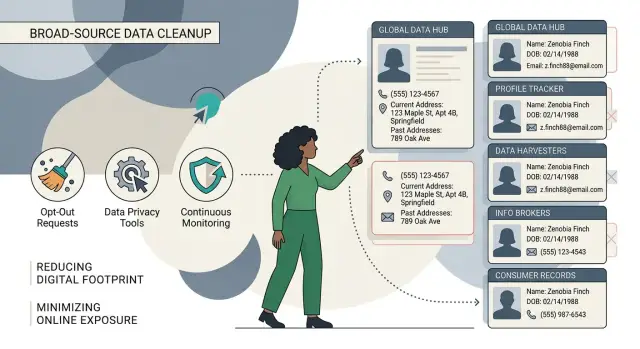
Broad-source cleanup is what saves time in the long run. You want coverage across many brokers and follow-up checks after the first wave of removals. Think in rounds: remove, recheck, search name variations, and repeat.
A quick check after cleanup
A cleanup only matters if it changes what people can find. For uncommon names, the follow-up check is simple: search your full name in quotes again and look at the first few pages with fresh eyes.
You are not checking for a perfectly blank result page. You are checking whether the risky details are gone. If an old record still shows your street address, mobile number, age range, or relatives, the job is not finished.
A quick review usually takes about 10 minutes. Search your full name in quotes, open the results that used to expose your details, note what disappeared and what is still live, and save the date of the check in a simple note. Keep it boring and consistent. That makes changes easier to spot.
Look past your own name too. Many broker pages still connect people through relatives, past cities, and broad age bands like 35-39. For someone with an uncommon name, that is often enough to confirm identity even when one detail is missing. If your name returns only five strong matches, one page with your brother's name and old ZIP code can still point straight to you.
It also helps to keep a small log. Write down which sites removed your record, which sites still show it, and which pages now show only partial information. Partial is better than full exposure, but it still matters. A page that drops your phone number and keeps your current address is still a problem.
Repeat the check after real life changes. Moving, changing jobs, getting a new number, or showing up in new public records can create fresh listings. That is why one-time cleanup rarely stays finished for long.
If you use Remove.dev, you can compare live search results with the requests shown in its dashboard. That makes it easier to see whether a site removed the record, reposted it, or never processed it.
What to do next
If your name is uncommon, do not spend much time trying to push one result down the page. The better move is broader cleanup. You want fewer places where your full name appears next to your address, phone number, age, or relatives.
Start with the records that expose the most. A listing with your street address and mobile number is a bigger problem than a plain mention of your name on an old page. Exact-match searches work because those details are easy to confirm, so remove the records that make confirmation simple.
Keep every request, reply, and deadline in one place so nothing slips. Follow up on sites that ignore the first request. Set a reminder to check again for relistings every month or two. A simple spreadsheet can work at first. Once you are dealing with more than a handful of requests, a dashboard is much easier to manage.
If the manual work starts to drag, a service can take over the repetitive part. Remove.dev automatically finds and removes records from more than 500 data brokers, tracks requests in a real-time dashboard, and keeps monitoring for new listings after removal. For people with uncommon names, that kind of ongoing coverage usually matters more than a one-time cleanup.
The goal is straightforward: fewer exposed records, fewer easy confirmations, and fewer ways for someone to find the right person on the first try.