Utility shutoff scam after move-in: why calls get worse
Utility shutoff scam after move-in often starts with public records and service signups. Learn what exposes your details and which removals to do first.
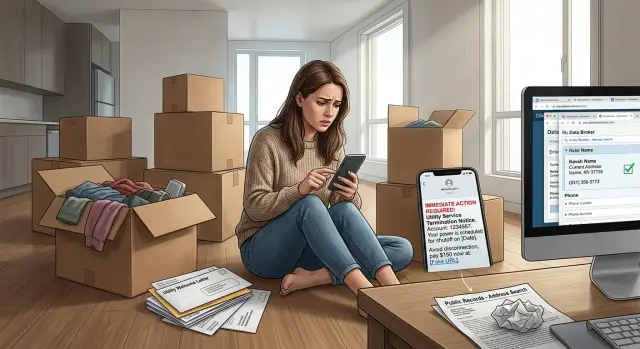
Why the calls start right after a move
A move puts your information into circulation fast. You set up electric, gas, water, internet, update your mailing address, and sometimes change voter, insurance, or delivery records in the same week. That creates several fresh records at once, and some travel much farther than most people expect.
Scammers do not need much to make a call sound real. Your name, your new address, and a rough idea of when you moved in are often enough. If they know you just started service, they can guess the rest. You may still be learning which company handles power, you may not recognize the real phone number yet, and you are more likely to believe there is a billing problem.
That is why utility shutoff scams work so well right after move-in. The story fits your real life. You are already expecting welcome emails, account alerts, installation updates, and first bills. A threat about a missed payment or service delay does not feel random. It feels possible.
Small details make the call even more convincing. The caller might mention your street name, apartment number, or the previous owner. They may say service was transferred recently. None of that proves they are real. It only shows they found enough public or easy-to-buy data to build a believable script.
Moves also create a short window where people are distracted. Boxes are everywhere, passwords are buried in old emails, and you may be answering unknown numbers because a technician, landlord, or delivery driver could be calling. Scammers like that mess. They need a rushed moment, not perfect information.
The spike in scam calls after a move is not a coincidence. A move creates new records, new stress, and a reason to trust utility messages before you know what normal looks like at the new address.
Where the data trail comes from
These scams usually start with ordinary data, not a dramatic hack. When you move, a few normal actions leave fresh signals behind: a new service account, a deed filing, a forwarding address, or a people-search profile that suddenly ties two homes to one name. A scammer only needs a couple of details to sound real on the phone.
One source is the signup itself. Utility and internet accounts can feed marketing records in indirect ways. The company may not hand over your full account, but move-related details can still spread through partners, lead lists, and companies that track household changes. That gives a caller enough to say, "We see service was just started at your address," which is often all it takes to make someone pause.
Property records are another common source. If you bought a home, the county may post the sale date, deed, parcel details, and mailing address. A recent filing can make you easy to spot as a new resident. Renters do not always appear in the same public records, but tenant screening data and rental marketing lists can still travel farther than most people expect.
Change-of-address activity adds another layer. A forwarding request, a bank update, a new subscription, or a credit file change can spread both your old and new addresses across the broker market. People-search sites are especially bad for this. They often connect your old address, new address, phone number, age range, and relatives into one profile.
The pattern is simple. A new utility or internet account marks the household as recently active. A property filing or related record shows a recent move or purchase. Address updates flow into list sellers and broker databases. Then people-search sites merge old and new details into one easy record.
That is why the calls often spike right after move-in. Fresh move data is easy to sell and easy to misuse. If you want fewer scam calls, start by removing the records that tie your name, address, and phone number together in one place.
How scammers make the story sound real
These calls work because the caller often has just enough truth to sound official. They may know your street, city, ZIP code, or the utility company that covers your area. Right after a move, those details are not hard to find through property records, people-search sites, mailing list updates, and local service-area data.
Then they add pressure. A common script says you missed a payment, your service transfer failed, or a shutoff order is set for later that day. The same-day threat is the point. If you feel rushed, you are less likely to hang up, log in to your real account, or call the number on your bill.
Caller ID makes the lie feel even more real. Scammers can spoof familiar numbers, so your phone may show what looks like the utility company, a local office, or simply a number with your area code. After a move, people expect calls about setup, billing, deposits, and meter reads, so a fake call fits the moment.
The payment request is usually where the story starts to fall apart. Real utilities send notices and give you normal ways to pay through your account. Scam callers push odd methods because they are fast and hard to reverse. Gift cards, payment apps, crypto, and cash payments through a store kiosk are common picks.
Most of these calls follow the same pattern. The caller knows your address or neighborhood but gets vague when you ask for account details. They claim there is a missed payment or shutoff notice that needs action today. They try to keep you on the phone so you do not verify the claim, and they insist that calling the main utility line will take too long.
Picture a new tenant who moved in on Friday. By Monday, a caller knows the street, mentions the local power company, and says the account setup did not process. That sounds plausible because it matches the confusion of move-in week. The scam feels real not because the caller knows everything, but because they know just enough.
A simple move-in week example
Picture a renter named Maya. She gets the keys on Monday and sets up electric service that afternoon. To do that, she shares her full name, phone number, new address, and move-in date.
A day or two later, that address can start showing up in places she never sees. A people-search site may add her to the unit. A tenant screening record, a change-of-address trail, or fresh property data around the building can help tie her name to that address fast.
By Friday, Maya gets a call that sounds oddly specific. The caller says they are from the power company and claims her account is behind, even though her first bill has not even arrived yet. They mention her street address, apartment number, and the date service started. Then they add pressure: pay now, or the power goes off today.
That is the part that trips people up. The story feels official because it uses small details that are often right. Maybe the caller knows the landlord's name from a rental listing. Maybe they confirm the last four digits of a phone number or mention the exact move-in week. None of that proves the caller is real, but in the moment it can feel close enough.
This is why these scams hit so hard after move-in. New service, a new address, and a first bill that has not arrived yet create a short window where you are easy to scare and easy to catch off guard.
If this sounds familiar, start with the records that spread fastest: people-search listings with your new address and phone number, plus any public-facing rental or ownership details you can limit. If you do not want to send removal requests one by one, Remove.dev can handle removals across data brokers and keep watching for your data to show up again.
What matters most to remove first
Start with the pages that join the dots. Those do more damage than a plain public record on its own.
A scam call gets more believable when the caller has your name, your new address, an old address, and a working phone number in one place. If they can also name a relative or roommate, the pitch feels real fast.
The first targets are usually people-search pages that show your new address next to your full name and age range, broker profiles that connect your old home and new home in one record, and listings that include your phone number, email, or names of other people in your household. Duplicate profiles matter too, especially when one old profile points to a newer one.
That second group matters more than most people think. A single page that links your old and new addresses to the same phone number gives a caller a ready-made script. It tells them you recently moved, gives them a way to reach you, and helps them sound informed before you have time to question the story.
If you have limited time, focus on anything that shows your full street address and the phone number you actually answer. That pairing is often enough to fuel the call.
What you probably cannot remove
Some records are public on purpose. If you bought a home, changed the title, or started utility service at a new address, part of that paper trail may be kept by a county or city office because the law requires it.
That means you usually cannot erase the original deed, tax record, or assessor entry tied to your property. In many places, those records are public by law, and the office that keeps them is not free to delete them just because scammers may misuse the data.
That is frustrating, but it helps to separate the original record from the copies that spread everywhere else. The government file is often the source. The bigger day-to-day risk comes from people-search sites and data brokers that copy the record, attach your phone number or email, and make it easy for anyone to build a believable story.
A scammer does not need your full closing packet. A name, a new address, and a phone number are often enough. If they also find an age range, family member names, or past addresses, the call can sound even more real.
So the better target is not the courthouse file. It is the layer of copied records around it. Focus first on sites that connect your new address to contact details like mobile numbers, personal email addresses, previous addresses, and names of relatives or household members.
That is where removal work pays off. If a broker can no longer tie your new property record to your current phone number, the scam call gets harder to place and much less convincing.
A simple example helps. Your county tax record may still show that you own the home, and that may never go away. But if the broker copies linking that address to your cell number are removed, the stranger claiming to be from the power company has much less to work with.
This is also where Remove.dev fits. It cannot wipe official deed or tax records, but it can remove broker copies and keep checking for re-listings. That split matters. You may not be able to erase the original record, but you can make it much harder for someone to turn it into a scam call.
How to reduce the trail step by step
After a move, speed matters. New utility accounts, address updates, and public records can spread fast. If scam calls start hitting your phone, the goal is to make your new address harder to match to your name and number.
Start with a quick sweep of what is already out there. Search your full name, phone number, and new address together. That combined search often finds the people-search pages and broker profiles most likely to feed scam calls. Save screenshots of the worst results before you opt out. If a listing comes back later, you will have a record of what was posted and where it appeared.
Send removal requests to the biggest people-search sites first. One large listing can get copied by smaller sites, so early cleanup usually pays off. When you set up utilities, internet, or home services, check whether they offer privacy settings that limit extra marketing or sharing. Turn off anything you do not need.
Then check again in about two weeks. Many removals take time, and that second search can catch re-listings before they spread.
This does not need to become an all-day project. A good first pass usually takes under an hour. Focus on listings that show the full street address, the phone number you actually answer, and names of relatives or past addresses. Those details make scam calls sound real.
Say you moved on Monday, set up power and internet on Tuesday, and by Friday you get a call saying your service will be cut off unless you pay now. If a people-search site already shows your new address next to your mobile number, the caller has enough to sound convincing. Remove that listing, and the next call gets much weaker.
Property record privacy is never perfect, but you can shrink the easiest trail. The first round matters most. After that, the job is mostly checking for reposts and cleaning them up before they attract more attention.
Mistakes that make the problem worse
These scams get stronger when the caller can test your details and hear you fill in the blanks. Most people do this without meaning to. A rushed callback, a quick payment, or a public post about the new place can give a scammer exactly what they need.
Calling the number back from the same phone is a common mistake. It tells the scammer the number is active, tied to a real person, and worth using again. If they already matched that number to a new address through broker data or service signups, your callback helps confirm the match.
The pressure to pay fast makes things worse too. These callers count on the first week in a new home feeling messy. Bills are arriving from five places, you may not know what the normal utility process looks like yet, and it is easy to think, "Maybe I missed something." Once you pay in a rush, they know the script worked, and they may try again with a different story.
Public posts can hand them the rest of the puzzle. A photo of the new house, a caption about move-in day, a picture of the keys, or a post about waiting for the power company gives away timing. Even without the full address, small clues can be enough when mixed with property records and people-search sites.
Using one email for every move-related signup creates another problem. If the same inbox is used for utilities, movers, internet setup, change-of-address notices, furniture orders, and home services, that email becomes a clean marker for your move. When it leaks or gets sold, many records connect at once.
A safer approach is simple: do not call the number in the message, keep move details off public posts until later if you share them at all, and use a separate email for home setup instead of tying every move-related account to your everyday inbox.
Small habits matter here. Stop confirming your number. Stop reacting to urgency. Stop tying every move-related account to one email. The next scammer has less to work with.
Quick checks before you pay or call back
If you get a shutoff warning during your first weeks in a new place, pause. A real billing problem can wait five minutes. These scams work by pushing you to act before you verify anything.
Start with your actual utility account. Open the utility app, sign in on the company site, or check your latest paper bill. Look for a past-due balance, service notices, and the service address. If nothing there matches the threat, treat the call like a scam unless your utility confirms it.
A few checks catch most fake calls:
- Do not use the number from the incoming call, text, or voicemail.
- Call the number printed on your bill or saved inside your account.
- Treat same-day shutoff threats as a red flag, especially when the caller wants gift cards, crypto, a wire, or a payment app.
- Compare the name, address, and account number with what your utility already has on file.
Same-day shutoff claims deserve extra doubt. Real utilities can send overdue notices, but scammers want panic. If someone says you cannot hang up, must stay on the line while paying, or will lose service within the hour, end the call and contact the utility yourself.
One more check matters after the call is over. Search a few broker sites for your name and new address after about 14 days, then again after 30 days. Move-in data often shows up in waves after service signups, change-of-address updates, or property record updates.
If your name and address are still easy to find, remove those records first. That basic pairing is often enough to make a scam call sound believable. Keep a short note of which sites list you and when. It helps you see whether the trail is shrinking or still feeding new calls.
Next steps if you want less manual work
If you want fewer scam calls after a move, start with the records that make you look new at the address. The first ones to check are the people-search and data broker pages that show your full name next to your current address. That pairing gives callers the story they need.
You do not need a perfect system. You need a small one you will actually keep using.
A basic tracker is enough: the site name, the page you found, the date you sent the opt-out request, the follow-up date, and the result. Without a list, people often send the same request twice, miss follow-ups, or forget which sites still show the new address.
Check the highest-risk records first. If a site shows your current home address, age range, relatives, and past addresses, move it to the top. If a site only lists an old city and nothing else, it can wait.
A tracker also helps you spot re-listings. Some records disappear, then come back weeks later after another data refresh. If you only do manual opt-outs once, the trail can rebuild itself.
That is where a managed service can make sense. If manual requests start eating your evenings, Remove.dev can remove your private information from more than 500 data brokers, keep monitoring for re-listings, and let you track requests in a dashboard. Even then, it helps to keep a short note of the worst exposures you found during move-in week so you can compare what changed after the first 7-14 days.
The goal is simple: fewer places showing your current address, fewer easy details for scammers to quote, and less cleanup every time your data shows up again.
FAQ
Why do utility scam calls get worse right after I move?
A move creates fresh records all at once. New utility accounts, address updates, delivery changes, and property filings can spread your name, phone number, and address fast, which gives scammers enough to make a call sound believable.
What details do scammers usually have about me?
Usually not much. Your name, new address, phone number, move-in week, and sometimes an old address are often enough for a caller to sound real and pressure you into paying.
How do scammers get my new address so quickly?
Most of it comes from normal move activity, not a dramatic breach. Service signups, public property records, change-of-address trails, and people-search sites can connect your old and new address in one profile.
What should I remove first after a move?
Focus on pages that tie your full name to your current street address and the phone number you actually answer. If a site also shows past addresses, relatives, or duplicate profiles, move that one up your list too.
Can I delete my deed or county property record?
In most cases, no. Deeds, tax records, and assessor entries are often public by law, so the better target is the copied broker and people-search pages built around those records.
How can I tell if a shutoff call is real?
Pause and check your real account through the utility app, company site, or the number on your bill. If the caller pushes same-day shutoff, refuses to let you hang up, or wants payment before you verify anything, treat it like a scam.
Which payment requests should make me hang up?
Gift cards, crypto, wire transfers, store kiosk cash payments, and random payment apps are bad signs. Real utilities normally let you pay through your account or standard billing channels.
Does calling the number back make things worse?
Yes, it can. Calling back from the same number tells the scammer the line is active and worth using again, so contact the utility through your saved account or paper bill instead.
How long does data removal usually take?
Many removals show up within about 7 to 14 days, but some records return after another data refresh. That is why it helps to check again after two weeks and again around the one-month mark.
When does it make sense to use Remove.dev?
If manual opt-outs are taking too much time, a service can help. Remove.dev removes private data from over 500 brokers, watches for re-listings, and shows request progress in a dashboard, which is useful when move-related records keep popping back up.